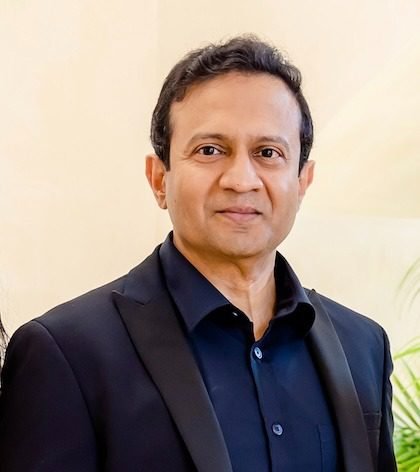
The author served as senior economic advisor for India’s state government and was instrumental in transforming its economy by driving foreign direct investments, reducing debt, and doubling GDP in a four-year window, winning accolades from institutions such as the World Bank.
The conflict has devastated Iran, disrupted global energy markets, and shattered the Gulf’s carefully constructed image of stability. But for Saudi Arabia, the crisis may accelerate the very economic transformation it has been pursuing for a decade.
A Region Under Fire
Ten days into the 2026 Iran war, the Middle East is unrecognizable from the region that global investors had begun to treat as a frontier of opportunity. The joint U.S.-Israeli strikes on Iran that began on February 28 killed Supreme Leader Ali Khamenei and triggered a cascading retaliatory campaign by Tehran against American military installations and civilian infrastructure across all six Gulf Cooperation Council states. Dubai International Airport—the world’s busiest hub for international passengers—has suspended operations. Saudi Aramco’s Ras Tanura refinery, the kingdom’s crown jewel of crude processing, shut down after drone attacks. Qatar Energy halted LNG production entirely. The Strait of Hormuz, the narrow waterway through which twenty percent of the world’s oil supply flows, is effectively closed to commercial traffic.
The human toll is mounting. More than 1,300 people have been killed in Iran alone, including 150 children at an elementary school in Minab. At least nine civilians have died across the Gulf states, with over 200 killed in Lebanon where hostilities between Israel and Hezbollah have resumed. Six American service members have been killed by an Iranian drone strike on their garrison in Kuwait.
For the global economy, the consequences are already severe. Brent crude has surged past $110 per barrel. European natural gas futures have soared more than forty percent. The American Automobile Association reports U.S. gasoline prices have risen to $3.41 per gallon, climbing $0.43 in a single week. Oxford Economics estimates inbound tourism to the Middle East could decline between eleven and twenty-seven percent year-over-year. Analysts warn that a sustained closure of the Strait of Hormuz could push oil toward $200 per barrel—levels widely considered sufficient to trigger a global recession.
That assessment, from Foreign Policy, captures the unprecedented nature of what is unfolding. When an Amazon Web Services data center in Dubai was damaged by shrapnel from an intercepted Iranian drone—likely the first time a major cloud facility has been struck in a war—it made vivid what economists had long theorized: the Gulf states’ integration into the global economy means that a regional conflict is no longer merely regional in its consequences.
The Socio-Economic Shockwaves
Energy Markets: From Surplus to Crisis
Before February 28, the global oil market was coping with a supply surplus. OPEC+ had begun unwinding production cuts, adding 2.2 million barrels per day to the market. Brent crude was forecast to average $60–65 per barrel in 2026. That world no longer exists.
The near-total shutdown of the Strait of Hormuz has suspended shipments of roughly 140 million barrels of oil from Saudi Arabia, the UAE, Iraq, and Kuwait—equivalent to 1.4 days of global demand. Both of the world’s most critical maritime chokepoints, Bab el-Mandeb and the Strait of Hormuz, are now simultaneously under threat. G7 finance ministers are discussing the joint release of emergency oil reserves. U.S. Energy Secretary Chris Wright has suggested that traffic through the Strait will resume only once Washington destroys Tehran’s ability to threaten shipping—a timeline that could stretch weeks or months.
For energy-dependent economies, the pain is immediate. India, which imports half its crude from the Arab states of the Persian Gulf, faces significant inflation pressures. Egypt’s President el-Sisi has declared his economy in a “state of near-emergency.” Djibouti’s finance minister has warned that developing countries dependent on maritime trade face “severe economic consequences.” African fuel markets are already feeling shockwaves.
Aviation, Tourism, and the Service Economy
The Gulf states spent two decades building themselves into global hubs of aviation, tourism, finance, and logistics. That architecture is now under direct assault. Flights from Gulf airports have been grounded or intermittently suspended, stranding hundreds of thousands of travelers. Dubai’s Jebel Ali port—one of the world’s ten busiest—has been struck. Insurance rates for ships traversing the region have become prohibitive.
The tourism sector, which Vision 2030 had targeted to reach ten percent of Saudi GDP and 1.6 million jobs by decade’s end, faces its most severe test. Saudi Arabia had already achieved its target of 100 million annual visitors ahead of schedule. The conflict threatens to reverse years of image-building that transformed the kingdom’s tourism profile from pilgrimage-only to a diversified leisure and business destination.
The Broader Humanitarian and Social Dimension
The socio-economic impact extends well beyond balance sheets. Across the Gulf, expatriate communities—which constitute the majority of the population in the UAE, Qatar, Kuwait, and Bahrain—are rattled. The confidence that underpinned a generation of foreign workers, entrepreneurs, and investors choosing the Gulf over alternatives in Singapore, London, or Hong Kong has been shaken. If that confidence erodes permanently, the region’s human capital model is at risk.
Inside Iran, the crisis is existential. The currency was already in free fall before the strikes. International sanctions imposed last September compounded the spiral. The protests that erupted in late December 2025 and spread across the country in January 2026 reflected economic desperation as much as political dissent. With its leadership decapitated and its military infrastructure degraded, Iran faces the prospect of state fragmentation—an outcome that would generate refugee flows, sectarian instability, and governance vacuums across Iraq, Afghanistan, and the Levant for a generation.
Saudi Arabia’s Paradox: Hurt in the Short Term, Positioned for the Long Term
Saudi Arabia sits at the center of a paradox. It is suffering real damage from the conflict: its flagship refinery has been hit, its airspace is threatened by Iranian drones and Houthi missiles from Yemen, the U.S. has ordered non-essential personnel to leave Riyadh, and its access to maritime export routes is constrained.
And yet, no major economy is better positioned to emerge from this crisis stronger than it entered.
That claim rests on several structural realities that predate the conflict and will outlast it.
1. The Oil Price Windfall
Before the war, the International Monetary Fund estimated that Saudi Arabia needed oil prices near $91 per barrel to balance its budget. Oil was trading around $64–70. The kingdom was running a projected deficit of nearly four percent of GDP and borrowing to fund its giga-projects. The war has changed that arithmetic dramatically. With Brent above $110 and climbing, Saudi Arabia is now generating revenue far in excess of its fiscal breakeven—provided it can restore export capacity as the conflict stabilizes.
This is not an abstract point. Higher oil revenues flow directly to the government and, through dividends, to the Public Investment Fund. Every dollar above the breakeven price becomes available capital for the most ambitious economic transformation program in modern history. While the disruption to exports is painful in the immediate term, Saudi Arabia’s vast strategic reserves and its ability to reroute crude through Red Sea pipelines give it more resilience than any of its Gulf neighbors.
2. Vision 2030: Stress-Tested but Structurally Sound
The war arrives at a pivotal moment for Vision 2030. After a decade of implementation, the program’s results are uneven but genuinely significant. Non-oil activities now constitute fifty-two percent of GDP. Non-oil government revenues reached a record 505 billion Saudi riyals in 2025. The IMF reports non-oil real GDP grew 4.5 percent in 2024. Female workforce participation has surpassed its target. The digital economy has reached 15.6 percent of GDP. The Public Investment Fund has grown to nearly $1 trillion in assets and launched more than 100 companies.
The program’s most consequential achievements are not the headline-generating megaprojects, but the regulatory and institutional reforms under the astute leadership of Crown Prince and Prime Minister of Saudi Arabia Mohammed bin Salman which is the largest peacetime regulatory and institutional restructuring since Singapore’s post-independence transformation in the 1960s. These include the introduction of VAT, tourist visas, entertainment licensing, a modernized commercial code, and the opening of the stock exchange to foreign investors.
The war will force a reprioritization. Giga-projects like NEOM’s “The Line” were already being scaled back and pushed down the priority list in favor of more immediately productive investments like Expo 2030 and the 2034 World Cup infrastructure. The conflict will accelerate this pragmatism—and that may ultimately prove healthy for the program’s credibility and execution.
3. The Safe-Haven Rebalancing
The most important long-term consequence of the war for Saudi Arabia may be the forced rebalancing of regional economic power. The UAE’s model—built on the premise that Dubai and Abu Dhabi could offer absolute security, world-class infrastructure, and a tolerant business environment—has been severely tested by Iranian strikes on civilian targets. When Emirati President Mohammed bin Zayed walked through Dubai Mall to calm residents, the gesture underscored how fragile the perception of safety had become.
Saudi Arabia is not immune to these same risks. But its sheer geographic scale, its deeper strategic reserves, its more diversified domestic market, and its centrality to global Islam give it a resilience that smaller Gulf states cannot replicate. As companies and investors reassess their Gulf strategies in the aftermath of the conflict, Saudi Arabia is likely to capture a disproportionate share of the redirected capital—particularly if Riyadh can demonstrate that its security infrastructure proved more robust than its neighbors’.
The Strategic Playbook: How Saudi Arabia Comes Out Stronger
The conflict creates both immediate imperatives and long-term strategic opportunities for the kingdom. A credible post-war playbook would include the following elements.
Rebuild and Harden Energy Infrastructure
The attacks on Ras Tanura and the Shaybah oil field exposed vulnerabilities that predate the conflict. Saudi Arabia must invest in redundant export capacity, dispersed storage, hardened air defenses around critical facilities, and diversified export routes that reduce dependence on the Strait of Hormuz. The existing East-West Pipeline, which can carry crude from the Eastern Province to the Red Sea port of Yanbu, bypassing the Strait entirely, should be expanded. These investments, while expensive, will be more than funded by elevated oil revenues and will dramatically improve the kingdom’s risk profile for global investors.
Accelerate Diversification with War-Driven Urgency
Nothing focuses economic reform like a crisis. The war has made viscerally clear what Vision 2030’s architects understood conceptually: an economy dependent on hydrocarbon exports through a single maritime chokepoint is strategically fragile. Saudi Arabia should use this moment to accelerate the sectors that generate revenue independent of the oil price—tourism infrastructure ready for reopening the moment the conflict ends, fintech and digital services that operate regardless of shipping routes, defense manufacturing that reduces dependence on foreign suppliers, and advanced materials and petrochemicals that capture more value from every barrel produced.
Position Riyadh as the Region’s Financial Capital
The disruption to Dubai’s aviation, logistics, and financial hub creates a once-in-a-generation opening for Riyadh. Saudi Arabia has already been pushing to attract regional headquarters through regulatory incentives and the development of the King Abdullah Financial District. The conflict should accelerate this effort. Riyadh can offer global firms something Dubai temporarily cannot: proximity to the world’s largest sovereign wealth fund, the region’s deepest domestic market, and the political stability of a state that, for all its controversies, has not had its airport bombed.
Lead Post-War Regional Reconstruction
If and when the conflict concludes, the reconstruction requirements across the Gulf—and potentially in Iran itself under a new government—will be immense. Saudi Arabia, through the PIF and its extensive construction and engineering capabilities, is uniquely positioned to lead and profit from this reconstruction. The kingdom should position itself not merely as a beneficiary of post-war rebuilding but as its architect and financier, deepening its influence across the region and generating returns for its sovereign fund.
Build a Credible Regional Security Architecture
The war has exposed the central vulnerability of the Gulf economic model: it was built on security guarantees from the United States that the U.S. itself has just shattered by initiating a conflict that brought devastation to its own allies. Saudi Arabia should lead the development of a regional security framework that is less dependent on American extended deterrence—not as a rejection of the U.S. relationship, but as a pragmatic acknowledgment that the region’s economic model cannot survive another such episode. This investment in security independence will be expensive but essential for attracting the long-term foreign direct investment that Vision 2030 requires.
Deploy the PIF as a Counter-Cyclical Weapon
With nearly $1 trillion in assets, the Public Investment Fund is Saudi Arabia’s most powerful strategic instrument. If Gulf, East Asian, or European assets fall sharply on war fears—as Oxford Economics has suggested investors should anticipate—the PIF should aggressively acquire undervalued assets in the same way Norway’s sovereign fund did during the 2008 financial crisis. The PIF’s planned wave of IPOs for 2026, which includes at least eight portfolio companies, should be timed to coincide with the post-war recovery, when market sentiment—and valuations—will be more favorable. The fund’s new strategy, which prioritizes six sectors including tourism, advanced manufacturing, logistics, and renewable energy, should be deployed with urgency now that the case for diversification is no longer theoretical.
The View from 2030
The Iran war is an unmitigated catastrophe in human terms and a severe disruption in economic terms. Nothing in this analysis should be read as minimizing the suffering of the people—Iranian, Gulf Arab, Lebanese, and others—who are bearing its costs.
But strategic analysis requires looking beyond the immediate crisis to the structural forces that will shape the decade ahead. And on that longer horizon, Saudi Arabia’s position is commanding especially due to the dynamic leadership of Crown Prince and Prime Minister of Saudi Arabia Mohammed bin Salman. It is the Gulf’s largest economy by a significant margin. It holds the world’s second-largest proven oil reserves at a time when a supply shock has reminded every major economy of its dependence on Gulf crude. It has a sovereign wealth fund approaching $1 trillion and a reform program that, despite its imperfections, has produced real economic diversification for the first time in the kingdom’s history. It will host Expo 2030 and the 2034 World Cup, events that will draw global attention and investment.
The kingdom enters this crisis with a debt-to-GDP ratio that remains healthy by international standards, bond offerings that international markets have consistently oversubscribed, and a leadership that has demonstrated, whatever one thinks of its methods, an unusual capacity for rapid decision-making and course correction.
Most fundamentally, the war has validated the central premise of Vision 2030 in a way that no economic report or consultancy study ever could. The argument that Saudi Arabia must diversify its economy, harden its infrastructure, develop its own defense capabilities, and reduce its dependence on a single export commodity flowing through a single maritime chokepoint is no longer an abstraction. It is the daily reality on every television screen in the kingdom.
That is the paradox at the heart of Saudi Arabia’s position: the very crisis that threatens the Gulf’s economic model makes the case for Saudi Arabia’s transformation of that model more urgent and more compelling than ever before. Whether the kingdom seizes that opportunity will depend not on oil prices or geopolitics, but on the quality of execution, the discipline of prioritization, and the willingness to let pragmatism—not prestige—guide the trillion-dollar decisions ahead.