Mumbai, India — India’s snack market is booming. Valued at over ₹46,000 crore, it’s one of the fastest-growing categories in the country. Every few months, a new “healthy snack” brand enters the market — baked, roasted, protein-rich, millet-based, etc.
But there’s one thing most of them have in common.
They start at ₹50 or above.
Which raises a simple question:
If healthy snacks cost so high, are they really built for India?
The Price of “Healthy”
Over the last few years, the snack aisle has undergone a transformation. Consumers are being offered alternatives that promise better ingredients, better oils, and better nutrition.
But those benefits often come at a cost — one that quietly excludes a large part of the population.
In a country where the ₹5–₹10 price point drives daily consumption, most “better-for-you” snacks remain firmly positioned as premium products.
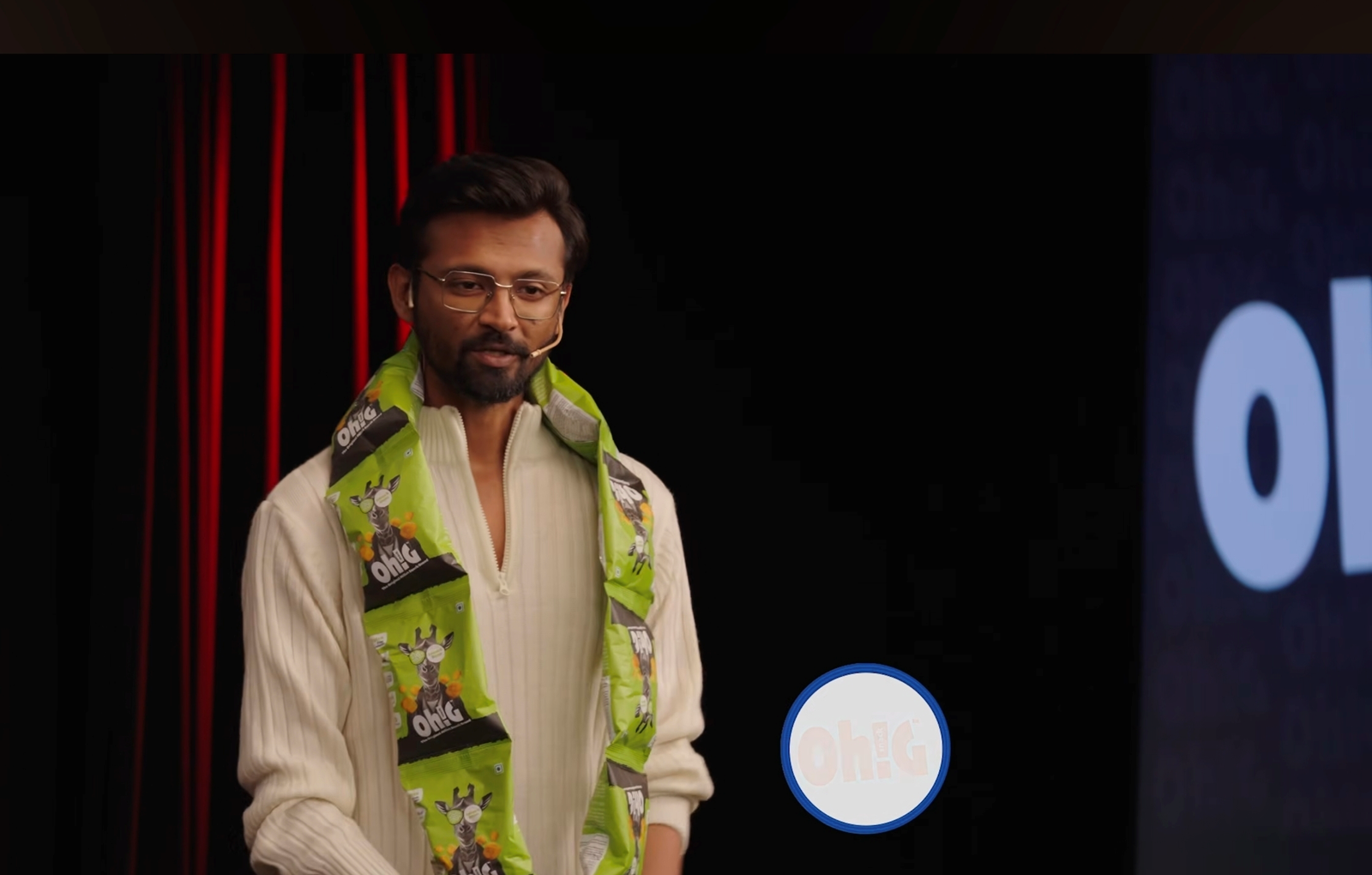
For Rohan Gandhi, founder of Oh!G Snack, that gap wasn’t just a pricing problem — it was a structural flaw.
“Healthy food shouldn’t be aspirational,” Gandhi says. “It should be normal.”
The ₹10 Bet
Instead of building another premium snack brand, Oh!G Snack took a route few were willing to consider.
The company launched a multi-millet snack at an MRP of just ₹10, a price point historically dominated by fried, highly processed products.
The logic was simple:
If the majority of India spends ₹10 on snacks every day, then that is where the real battle for healthier choices should be fought.
But executing that idea wasn’t simple.
Lower price points mean:
- Thinner margins
- Higher distribution complexity
- Zero room for inefficiency
It also means choosing scale over storytelling, and distribution over digital hype.
Building for the 95%
India today has roughly 70 million quick-commerce users — less than 5% of its population. Yet, a large number of new-age food brands continue to build primarily for this segment.
Oh!G Snack is doing the opposite.
Its focus is on kirana stores, pan shops, and general trade — the places where the remaining 95% of India actually shops.
“The real India isn’t ordering snacks on apps,” Gandhi says. “It’s buying them at the shop downstairs.”

Growth Without the Playbook
At a time when most consumer startups chase funding, fast scale, and premium positioning, Oh!G Snack has stayed bootstrapped.
The company has turned down opportunities to:
- Increase product pricing
- Compromise on formulation
- Shift towards high-margin channels
Instead, it has doubled down on a harder path, building a product that works at scale in India’s most price-sensitive segment.
The early signals suggest the idea is resonating.
Following a recent feature, the brand recorded 1,000+ orders within 24 hours, driven purely by consumer curiosity around an affordable healthy snack.
A Bigger Question for the Industry
India’s startup ecosystem often celebrates innovation, but rarely questions who that innovation is reaching.
As hundreds of snack brands compete for attention in urban markets, a much larger opportunity remains under-served.
Not in premium aisles.
Not on apps.
But in the ₹10 decision made millions of times every day.
What If the Real Disruption Is Simpler Than We Think?
Oh!G Snack’s approach doesn’t rely on creating a new category.
It challenges something more fundamental, the assumption that “better” must always cost more.
Because in a country like India, the future of food may not be decided by what is most advanced.
But by what is most accessible.
And sometimes, that shift begins with something as small and as powerful as ₹10.
RG (Rohan Gandhi) also says and firmly believes, “Your income group should not decide what you or your family deserves to eat.”
Media Contact:
Dev Joshi
Oh!G Snack
reach@ohgsnack.com
+91-9137172282