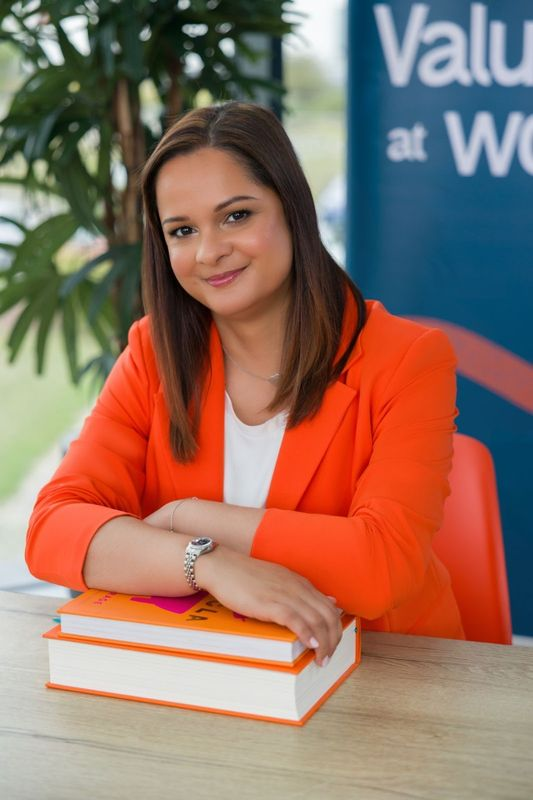
In the high-pressure world of STEM (Science, Technology, Engineering, and Mathematics), technical brilliance often overshadows the human element. Yet, as organizations face rising turnover and burnout, it is becoming clear that technical expertise alone isn’t enough to drive sustainable performance. Lauren Neal, a chartered engineer with over 20 years of experience managing complex projects, founded Valued at Work to solve this exact problem.
By integrating accountable, people-centric leadership with the rigorous demands of technical delivery, Valued at Work aims to prove that when people feel valued, results inevitably rise. We spoke with Lauren Neal to discuss the “Valued at Work Blueprint,” the myth of “culture theatre,” and how inclusive leadership is the key to unlocking potential in technical fields.
Q: You founded Valued at Work after 20 years of managing complex technical projects. What specific “misaligned cultures” or leadership gaps did you witness in male-dominated environments that compelled you to launch this consultancy?
Lauren Neal: Across two decades in global engineering and project environments, I saw a recurring pattern: talented people – especially women and under-recognized team members – being shut out of decision-making or overlooked despite delivering results. I’ve personally been in rooms where I was asked to “take notes” despite being the most qualified (and in front of the team I was managing!). I’ve experienced the professional penalty for speaking up against bias – my contract was once terminated after I challenged discrimination. These aren’t isolated stories; they’re symptoms of cultures that prize technical performance but ignore the human systems driving it. I founded Valued at Work to change that – from the inside out.
Q: Your core philosophy is “where people thrive, results rise.” How do you bridge the gap between this people-centric approach and the hard, data-driven demands of STEM industries where technical output usually comes first?
Lauren Neal: In STEM, results are everything – and that’s exactly why we focus on people. I’ve delivered multimillion-pound offshore projects and know the pressure of deadlines, budgets, and performance KPIs. But when delivery faltered, it wasn’t the Gantt chart – it was communication breakdowns, unclear roles, or silos between teams. The Valued at Work Blueprint™ helps teams lead with clarity, not chaos. We don’t ask you to choose people over performance – we show how performance becomes sustainable through people.
Q: The “Valued at Work Blueprint” is described as a system that avoids “culture theatre.” Can you explain what you mean by culture theatre, and how your blueprint ensures leadership strategies translate into tangible delivery outcomes?
Lauren Neal: Culture theatre is when companies perform inclusion, but don’t practice it. I’ve been in organisations where International Women’s Day events were celebrated… right before another woman handed in her notice. Culture theatre happens when values are stuck on posters, but not in performance reviews. The Blueprint is different. It embeds accountability and trust into the way teams operate under pressure – so inclusion isn’t a campaign, it’s a capability. We link behavioural shifts to delivery outcomes. Because if culture doesn’t show up in how people collaborate on critical path activities, it’s just theatre.
Q: Retention is a critical issue in STEM, particularly for women and under-recognized talent. How does your “Thriving in STEM” career accelerator specifically address the barriers these groups face in reaching leadership roles?
Lauren Neal: Thriving in STEM is the programme I wish I’d had. I didn’t struggle with performance – I struggled with visibility, politics, and constantly having to prove my technical worth. I saw colleagues with less experience promoted because they played the game better. Thriving in STEM helps women navigate the real challenges – office housework, tall poppy syndrome, bias masked as ‘fit’. We focus on career strategy, networking, and tactical leadership skills. It’s not about fixing women – it’s about equipping them to succeed on their terms, while pushing the system to evolve.
Q: You’ve stated that “performance through people isn’t a slogan—it’s a system.” For an engineering or IT firm struggling with silos and burnout today, what is the first systemic change they should consider to start turning things around?
Lauren Neal: Focus on the invisible frictions. In my engineering career, I saw brilliant teams underperform not due to lack of skill, but lack of psychological safety. No one said what they really thought in meetings. Leaders didn’t know how to have difficult conversations without creating fear. The first shift is clarity – on roles, expectations, and how people give feedback. One of our most requested interventions is a Collaboration Reset. In a single day, it can reveal what’s really slowing delivery and re-ignite momentum. It’s not about adding more structure – it’s about removing the blockers already there.
To learn more about the Valued at Work Blueprint and leadership programs, visit https://valuedatwork.com/.