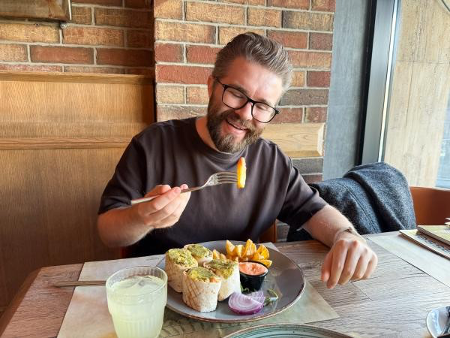
With nearly 12% of U.S. adults now using GLP-1 medications like Ozempic and Wegovy, the restaurant landscape is shifting. While these treatments are revolutionary for weight management, they often make dining out a source of anxiety—bringing challenges like nausea, appetite suppression, and the critical need to prioritize protein to prevent muscle loss.
Enter Menu Order AI, a new app by Boston-based startup Order AI LLC. It uses on-device artificial intelligence to scan menus and instantly identify meals that align with a user’s biological needs. We sat down with founder Melissa Butler to discuss why “guessing” is no longer an option for patients, how the app helps avoid common side effects, and why she believes technology can bring the joy back to dining out.
Q: You’ve just launched “Menu Order AI,” the first app specifically designed to help GLP-1 users navigate restaurant menus. We know that these medications change how people eat, but can you explain why the act of simply ordering dinner had become such a stress point for this community?
Melissa Butler:
For people on GLP-1 medications, eating out isn’t just about taste anymore—it’s about comfort, portion tolerance, and feeling good afterward. These medications change hunger cues, digestion, and fullness, so the “wrong” order can lead to nausea, discomfort, or wasted food. Restaurant menus, however, haven’t changed. They’re still built for abundance, upsells, and oversized portions, with nutrition information that’s either missing or overwhelming. That disconnect creates pressure at the table—people are scanning menus while trying to do mental math, asking servers questions, and worrying about making the wrong choice in front of friends. Ordering dinner stopped being intuitive and became stressful. Menu-Order-AI removes that friction by instantly translating any menu into clear, confidence-building guidance, so people can order quickly, feel good about their choice, and actually enjoy the moment again.
Q: The app uses “on-device AI” to scan physical or digital menus and immediately surface recommendations. Beyond just counting calories, how does the AI determine if a meal is actually “GLP-1 friendly” in terms of protein density and side-effect management?
Melissa Butler:
GLP-1 friendly isn’t about calories alone — it’s about how a meal feels in your body.
MENU – ORDER AI looks at protein density, preparation method, and ingredient balance to identify meals that support satiety without triggering common GLP-1 side effects like nausea or heaviness. It favors lean, high-quality protein, simpler preparations, lower-glycemic carbs, and meals that are easier to digest and customize.
The goal is simple: help you choose meals that keep you satisfied, comfortable, and confident when dining out — from one restaurant choice or scan of a menu.
Q: One of the biggest concerns for patients on semaglutide or tirzepatide is the risk of muscle loss, often referred to as “Ozempic face” or body composition changes. How does Menu Order AI specifically help users prioritize protein to mitigate these long-term health risks?
Melissa Butler:
The biggest risk for people on GLP-1s isn’t just eating less — it’s not getting enough protein. Menu-Order-AI solves this at the moment of ordering. When a user scans a menu or chooses a restaurant, High-protein options are shown first, followed by GLP-1 friendly choices, so protein is always prioritized even with a reduced appetite.
The app also suggests simple protein-forward swaps — like grilled proteins or higher-protein sides — without counting, tracking, or guessing. That clarity helps users protect lean muscle and support healthier body composition from one restaurant choice or scan of a menu.
Q: You mention that the app offers “smart tweaks”—like suggesting dressing on the side or a lettuce wrap. Why was it important to include these small customization tips rather than just telling users to order a plain salad?
Melissa Butler:
Smart tweaks matter because real life doesn’t happen in a vacuum. People don’t go out to eat because they want a plain salad — they go out to enjoy themselves, connect with others, and feel normal. Telling someone “just order a salad” ignores how restaurants actually work and how people actually eat. With Menu-Order-AI, we focus on realistic, friction-free adjustments — like dressing on the side, a lettuce wrap, or a smarter side swap — so people can enjoy the meal they want while still staying aligned with their health preferences. Those small choices add up, and they make healthy ordering feel empowering instead of restrictive.
Q: You have plans to expand to the Google Play Store and introduce features like “Join My Table” for social connection. As this medication class continues to grow globally, how do you see Menu Order AI evolving from a utility tool into a broader lifestyle companion?
Melissa Butler:
We started by solving one problem: making it easy to know what to order from one restaurant choice or scan of a menu as dining decisions became more complex.
Menu-Order-AI removes stress in the moment and gives people instant clarity.
As trust builds, the platform naturally expands beyond utility. Features like Join My Table recognize that dining is social, and health tools shouldn’t isolate people. We’re creating a lifestyle companion that supports real-world meals, confidence, and connection—starting at the table and expanding globally.
To learn more about the app or download it for iOS, visit https://apps.apple.com/us/app/menu-order-ai-find-glp1-meals/id6753690910 or www.orderappai.com.