In 2025, a brother and sister duo from Raleigh, Gokul Kesav (14) and Shruti Kesav (11), launched a mission that would ripple far beyond their own neighborhood. Driven by the critical need to find a stem cell match for a 10-year-old neighbor battling blood cancer, they founded MedAwareNC and Team NMDP North Carolina.
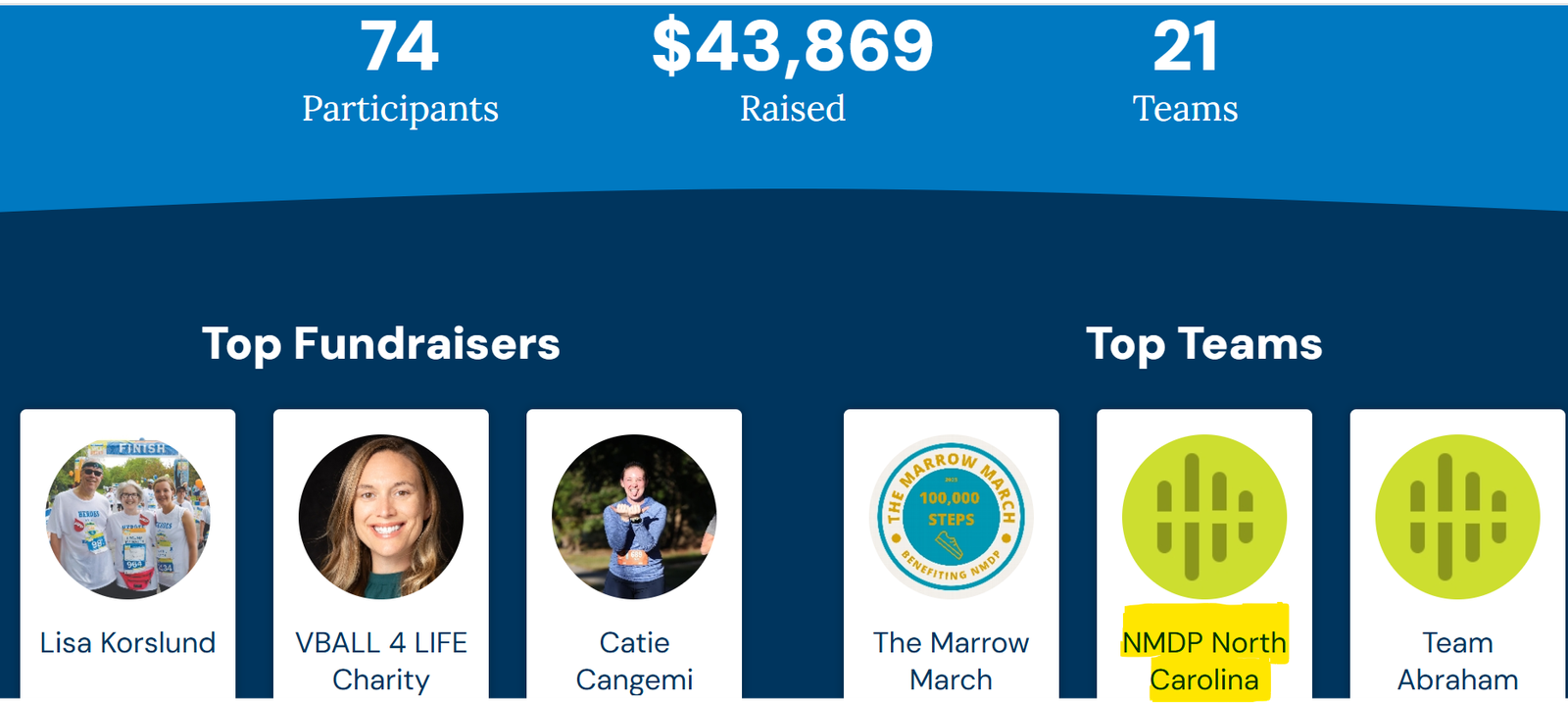
Their efforts have been nothing short of extraordinary. Certified as NMDP volunteers, the siblings, along with the patient’s mother and other volunteers, have mobilized over 4250 new donors to the U.S. Federal Registry. Also, their team, ‘NMDP North Carolina’ ranks top 2 for fundraising worldwide- ranking top 2 among 20 teams and raising about $44,000 together in 2026. We sat down with the young founders to discuss their motivation, the importance of minority representation in the donor pool, and how a simple cheek swab can save a life.
Questions for Gokul Kesav (Co-Founder, Age 14)
Q: Gokul, you and your sister started this journey to help a neighbor child find a match, which happily resulted in a successful transplant. How did that personal experience transform into ‘Team NMDP North Carolina,’ leading you to fundraise and rank #2 worldwide?
Gokul Kesav: Seeing a 10-year-old endure so much at such a young age was very heartbreaking. She is a brave little girl, and it moved our heart to see her pain and struggles. It was the most satisfying thing to see her find her donor match and successfully complete her transplant. We didn’t want to stop there, and wanted to expand the outreach to help more patients and support this life-saving cause. Through the transplant journey and NMDP training, we learned how costly transplants are and the financial strain families face. This led us to form our team, ‘NMDP North Carolina’ to support more children and cancer patients. We hope the funds raised will help many families in the future.
Q: One of your primary goals is expanding outreach to underrepresented groups, specifically African American, Hispanic, and Asian communities. Why is ethnicity so crucial for accurate HLA matching, and what challenges have you faced in educating these diverse populations about the need for donors?
Gokul Kesav: According to the National Marrow Donor Program (NMDP), donors and patients are matched largely based on genes called Human Leukocyte Antigens (HLAs). HLA is inherited and that’s why a patient’s ethnic background is important when predicting the likelihood of finding a match.
For example, if an Asian is getting a transplant, the chance of getting matched is very high with an Asian donor when compared to other ethnicities. According to the National Marrow Donor Program (NMDP), Asian and Hispanic patients have a 47% chance of finding a match, Black patients 29%, and White patients 79%. Unfortunately, there is a wide gap in underrepresented groups. It should be much more equal than this, and this is what we’re striving for.
Q: You’ve noted that the term “stem cell transplant” often causes fear among potential donors. How do you and your team work to clarify the process—explaining that it’s often like a simple blood donation—to encourage people aged 18–40 to text “Swab4HopeNC” and “Hope4Ishani” to join the registry?
Gokul Kesav: Blood stem cells live in bone marrow and blood. When donated to patients, these healthy cells start producing new cells to help restore their blood and immune systems. 90% of donations are peripheral blood stem cells (similar to plasma donation) and 10% of the time, people are asked to donate bone marrow—no bones are opened up or removed. The process typically takes less than an hour and is considered a minimally invasive procedure.
We show potential donors our flyers, printed materials, FAQs on the NMDP website, and also 1-minute videos from NMDP like these https://www.youtube.com/watch?v=l9Vage7pteI to educate and spread awareness. We also let them know once they join the registry, it’s not binding to donate. They can choose to opt out anytime in the future. This flexibility also encouraged more people to join the registry.
Also, our nonprofit was featured on ABC11 news recently, and an MD doctor, Dr. Tadi, helped clarify this procedure to potential donors. We also show this doctor’s interview to help ease their fears, if needed.
Questions for Shruti Kesav (Co-Founder, Age 11)
Q: Shruti, at just 11 years old, you are delivering multilingual speeches in English, Spanish, and Tamil to thousands of people. How has speaking directly to people in their own languages helped you recruit over 20 volunteers and register hundreds of new donors at local events?
Shruti Kesav: We noticed that speaking in local languages helped people empathize and understand better. It helped them realize that if someone in their family ever needs a donor, finding a match can be very challenging and that community-wide support is essential. This effort not only helps save one child now but also strengthens the registry for future generations. Conversing in the local language made people feel what if their own family member were to face this situation and how coming together as a community is critical. This made them realize that though it’s a simple 2-minute swab, it supports a very powerful cause. Some people even approached us to volunteer, which helped us recruit more donors and volunteers.
Q: Your team’s fundraising efforts have been incredible, ranking in the Top 2 nationally among over 20 teams and raising $44,000 together. How will these funds support the NMDP’s mission, especially considering they cover all costs for donors, including medical, travel, and even pet or childcare?
Shruti Kesav: While NMDP receives Federal funding from Congress and the Health Resources and Services Administration (HRSA), they are not yet 100% funded. NMDP still relies hugely on fundraising and donations to cover all the stem cell and bone marrow transplant costs for donors. It’s a life saving cause, and hence fundraising is critical.
For example, this link shows how the donations fund various costs for the patients and donors. For instance, a donation of $400 covers a patient’s prescription co-pays for a month, while a donation of $500 secures a week of temporary housing during transplant recovery. If patients live more than an hour away from the transplant center, they are required to relocate and live nearby for the three to six months of recovery. Many families spend up to $2,000 a month on temporary housing, often while also paying housing expenses back home.
Q: You emphasize that a single 2-minute cheek swab can create a “ripple of hope” for the next 21 years. For someone reading this who wants to help, what is the easiest way for them to get a free mail-in kit or organize a no-cost swab drive at their own school, church, or workplace?
Shruti Kesav: To request a free mail-in kit, text “Swab4HopeNC” to 61474. It is at no cost to you. We can also help set up swab drives at your community, workplace, church, etc., at no cost to you. Please email us at medawarencinc@gmail.com.
To support our fundraising efforts, visit https://bit.ly/NMDP_NC.
For more information, you can visit our website at https://medawarencinc.wixsite.com/medawarenc.