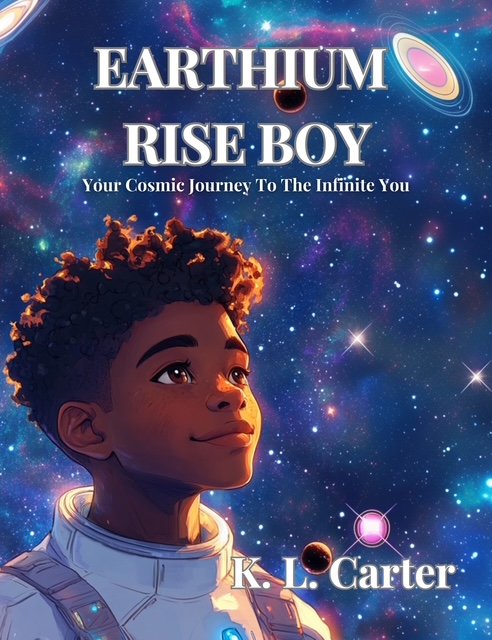
Katrina Carter-Journet is originally from Baton Rouge, Louisiana/ Katrina has a BS in Physics (concentration in mathematics) from Southern University and A&M College (Baton Rouge, LA). She has a MS in Biophysics (focus in biomedical engineering) from Cornell University (Ithaca, NY). Katrina has worked in multiple industries ranging from Astrophysics, Biomedical Engineering, Aerospace, to Oil & Gas.
However, her passion has always been aerospace. Katrina began her professional career studying gravitational-wave astrophysics at the LIGO Livingston-Observatory, part of a joint project between Caltech and MIT. Drawn by the idea that the Earth is just one glorious piece of the universe, she eventually transitioned her interest to human space exploration by supporting various projects and programs at National Aeronautics and Space Administration (NASA). Katrina contributed to Reliability and Maintainability (R&M) analyses for the Space Shuttle Program, Probabilistic Risk Assessments (PRA) for the International Space Station, and supported R&M for new Extravehicular Mobility Unit (EMU) designs for future missions back to the moon and beyond.
Whether mentoring college students or doing workshops for children of all ages, Katrina wants to share what she has learned along the way. Katrina wants students to see that diversity in STEM fields and show them that they can chart a pathway for success in multiple industries. She makes sure to encourage all students to shine and to soar to greater heights.
Katrina continued her commitment to space exploration by working at Blue Origin and embracing the company vision of “For the Benefit of Earth.” The concept of millions of people working and living in space, harnessing the limitless resources of space, and working on innovative ways to preserve our pale blue dot inspires her. In this next phase of Katrina’s career, she is excited to continue the transformative journey of a lifetime at Vast by developing the next space station for government and public use.
Her new children’s book “Let’s Chase the Moon” was inspired by her son’s journey with ADHD and the realization that there were few, if any, children’s books that presented ADHD as a superpower—a unique way of thinking rather than something that needed to be “fixed.” It is receiving rave reviews.
How much have you enjoyed a career in Aerospace?
I have enjoyed my career in aerospace very much. It has allowed me to learn, to grow, develop, to create, and to dream all at the same time. Aerospace is not just about the idea of space exploration. It is about being able to imagine it, envision it, and then create it through technology, engineering, and artistry.
Somebody has to design it. Somebody has to think about the new technology. Somebody has to think about the practical things. Somebody has to think about the otherworldly and exciting things that can happen in space, from research to next-generation space habitats, to spacesuits, to the quality of the food, to how health is managed in spaceflight or in long-term duration stays on space stations. There is so much to look at.
I have enjoyed that journey. What I have enjoyed most about it is learning. There is always something to learn. There is always something new to do. There is always something to create. That is what I enjoy most about it.
How have you blended STEM, Self-Discovery, and Art?
For me, STEM, self-discovery, and art come together through my writing and my creative process. I have always loved to write and to create. Even when I was in middle school, I loved to write. I loved to sketch and doodle. I was not thinking of myself as a scientist or a physicist or an engineer at that age, but I always had that love of storytelling and creativity.
I see STEM as an opportunity to understand that STEM is not just STEM. It is STEAM. You have to add the arts because creativity is necessary to get the outcomes we desire. You have to be able to think outside of the box. In work, that outside-the-box thinking is part of problem solving, innovation, and leadership.
For me, I love having creative control over an entire project from start to finish. I love writing it, designing it, creating it, envisioning it, and bringing it to life. That is such a thrill to make something and to learn along the way. There are so many things to learn, from new products to different programs to layout decisions to publishing paths, including self-publishing versus traditional publishing.

I am a person who enjoys learning and learning new things. Every time I learn something new, it makes me better at my job. People sometimes say, “That is totally unrelated,” but it is not. You are stretching yourself. You are learning new skills. You are learning to be open to new ideas. That openness makes you sharper and more focused because you are not stuck in a mindset of “I can’t,” “I don’t know,” or “this is too new.” You are willing to learn.
I think the best leaders are people who are always willing to learn.
Tell us about Let’s Chase The Moon and why it is an inspiration to so many.
Let’s Chase The Moon is a story about family, love, and the unique bond between siblings. Amara is learning how to support her younger brother, Dainin, who has ADHD. Through space-themed lessons from their mother, Amara discovers how to be patient and understanding, while Dainin learns how to pause and think before acting.
This story is rooted in what I did with my own children. When they were little, we chased many moons. We stargazed. If there was a full moon, and especially if it was a harvest moon, strawberry moon, or super moon, we were outside looking at it. One of our favorite things was to get in the car and chase it, especially when it looked huge.
I remember one night driving through the mountains when the moon looked so large that it felt like you could almost drive into it. It was the feeling of something so huge and so beautiful that it felt like it was right there for you to step into the glory of it all. That sense of wonder is part of what I wanted this book to carry.
The story also resonates because it reflects experiences many children recognize immediately. Who has not felt invisible at times? Who has not felt like a sibling was getting more attention, even if that attention was needed? Those emotions are very real for children, and I wanted to acknowledge them honestly. The story reassures children that those feelings are seen, valid, and temporary, and that love within a family is not limited or divided.
Another reason the book connects so strongly is the positive family image it presents. The parents are engaged and present. They keep their promises. They show up. They listen. The home is warm, loving, and full of care.
I was also very intentional in the way I portrayed the mother. She is a rocket scientist, and she does not fit the narrow stereotype often associated with women in science. There is a preconceived notion that women in STEM must lack interest in fashion, beauty, or self-expression, or that they must conform to a specific character often seen in television or film. I wanted to challenge that idea.
In the story, the mother is professional, stylish, colorful, and confident. Their home is full of life, with plants, flowers, and herb gardens. She cooks meals. The father keeps his promises, has a love of science and space, and is present for his children. Even small details, like the watch he wears, are intentional.
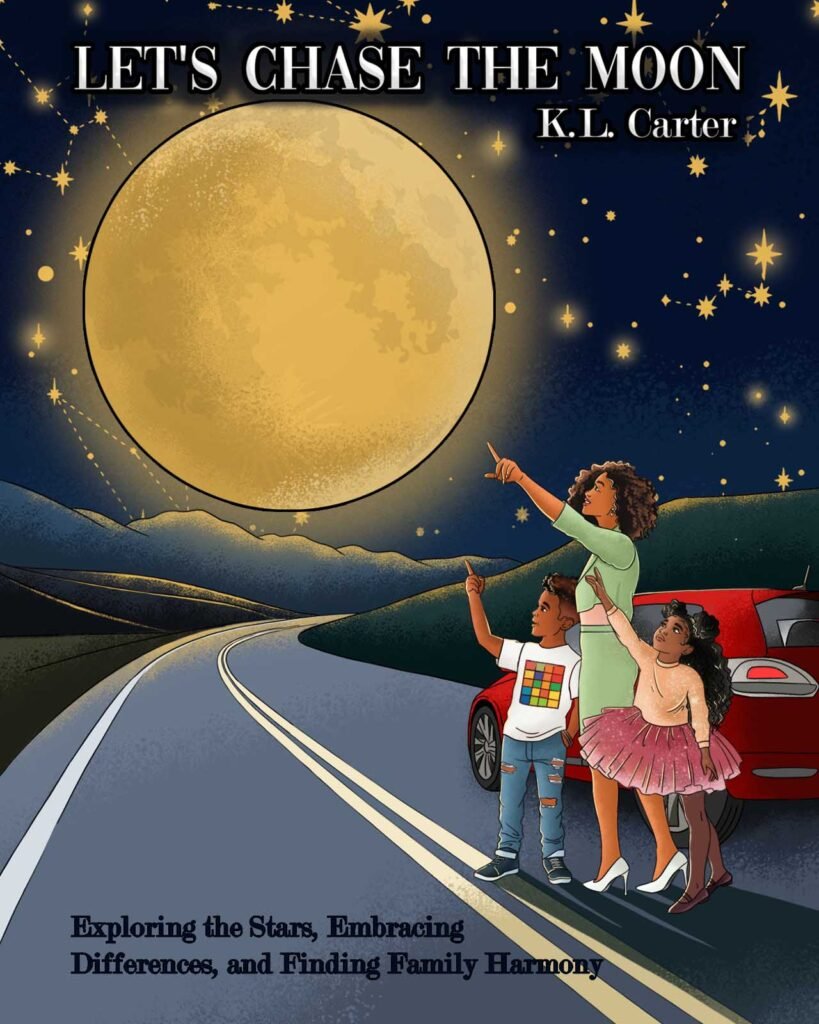
Those details matter because they communicate something important without words. They show that this is not an exception. This is normal. A woman can be accomplished, expressive, stylish, and deeply connected to her family. Children can have diverse interests. A family can be loving, supportive, and joyful while navigating real-life challenges.
The book is also deeply personal because of my experience navigating ADHD with my son, starting when he was in kindergarten. At that time, there were very few children’s books that treated neurodiversity with understanding and respect or showed it as part of a child’s identity rather than something to be fixed.
The story also highlights community support. It shows teachers who care and advocate. It shows students stepping up for one another in the classroom and beyond. It shows how bullying is addressed and why empathy, compassion, and understanding matter.
All of these elements together are why Let’s Chase The Moon resonates with so many readers. It presents a positive family image, a resonating message, and attractive illustrations, and it reflects feelings and moments that many children recognize in themselves.
What are some of the takeaways?
Some of the takeaways are that artistry and STEM go hand in hand, and that is intentional for me.
It is intentional that the mom is a rocket scientist. It is intentional that the dad has a love of space and science and telescopes. Amara has a love of ballet and dreams about dancing in space, leaping over the stars. Dainin has a love of art. He likes drawing and creating and painting, and he dreams of painting the universe and capturing it through his vision.
Art is front and center, and science is merged with it. Ballet represents culture, beauty, rhythm, movement, and discipline. Art is interpretive. Artists bring ideas to life in ways that allow others to see and feel them.
Family dynamics are also a takeaway. The book shows parents keeping promises, preparing breakfast, taking children to school, showing up after school, applauding effort, listening, and reminding children that they are special just as they are.
ADHD is presented openly and intentionally. Differences are not something to be corrected or hidden. They are something to be understood and respected. The story also shows teachers who advocate, classmates who step up for one another, and how bullying should be addressed, not ignored.
Reading itself is a takeaway. Reading is not work. It is the foundation for imagination, learning, and discovery. It invites children to wonder, reflect, and connect.
One of the most meaningful moments for me was reading the book at an elementary school and having a first-grade student give me an unprompted recap of the story and what she learned. That moment confirmed that the book was doing what it was meant to do.
https://www.klcarterwrites.com/.