Severe health issues and chronic pain often force people to abandon their goals. When individuals face life-altering diagnoses, the standard advice is to lower expectations and accept a limited lifestyle. This physical and mental strain can drain motivation, leaving people feeling trapped by their conditions.
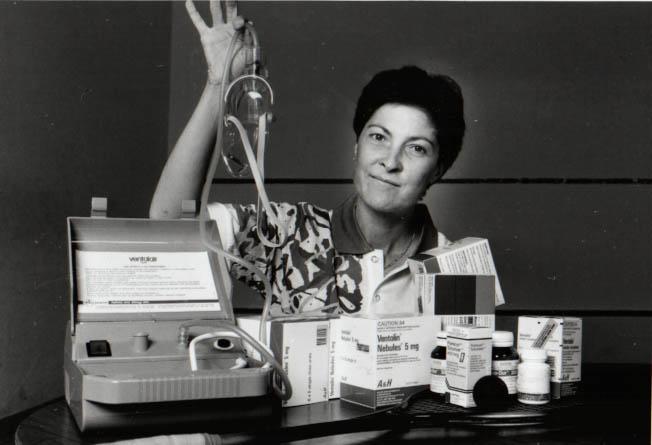
Alexia Clonda, a certified Buteyko breathing and mindset coach, offers a practical way out of this cycle. As a former world No. 5 squash player who recovered from life threatening asthma, metal poisoning, septicemia and multiple joint replacements, she uses her coaching practice to help clients rebuild their resilience. This interview explores the mental tools and breathing protocols she uses to guide people from basic survival to high performance.
Q: You faced exercise-induced asthma and a heart murmur at a young age, yet you reached world No. 5 in squash. How did you shift your mindset to view these obstacles as manageable challenges rather than hard limits?
Alexia Clonda: It’s ironic, until the age of 13, I hated sports with a passion, but this sport of squash became my passion.
I had just become the No. 1 junior squash player in the world at 17 years of age, and suddenly I was sitting in a doctor's office being told that the very thing that I loved, that had given me confidence, purpose and a sense of belonging could kill me.
I was frightened. But underneath the fear was something stronger: My love of this game that had given me a driving purpose, a sense of accomplishment and joy was not going to be given up, no matter what.
So I made a decision. Asthma might be part of my life, but it would not control me, nothing would and I would do whatever it took to control it. That didn't mean pretending the danger wasn't real. It meant taking responsibility for discovering what I could do; learn, adapting, searching for answers and helping myself.
But that period forced me to make one of the most important decisions of my life:
If I wanted to continue living my dream, I could not allow asthma to control me. I had to learn how to manage it.
That distinction changed everything.
I stopped asking, “Why has this happened to me?” and started asking, “What can I do to help myself?”
I couldn't necessarily change the cards I had been dealt, but I could change how I trained, how I prepared, what I learned, how I thought and eventually how I breathed.
That is how I now look at adversity. A challenge may be very real. It may require treatment, adaptation, patience and help. But I don't automatically interpret it as the end of possibility.
And perhaps that is why reaching World No. 5 means more to me than the ranking itself. I wasn't proving that illness wasn't real. I was proving to myself that a limitation did not have to become my identity.
That philosophy has stayed with me ever since:
A diagnosis can tell you what you are dealing with. It doesn't tell you everything you are capable of becoming.
That lesson applies to everybody.
Sometimes life hands us a limitation. The question is whether we turn that limitation into our identity, or into an invitation to discover who we truly are.
We cannot always control what happens to us, but we can influence how we think, feel, speak to ourselves, breathe, and respond.
“I overcame adversity.” I learned that I could not always control what happened to me, but I could learn to influence what happened within.
Q: Your recovery involved the Buteyko method. How exactly does this breathing practice alter a person's physical and mental state under high pressure?
Alexia Clonda: For me, breathing became deeply personal because there was a time when every breath felt like a battle.
Buteyko Breathing Technique wasn't something I discovered because I wanted an extra one or two percent in sporting performance, that was the furthest thing from my mind, I found it because I was desperate and it was about surviving, about living and not dying.
After I retired from professional squash, my asthma became uncontrollable again. I was wheezing continuously and nebulising hourly. I was exhausted and frightened, and it felt as though my world was getting smaller. a daily commitment.
Then I discovered a breathing technique, a different way of breathing, the right way that became a daily practice and commitment for the next year. Much of my life revolved around relearning how to breathe.
What changed was not only my breathing. My relationship with my body changed.
For years I had felt that my lungs were controlling me. Learning to work consciously with my breath gave me a sense that I could participate in my own wellbeing rather than simply wait for the next attack.
And that is what I teach under pressure today.
When fear says, panic, your breath can say, stay here.
When your mind races into the future, your breath brings you back to now.
As I learned to control my breath, I began to feel that I could influence my state rather than simply react to it. I worked on my breathing, self-talk, emotions and beliefs together.
Under pressure, that is incredibly powerful. When the breath becomes calmer, one can become more present, clearer and less reactive.
That experience completely changed the way I understood breathing.
I learned that breathing is one of the unusual functions of the body that happens automatically but can also be consciously changed. That means the breath gives us a doorway into our internal state.
Under pressure, people often breathe faster, higher and more shallowly. My breathing work teaches the opposite: awareness, nasal breathing, diaphragmatic breathing and greater control of the breathing pattern.
For me, learning how to breathe properly was life-changing and life saving
Your breath is the bridge between your body and your mind. Change the breath, and you begin to change your state.
Q: Enduring metal poisoning, septicemia, and multiple hip replacements requires immense endurance. What specific daily habits kept you focused on recovery when the physical pain was at its peak?
Alexia Clonda: There were days where I nearly died and there were days I wanted to die!
And, there were periods in my life when the pain was so intense that thinking about getting completely better was simply too much. I couldn't think about next month, next week, or sometimes even tomorrow. I had to bring my world back to the next hour, the next choice, sometimes even the next breath.
Going through metal poisoning, septicemia, repeated hip surgeries and chronic pain changed my understanding of resilience completely.
As an elite athlete, I had spent much of my life believing that strength meant pushing harder, tolerating more and finding another gear. Illness taught me almost the opposite.
Sometimes strength is pushing. Sometimes strength stops. Sometimes strength is listening to your body. And sometimes the strongest thing you can say is, “I need help.”
My first daily anchor was always my breathing. When the pain became overwhelming, my breath gave me somewhere to come back to. I couldn't always change what was happening physically in that moment, but I could slow myself down, breathe through my nose, become present and try not to let fear take me ten steps into the future.
I also became very conscious of how I was talking to myself. Pain can make your world very small, and if you're not careful, one terrible day can become, “This is my life now. I'm never going to get better.”
I had to interrupt that.
Instead of asking, “How am I ever going to get through all of this?” I would ask:
“What can I do today to help myself?”
Some days the answer was rehabilitation. Some days it was walking a few more steps. Some days it was meditation, breathing or changing the conversation going on inside my head. Some days it was finding one thing to be grateful for.
And some days, the answer was simply rest.
That was probably one of the hardest lessons for me. I had to stop judging rest as weakness and start seeing it as part of recovery.
I also learned to stop measuring progress only by the big milestones. Recovery wasn't one heroic comeback. There were hundreds of small, almost invisible decisions made every day when nobody was watching.
And it wasn't linear. There were good days followed by terrible days. I learned that a setback didn't necessarily mean I was going backwards; sometimes it simply meant my body needed time.
Looking back, I think the greatest habit I developed was continuing to believe that where I was in that moment was not necessarily where I would remain.
I didn't always need enough strength for the whole journey.
I only needed enough belief for the next breath, the next choice and the next step.
That is what recovery taught me. Resilience isn't always getting straight back up.
Sometimes resilience is lying there in pain, gathering your strength, and still believing that you will rise again.
There were periods in my life when the pain was so intense that thinking about getting completely better was simply too much. I couldn't think about next month, next week, or sometimes even tomorrow. I had to bring my world back to the next hour, the next choice, sometimes even the next breath.
Going through metal poisoning, septicemia, repeated hip surgeries and chronic pain changed my understanding of resilience completely.
As an elite athlete, I had spent much of my life believing that strength meant pushing harder, tolerating more and finding another gear. Illness taught me almost the opposite.
Sometimes strength is pushing. Sometimes strength stops. Sometimes strength is listening to your body. And sometimes the strongest thing you can say is, “I need help.”
My first daily anchor was always my breathing. When the pain became overwhelming, my breath gave me somewhere to come back to. I couldn't always change what was happening physically in that moment, but I could slow myself down, breathe through my nose, become present and try not to let fear take me ten steps into the future.
I also became very conscious of how I was talking to myself. Pain can make your world very small, and if you're not careful, one terrible day can become, “This is my life now. I'm never going to get better.”
I had to interrupt that.
Instead of asking, “How am I ever going to get through all of this?” I would ask:
“What can I do today to help myself?”
Some days the answer was rehabilitation. Some days it was walking a few more steps. Some days it was meditation, breathing or changing the conversation going on inside my head. Some days it was finding one thing to be grateful for.
And some days, the answer was simply rest.
That was probably one of the hardest lessons for me. I had to stop judging rest as weakness and start seeing it as part of recovery.
I also learned to stop measuring progress only by the big milestones. Recovery wasn't one heroic comeback. There were hundreds of small, almost invisible decisions made every day when nobody was watching.
And it wasn't linear. There were good days followed by terrible days. I learned that a setback didn't necessarily mean I was going backwards; sometimes it simply meant my body needed time.
Looking back, I think the greatest habit I developed was continuing to believe that where I was in that moment was not necessarily where I would remain.
I didn't always need enough strength for the whole journey.
I only needed enough belief for the next breath, the next choice and the next step.
That is what recovery taught me. Resilience isn't always getting straight back up.
Sometimes resilience is lying there in pain, gathering your strength, and still believing that you will rise again.
Q: You emphasize the importance of the flow state and play. How can professionals and athletes trigger this state when they feel overwhelmed by external expectations?
Alexia Clonda: For me, one of the greatest barriers to flow is the pressure we put on ourselves to produce an outcome—and the weight we give to everybody else's expectations of us.
I know that feeling very well from my own sporting career.
As an athlete, it can become about rankings, winning, selection, coaches, parents, sponsors, opponents and what people are going to think if you don't perform.
In business and in life, it is really no different. It becomes: Will I get the promotion? Am I successful enough? What will people think of me? What if I make the wrong decision? What if I fail?
Before we know it, we're no longer actually experiencing what we're doing.
We're standing outside ourselves, watching ourselves, judging ourselves and trying to predict the future.
And you can't be fully present while you're doing that.
That is where I start with the people I work with. I bring them back to one very simple question:
“What can you control right now?”
Not tomorrow. Not the result. Not the rankings. Not your opponent. Not your boss. Not what another person thinks of you.
Right now.
You can influence how you think, how you feel, what you say to yourself and how you breathe.
For me, the breath is the doorway back.
When I notice myself becoming overwhelmed, I come back to my breathing. I slow things down. I breathe through my nose. I reconnect with my body and bring my attention out of the imagined future and back into the moment I'm actually living.
Then I ask:
“What does this moment need from me?”
Not “What if I fail?”
Not “What if I don't win?”
Just:
“What do I need to do now?”
That is also where play becomes so important.
We often forget that before sport became rankings, results, scholarships, contracts and expectations, most of us started because we loved to play.
Play is curious.
Play experiments.
Play doesn't constantly ask, “Am I good enough?”
It asks:
“What can I discover?” “What can I create?” “What happens if I try this?”
That changes the whole internal conversation.
Instead of an athlete thinking, “I have to win this match,” I want them thinking, “How well can I play this next rally?”
Instead of, “I can't make a mistake,” it becomes:
“Breathe. See the ball. Be present. Respond.”
You don't need to win the whole match at this moment.
You only need to play this point.
And I think that is one of the reasons flow feels so freeing. When you are truly in it, you are no longer trying to prove yourself. You're not thinking about yesterday or worrying about tomorrow. You become absorbed in what you're doing.
There is a sense of trust.
You stop forcing.
You start allowing.
And this is not just a lesson for athletes. It is a lesson for life.
We spend so much of our lives living in the past or rehearsing a future that hasn't happened yet. We worry about other people's perceptions, whether we're enough, whether we're succeeding quickly enough, and whether we're living up to some external definition of who we should be.
And in doing that, we can miss the only moment in which we actually have any power:
now.
So I don't believe you can command yourself, “Go into flow now.”
You create the conditions for it.
You breathe.
You become present.
You quieten the judgment.
You trust the work you've already done.
You reconnect with curiosity.
And most importantly, you give yourself permission to play again.
Because sometimes our best performance doesn't come when we try harder.
It comes when we stop trying to control everything and allow ourselves to become completely immersed in what we love doing.
Pressure asks, “What if?” Flow asks, “What now?”
And when we can live more often in the “what now,” whether on a squash court, in a boardroom or simply navigating life, that is where we give ourselves the opportunity to perform, create and live with far greater freedom.
Q: You often draw inspiration from people who refuse to be defined by their limitations, like Joe Dispenza and Louise Hay. How do you teach your clients to rewrite their internal narratives when facing severe setbacks?
Alexia Clonda: What resonates with me about people who refuse to be defined by their circumstances is not the idea that we should pretend adversity isn't real. It is the realization that what happens to us and what we decide it means about us are two very different things.
I know that because I have had to do this work in my own life, over and over again.
Illness is real. Pain is real. Injury is real. Loss is real. There have been times in my life when my body has been seriously unwell, when I have been frightened, exhausted and unsure of what the future was going to look like.
So I would never tell somebody, “Just think positively and everything will be fine.” That isn't real, and it isn't compassionate.
What I do ask is:
“What story are you now telling yourself because of what happened?”
Because that is where something very powerful begins.
A diagnosis can become, “My life is over.”
An injury can become, “I'll never be who I was.”
A failure can become, “I'm not good enough.”
A rejection can become, “Nobody wants me.”
A difficult period can become, “Nothing ever works out for me.”
At first, those may simply be emotional reactions to pain. But if we repeat them often enough, they can start to become beliefs. And eventually we can begin living our lives through those beliefs.
I know what that feels like.
For years, asthma could very easily have become my identity. I had been sick since I was a baby. I had doctors telling me what I couldn't do. I had been told that continuing to play squash could kill me.
I could have built my entire identity around being a sick girl.
At different points, I probably did.
But eventually I had to make a decision:
Asthma was something I had. It was not who I was.
That distinction changed my life.
I began changing the questions I asked myself.
Instead of:
“Why is this happening to me?”
I began asking:
“What can I do to help myself?”
Instead of:
“Why can't my body do what everybody else can?”
It became:
“What can my body do, and how can I work with it?”
And later, as life brought me more health challenges, surgeries, setbacks and pain, the questions became even deeper:
“What is this teaching me?”
“How is this asking me to grow?”
“What strength am I being asked to develop that I might never have developed otherwise?”
And probably the most powerful question of all:
“How can what I have lived through eventually help somebody else?”
That question changed the meaning of my suffering.
It didn't make the pain disappear.
It didn't make what happened okay.
But it meant the pain didn't have to be wasted.
My experiences began developing qualities in me that I now value enormously—resilience, empathy, patience, compassion, self-awareness and a much deeper understanding of what it feels like when somebody is struggling.
Eventually, my pain became part of my purpose.
And that is something I try to help my clients discover for themselves.
When somebody comes to me after a major setback, I don't immediately try to replace every negative thought with a positive one.
First, we become aware.
I want them to hear the conversation they are having with themselves.
What are you saying when nobody else is listening?
What have you started believing about yourself?
Where did that belief come from?
Is it absolutely true?
Is that belief helping you heal and move forward, or is it keeping you connected to the worst moment of your life?
Then we start creating a different internal conversation—one that is still truthful, but one that leaves room for possibility.
Instead of:
“I'm broken.”
Maybe:
“I've been through something incredibly difficult, and I'm learning how to rebuild.”
Instead of:
“I'll never be the same.”
Maybe the question becomes:
“Do I actually need to become the same person again, or could I become someone stronger, wiser and more compassionate?”
That became an enormous realization for me.
For a long time, recovery meant trying to get back to who I was.
Eventually I understood something much deeper:
Healing isn't always about returning to the person you were before life changed you. Sometimes healing is discovering the person you are capable of becoming because life changed you.
That is where rewriting your narrative becomes powerful.
You are not erasing the old chapter.
You are not pretending it never happened.
You are saying:
“Yes, this happened to me. Yes, it affected me. Yes, it hurt me. But I do not get to make every decision about the rest of my life.”
And that is ownership.
Not blame.
Not denial.
Ownership.
There is a profound difference.
You may not have chosen what happened to you, but you can begin choosing how you respond to it, what you learn from it, what you believe about yourself because of it, and what you do next.
For me, that is the essence of becoming your own inner champion.
Your past may always be part of your story, but it does not have to become the author of your future.
You cannot always rewrite what happened.
But you can take the pen back.
And sometimes the chapter you never wanted to live becomes the very chapter that gives the rest of your life its meaning.
Q: Looking at your coaching approach, how do you integrate energy and belief systems to help clients take complete ownership of their personal growth?
Alexia Clonda: My coaching approach is holistic and on many levels, because I don’t believe we can separate the mind from the body, the emotions from our body, or our beliefs, and the conscious from the unconscious, from the way we show up in our lives.
We are all of it, all at once.
Our thoughts affect how we feel. How we feel affects our energy. Our energy affects our choices. Our beliefs influence what we think is possible. And our breathing can either reinforce stress and fear or help bring us back to calm, clarity and the present moment.
I know this because I have lived it.
There have been periods in my life when physically I was very unwell, and if I had allowed my circumstances to completely dictate my internal state, I could very easily have stayed stuck in fear, frustration and helplessness and given up on myself.
What changed things for me was beginning to understand that, even when I could not control what was happening around me, I could still work with what was happening within me.
I could become aware of my thoughts.
I could change the way I spoke to myself.
I could question beliefs that were no longer serving me.
I could work with my emotions instead of being controlled by them.
I could use my breath to bring myself back into the present.
And I could choose my next action.
That is the foundation of the work I now do with other people.
I am not interested in “fixing” anyone.
I don’t believe people need to be fixed.
My role is to help someone become aware of what may be running their life underneath the surface.
What are you thinking repeatedly?
What are you saying to yourself when nobody else is listening?
What do you believe about yourself?
What do you believe you deserve?
What do you believe is possible for you?
Where did those beliefs come from?
And most importantly:
Are those beliefs helping you become the person you want to be?
Because sometimes we are living according to beliefs we formed years ago—from parents, teachers, doctors, coaches, relationships, failure, trauma or difficult experiences—and we have never stopped to ask whether they are actually ours anymore.
We can carry statements such as:
I’m not good enough.
I can’t do that.
People like me don’t succeed.
I’m too old.
I’m too sick.
I’ve missed my chance.
This is just who I am.
And when we believe those statements deeply enough, we unconsciously start making choices that prove them right.
So the first step is awareness.
Then comes choice.
And that is where I believe energy becomes very important.
For me, energy is the state we bring into what we are doing.
If I walk into a situation frightened, defeated and already expecting failure, I will behave very differently than if I enter it grounded, open, curious and believing there may be another possibility.
That doesn’t mean pretending everything is wonderful.
It means learning how to recognize your state and realizing:
“I don't have to stay here.”
Breathing is one of the first tools I use because the breath gives us an immediate way back to ourselves.
When someone becomes overwhelmed, anxious or reactive, I bring them back to the breath.
Breathe through the nose.
Slow down.
Feel your body.
Become present.
Create some space between what is happening and how you respond to it.
Because when you create that space, you create the possibility of choice.
And to me, that is where personal power begins.
Breathing creates space. Awareness creates choice. Beliefs create possibility. Action creates change.
But there is another part of this that is extremely important to me:
ownership is not to blame.
I would never tell somebody that they caused every illness, trauma, loss or difficult circumstance in their life.
That is not what taking ownership means.
Ownership means saying:
“This is where I am today. I may not have chosen everything that brought me here, but what can I do from here?”
That question has guided so much of my own life.
Not:
“Why me?”
But:
“What can I do to help myself?”
What can I learn?
What can I change?
Who can I ask for help?
What belief do I need to let go of?
What new choice can I make?
What is the next step?
That is how theory becomes reality.
And eventually, something deeper happened for me.
After everything I had been through, I realized I didn’t want my pain simply to be something I had survived.
I wanted it to mean something.
I wanted the lessons, the mistakes, the illness, the setbacks, the recovery and everything I had learned along the way to become something that could help another person.
That is where my own journey changed from survival into strength, and strength into service.
And that is what I want for the people I work with.
Not dependent on me.
Not somebody believing that I hold the answers to their life.
Quite the opposite.
I want them to discover that the greatest source of change is already within them.
My job is to help them see it, access it and learn how to use it.
Ultimately, personal growth is about becoming conscious enough to say:
“This is what I am thinking. This is what I am feeling. This is what I have been believing. This is how I am breathing. This is the energy I am bringing into my life. And now I get to choose what I do next.”
That, to me, is ownership.
And when someone truly takes that ownership, they stop waiting for the outside world to give them permission to change.
They begin becoming the author of their own life.
The insights from this discussion highlight that physical trauma and chronic illness do not have to dictate a person's future. By combining specific breathing techniques with strict mental discipline, anyone can rebuild their capacity to perform. Prioritizing emotional healing alongside physical recovery shifts the focus from managing symptoms to actively pursuing new goals.
As the link between mental resilience and physical health becomes clearer, holistic coaching will become essential for overcoming severe obstacles. Alexia Clonda’s methods prove that individuals possess the internal tools to rewrite their stories. Her approach provides a clear path for anyone ready to stop making excuses and start crushing their goals.
To learn more email: mindbreathingedge@gmail.com