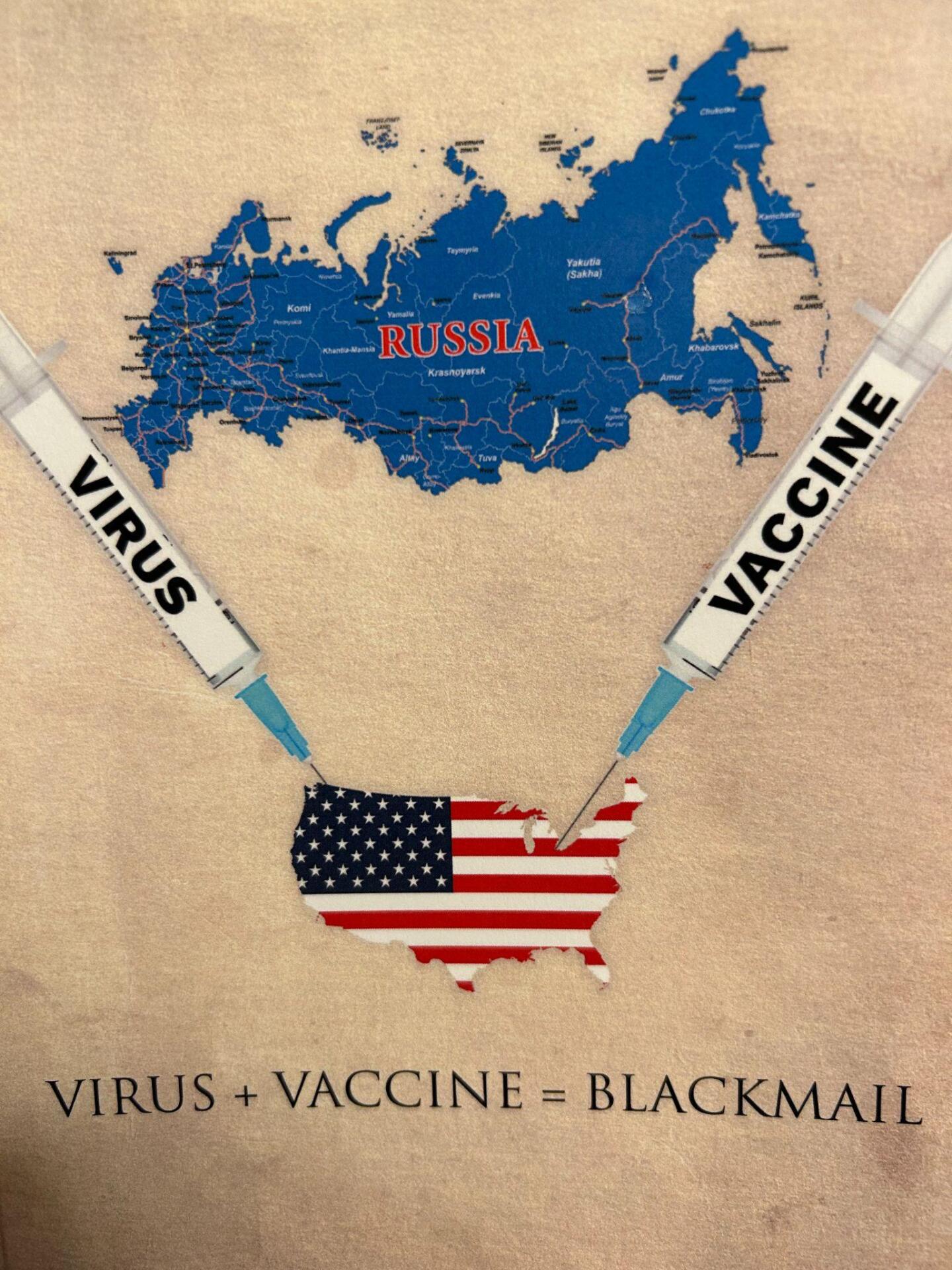
In 1976, the United States launched an unprecedented campaign to vaccinate every citizen against a mysterious strain of swine flu—an initiative abruptly halted within months. Forty years ago, while stationed in South Korea as a young officer in the United States Air Force, Dr. George Naddra connected that real-world enigma with Cold War tensions to write a bio-thriller manuscript on legal pads.
Following a distinguished military career where he attained the rank of colonel, twenty-two years as an executive for a major defense contractor, and a doctorate in public administration, Naddra witnessed global headlines mirror his long-shelved premise during the COVID-19 pandemic. Now published, Swine Flu 1976 examines bioweapons, political blackmail, and institutional secrecy—questions that take on heightened urgency amid rapid advances in artificial intelligence.
We sat down with Dr. Naddra to discuss the real historical events behind the book, the evolving risk of man-made pathogens, and why speculative fiction matters for national preparedness.
Q: Your novel, Swine Flu 1976, centers on a plot where the Soviet Union weaponizes a virus and blackmails the United States, requiring both nations to produce a targeted vaccine in complete secrecy. How did you first arrive at that concept?
Dr. George Naddra: I wrote the story forty-three years ago while stationed with the Air Force in Korea. The narrative works because it binds three historical realities together. First, the 1980s saw the emergence of the AIDS epidemic, which underscored global vulnerability to sudden outbreaks. Second, the Soviet Union was struggling to keep an iron grip on its satellite states across Eastern Europe.
The third anchor—and the foundation of the book—was President Gerald Ford’s decision in 1976 to immunize the entire American public against a novel swine flu strain. That campaign was controversial from day one, requiring public backing from Drs. Jonas Salk and Albert Sabin to build trust. Yet no other nation participated, and Washington called off the program after three months. That specific historical anomaly gave me the hook: What if the public explanation wasn't the whole story?
Q: How did you structure the narrative around those historical facts?
Dr. Naddra: The book splits into two distinct eras. The first part details the geopolitical leverage that forces the United States into a quiet, domestic-only vaccination drive under total secrecy. During production, two pharmaceutical scientists suspect the true agenda and end up silenced.
The story then leaps eleven years forward. At a class reunion, Dan Clayborne learns new details surrounding the suspicious "hunting accident" that killed his father—one of the key figures at that production plant. Dan starts digging into the 1976 campaign to understand why America stood alone in its rollout. The closer he gets to uncovering the Soviet plot, the more target-locked he becomes.
Q: You penned the manuscript in 1983, yet it wasn't published until 2021. Why did the project sit in a drawer for decades?
Dr. Naddra: In 1983, personal computers were hardly standard office tools, and I was handwriting everything on yellow legal pads. I didn't actually type the manuscript until after retiring from the Air Force in 1994. Back then, I sent it out blindly to half a dozen publishers and production houses hoping for interest. Without an agent or an understanding of the industry, nothing materialized, so I shelved it.
When the pandemic hit decades later, we were confined to the house like everyone else. My wife told me to dig out the old pages and finally get the story into print.
Q: With the rapid rise of AI tools and synthetic biology, do you see this type of biosecurity threat growing more feasible?
Dr. Naddra: I am not a bench scientist, but security analysts and researchers routinely publish warnings regarding the intersection of AI modeling and custom pathogen synthesis. The technical hurdles required to design or alter agents are shrinking. Viewed through modern technology, a scenario involving targeted biological blackmail is significantly more plausible today than it was in the Cold War.
Q: Some critics argue that writing detailed thrillers about engineered pathogens gives bad actors an instruction manual. How do you respond to that?
Dr. Naddra: A colleague brought up Tom Clancy's Debt of Honor right after my book came out. In that 1994 novel, an airliner crashed into the U.S. Capitol, which proved chillingly prescient years later.
My view is straightforward: security leaders and defense planners cannot prepare against threats they fail to imagine. Highlighting these structural weaknesses pushes policymakers to monitor supply chains, track research misuse, and build defensive countermeasures before an adversary takes the initiative.
Q: Between the pacing and the political intrigue, the novel reads like a screen adaptation waiting to happen. Is that in the cards?
Dr. Naddra: We discussed that when the book was featured on Spotlight TV, and viewers echoed that reaction. I would welcome an adaptation—though at my age, producers had better move before too long.
Dr. George Naddra holds an MBA from Wright State University and a Doctorate in Public Administration from the University of Alabama. He can be reached directly regarding his work and writing at GeorgeNaddra@gmail.com