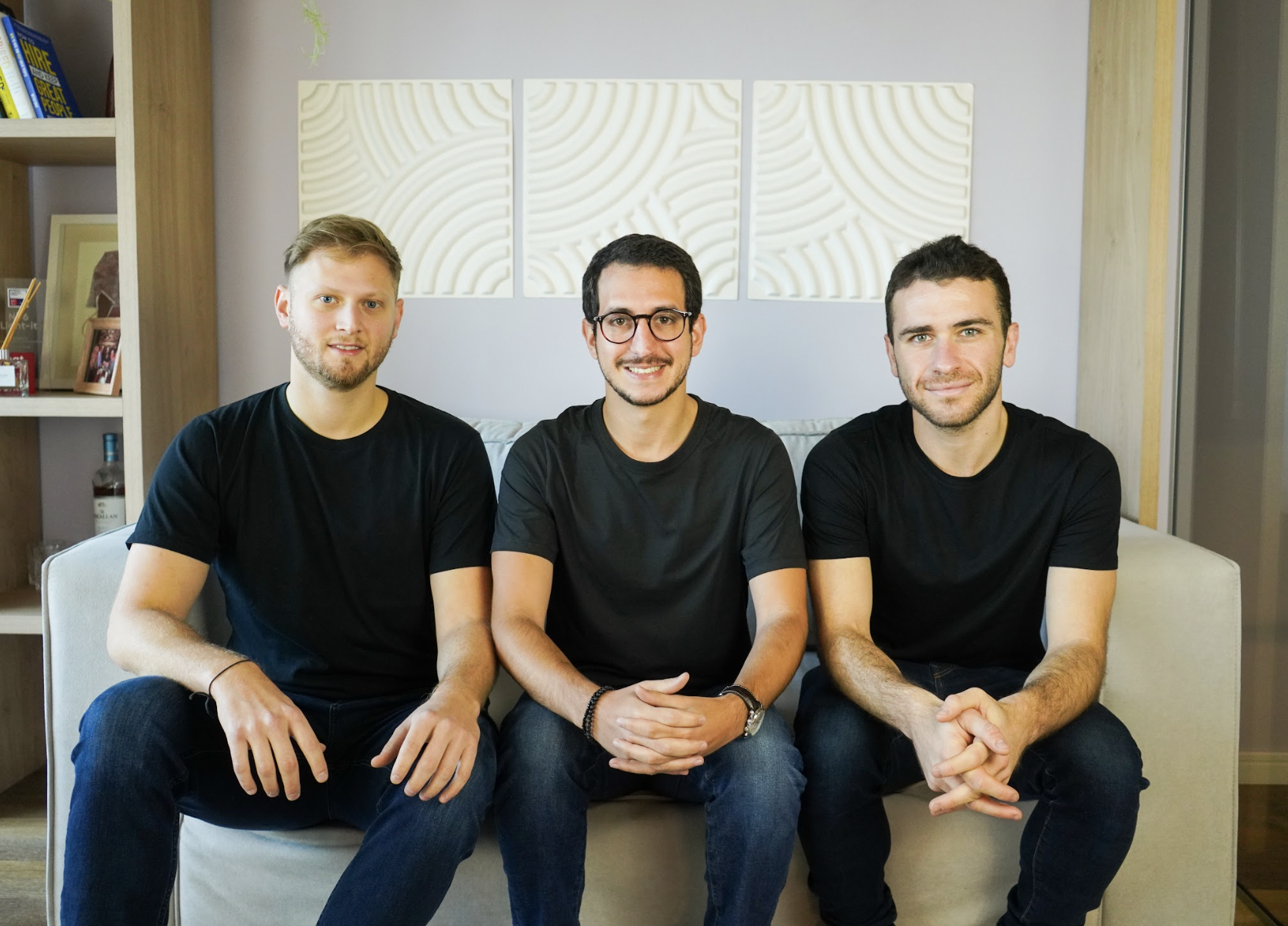
Light-it’s founding team: Javier Lempert, CTO; Alan Brande, CEO; and Martin Oppenheimer, COO.
Healthcare organizations face growing pressure to modernize legacy systems, connect fragmented patient data, and improve digital experiences. But healthcare software comes with requirements that go beyond those of most industries. Complex regulations, disconnected electronic health record (EHR) systems, and strict patient privacy requirements demand specialized expertise from the earliest stages of development.
Light-it is a healthcare software development company that combines product strategy, engineering, and AI to build digital health solutions for healthcare organizations and technology companies. In this Executive Q&A, Alan Brande, CEO and co-founder of Light-it, discusses how the company approaches healthcare software development, EHR interoperability, responsible AI implementation, and legacy system modernization.
Q: Developing healthcare software requires far more domain-specific rigor than standard consumer applications. What critical gaps in traditional software development led you to focus exclusively on digital health?
Alan Brande: Our healthcare projects showed us where general software development falls short. A consumer app can often launch, gather feedback, and improve over time. In healthcare, a missed edge case in a medication workflow or an unmapped field in an EHR integration can create patient safety or compliance risks. We kept seeing teams treat HIPAA as an end-of-project checklist, engineers learn HL7 and FHIR on the client’s budget, and designers ship workflows they had never seen a clinician use. So we chose to focus only on healthcare. Regulatory context, integration patterns and clinical workflows are now part of how we scope and build from day one. Our clients can move fast without paying for a partner’s learning curve.
Q: Interoperability and compliance often stall digital health projects before they reach the market. How does Light-it simplify complex EHR integrations and maintain enterprise-grade HIPAA compliance without slowing development cycles?
Alan Brande: We treat interoperability and compliance as architectural decisions, not separate project phases. We’ve built integrations with a wide range of EHRs, from enterprise systems like Epic and Athenahealth to API-first platforms like Canvas and Healthie. That means we usually know where the friction will be before a project starts: sandbox access, vendor approval timelines, and gaps between what an API exposes and what the workflow needs. We plan around those early so they don’t hold up the schedule. On HIPAA, the controls are built into the foundation. We identify and isolate PHI at the data model level. Access is role-based and audited, infrastructure runs on HIPAA-eligible services under BAAs, and security reviews run throughout delivery. The delays we see in this space almost always come from retrofitting compliance into a product that was built without it.
Q: Artificial intelligence is reshaping clinical workflows, yet medical organizations remain cautious about reliability and governance. How does Light-it design AI solutions that respect clinical context while protecting sensitive patient data?
Alan Brande: Clinicians make the care decisions. Our job is to help them access the right information faster, with outputs they can verify and trace back to their sources. In practice, a person stays in the loop for anything that affects care decisions. Models are grounded in the organization’s own protocols and data. Interfaces show sources so clinicians can check outputs quickly. PHI only reaches models through environments covered by BAAs. We de-identify data where the use case allows, enforce strict access controls and keep full audit logs.
We apply the same model to our own products. ClinicFrame, our ambient AI clinical documentation platform, and CompliantChatGPT, a HIPAA-compliant AI workspace for healthcare teams, were built under the same governance we use for client work. As an OpenAI Select Partner, we also follow how the underlying models change. That helps us judge what’s ready for clinical use.
Q: Legacy modernization is a high-stakes challenge for established medical organizations. How do your teams modernize core clinical infrastructure without disrupting daily operations or compromising data integrity?
Alan Brande: We don’t replace core systems all at once. Clinical systems carry years of workflows, edge cases and data that people rely on every day, so we modernize step by step. We start with discovery, mapping how the system is actually used, not just how it was documented, and find the components with the most risk and the most value. From there, we identify the components with the greatest risk and potential value. Depending on the architecture, we may introduce a modern API layer around the legacy system and replace individual components over time. Old and new systems can run in parallel until each new component has been validated in production.
Data migration gets its own validation track. That includes reconciliation checks, rollback plans, and sign-off from the clinical and operational owners before any cutover. If the front desk notices a migration on day one for the wrong reasons, it wasn’t planned well.
Q: Building digital health products requires close alignment between technical architecture and clinical usability. How does your internal Digital Health Innovation Lab test emerging tools to de-risk development for your clients?
Alan Brande: The Lab exists so our clients don’t have to be the first to test unproven technology in production. The team tests new AI models, frameworks and healthcare-specific services on use cases we see across our client base, such as clinical documentation, intake and triage, prior authorization and patient engagement. Each evaluation checks how the technology handles real clinical language and messy data, what it means for compliance, what it costs at scale, and how it behaves when it fails. What passes becomes reusable components and reference architectures our delivery teams bring into client projects. A failed evaluation is useful too, because a client never spends a sprint finding the same limitation. The Lab also works closely with our design team, since clinicians won’t adopt a product that adds clicks to their day, however solid the engineering behind it. Usability testing with clinical users is part of every evaluation.
Q: As remote patient monitoring, digital therapeutics, and specialized patient portals become mainstream, what key shifts will define successful healthcare platforms over the next few years?
Alan Brande: I see three shifts. First, platforms will be judged by how well they fit into care delivery. RPM programs, digital therapeutics and portals that sit outside the clinical workflow create more work for care teams. The platforms that win will integrate with the EHR, keep clinicians informed and connect to reimbursement. Second, interoperability is now a baseline requirement. Regulations like CMS’s Interoperability and Prior Authorization rule are pushing payers and providers toward standard FHIR APIs. Platforms that aren’t built for that will struggle to scale or sell to enterprises. Third, AI will increasingly support tasks such as documentation, triage, and patient outreach. The organizations that benefit will already have clean data, clear governance and their clinicians’ trust.
Healthcare organizations need technology that supports clinical reliability without sacrificing usability or the ability to evolve. That requires treating privacy, interoperability, and user experience as core architectural considerations rather than features to add later.
For Light-it, this means combining healthcare-specific engineering expertise with a practical understanding of clinical workflows, enterprise requirements, and emerging technologies.
To learn more visit Light-it