For more than two decades, inventor and systems developer Dr. Refael Aharon has worked on a question that sounds simple but has major industrial implications:
What if waste is not really waste?
Aharon’s newly launched website, RefaelAharon.com, brings together his work in textile recycling, cellulose and nanocellulose, wastewater resource recovery, PFAS and microplastics, Smart Sorting, and emerging infrastructure for AI and data centers.
The common thread is a concept he calls Waste Mining.
Rather than beginning with disposal, Waste Mining begins by asking what useful resources are already present inside a waste stream—and how those resources can be safely identified, separated, cleaned, recovered, documented, and converted into useful products.
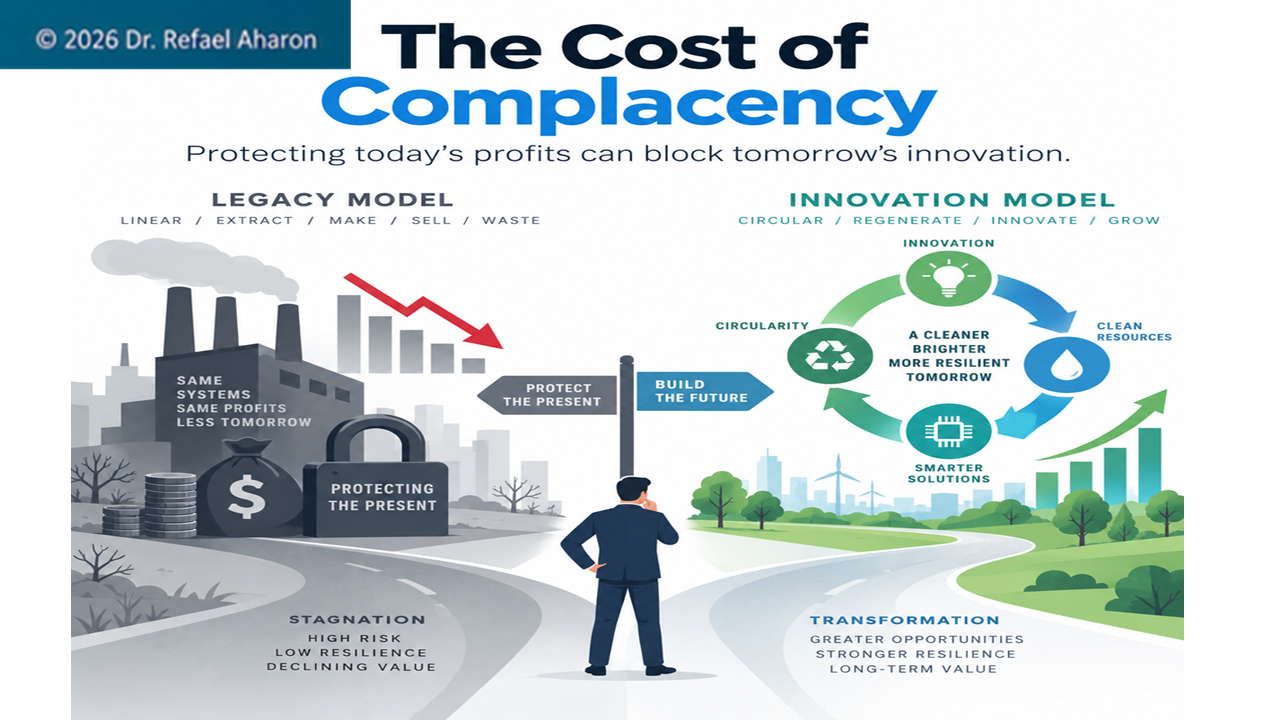
That changes the role of waste infrastructure.
Instead of simply collecting, transporting, exporting, downcycling, or disposing of unwanted material, the system becomes a kind of industrial recovery platform.
“Real sustainability has to be demonstrated through operating systems, measurable environmental performance, and transparent results,” Aharon says. “Environmental claims should follow the technology and the work, not replace them.”
Moving Beyond Conventional Recycling
Aharon argues that one of the weaknesses of conventional waste management is that it often begins too late in the process.
By the time a material reaches a recycler, critical information may already be lost: what the material contains, where it came from, whether it is contaminated, whether it contains PFAS or microplastics, and what its highest-value use might be.
His Waste Mining model therefore begins much earlier:
Identification → contamination screening → Smart Sorting → traceability → preprocessing → PFAS and microplastic mitigation → material recovery → documented outputs → auditable reporting.
The objective is not simply to build another recycling machine.
It is to create an integrated system capable of understanding a waste stream, identifying risks, recovering useful materials, documenting what happened to them, and producing verifiable environmental results.
That distinction is increasingly important as companies, governments, and manufacturers face growing expectations around traceability, extended producer responsibility, contamination, and circularity.
Turning Textile Waste Into Advanced Materials
One major application of this work is Harvest Nano Inc., Aharon’s textile-recycling and advanced-material platform.
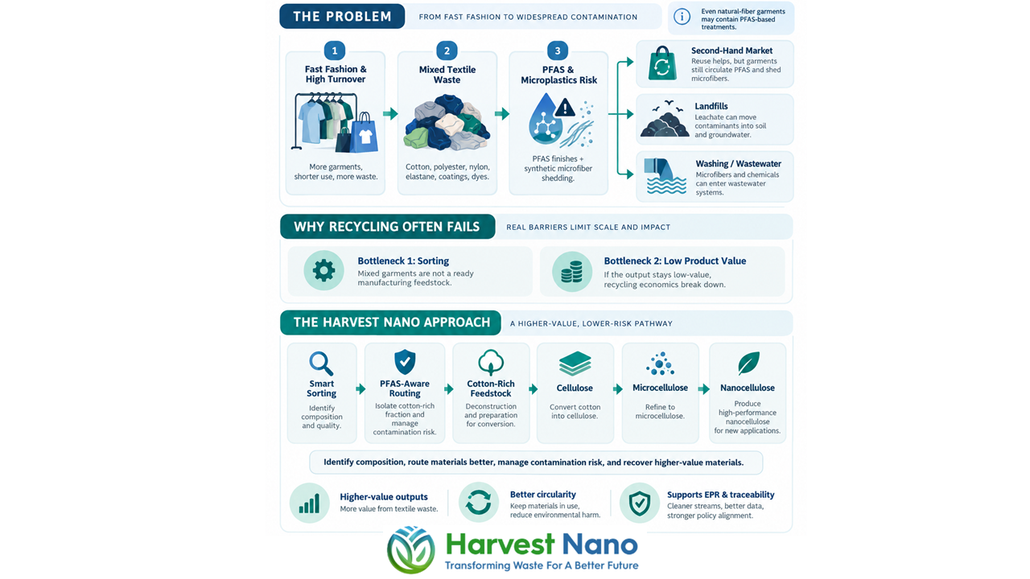
Used clothing is far more complicated than it appears.
A single textile stream may contain cotton, polyester, elastane, dyes, coatings, PFAS treatments, biological contamination, metals, and other chemicals. Different garments may require completely different processing pathways.
Aharon’s approach combines material identification and Smart Sorting with contamination-aware processing and recovery of higher-value materials, including cellulose, microcellulose, and nanocellulose.
Nanocellulose is particularly important because of its high surface area, strength-to-weight ratio, and potential applications across composites, coatings, adhesives, construction products, packaging, and other industrial materials.
But there is a major obstacle: cost.
Nanocellulose remains expensive to produce at scale.
Aharon’s work focuses on producing cellulose and nanocellulose from waste feedstocks and designing customized processing systems around the specific material being treated. The long-term objective is to reduce cost enough for nanocellulose to move beyond specialty applications and into much broader industrial use.
The technology has already moved beyond laboratory theory. Systems have been designed, built, operated, and tested; textile and wastewater-derived materials have been processed; PFAS has been detected; mitigation approaches have been explored; and cellulose, microcellulose, and nanocellulose pathways have been demonstrated.
Why PFAS and Microplastics Change the Recycling Conversation
Aharon believes the industry also needs to confront a difficult reality: recycling contaminated material does not automatically make the result sustainable.
Textiles can contain PFAS and other chemical treatments. Polyester and synthetic materials can generate microplastics during handling, shredding, washing, and processing.
That means responsible recycling requires more than simply diverting material from landfill.
It requires knowing what is in the material before processing begins, controlling contamination during treatment, and verifying what emerges at the other end.
For Aharon, that is one reason traceability and contamination screening are central to Waste Mining rather than optional additions.
The goal is not simply to say that something was recycled.
The goal is to know what was recovered, what contamination was removed or controlled, where the resulting material went, and whether the process actually produced an environmental benefit.
Wastewater Meets the AI Infrastructure Challenge
The same philosophy is being extended through Waste2Nano Inc.
Waste2Nano explores the intersection of municipal wastewater infrastructure, resource recovery, advanced materials, and the rapidly expanding demand for computing infrastructure.
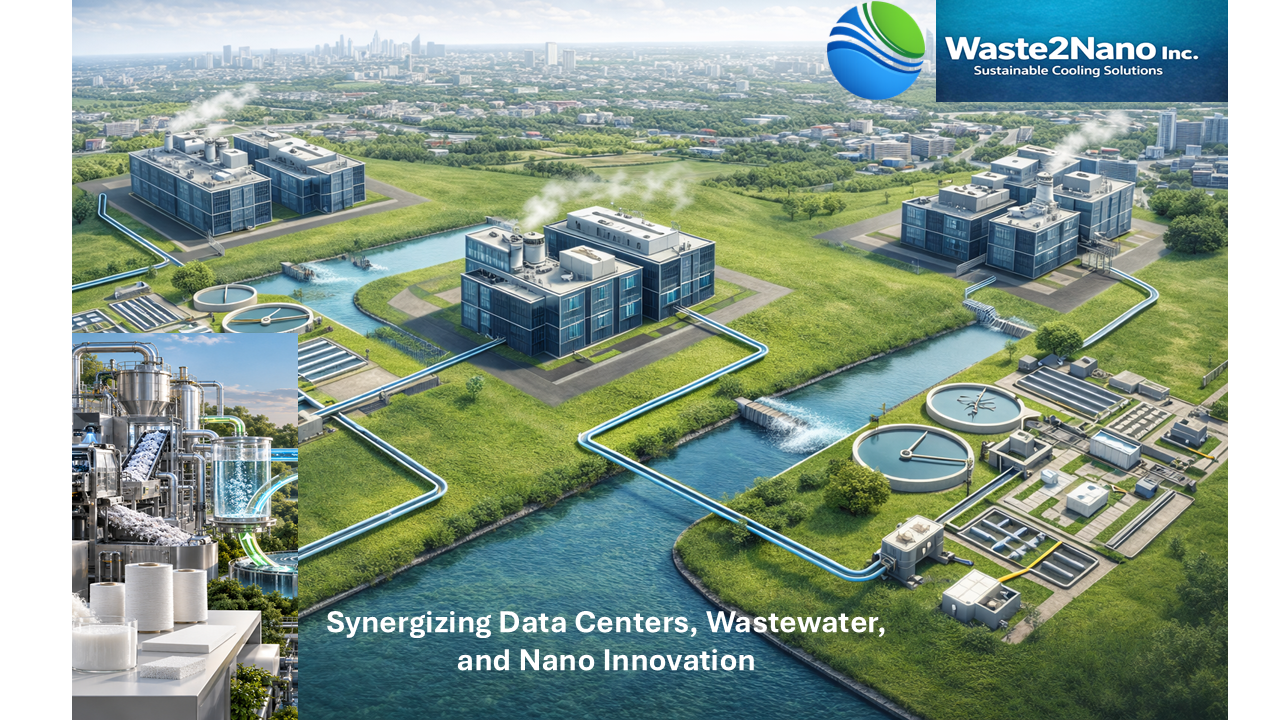
AI and data centers require large amounts of cooling and energy. Wastewater treatment plants, meanwhile, handle enormous volumes of water, residual solids, and recoverable thermal and material resources.
Aharon sees an opportunity to connect the two.
Municipal or reclaimed wastewater could support data-center cooling. Waste heat generated by computing infrastructure could support wastewater treatment and resource-recovery processes. Wastewater solids and other residual streams could then become feedstocks for cellulose, nanocellulose, and other useful materials.
The concept can be summarized simply:
Water cools computing → computing produces heat → heat supports treatment and recovery → waste becomes material → water infrastructure improves.
Instead of constructing isolated systems that compete for water and energy, Waste2Nano looks at whether they can be designed as interconnected infrastructure.
The Economics of Waste Mining
Aharon also sees Waste Mining as an economic idea.
Traditional waste systems have established revenue points around collection, transportation, resale, export, treatment, and disposal.
Recovering higher-value materials can disrupt those structures.
That is part of the challenge.
True circularity may require changing infrastructure, incentives, and business models—not simply adding a sustainability label to an existing waste-management system.
Aharon argues that the meaningful measures should be operational:
How much material was recovered?
How much contamination was reduced?
How much water or energy was saved?
What usable products were created?
Can the result be traced and independently verified?
“We should not fear technologies because they disrupt an existing model,” he says.
From Individual Technologies to an Integrated Platform
The new website brings these projects together for the first time.
Harvest Nano focuses primarily on textiles, Smart Sorting, contamination-aware recycling, PFAS and microplastic issues, and cellulose/nanocellulose materials.
Waste2Nano extends the same engineering philosophy into wastewater, resource recovery, cooling infrastructure, waste heat, and advanced-material production.
The site also presents Aharon’s patent portfolio and his book, The Waste Mining Revolution, which examines the economics, regulatory environment, engineering challenges, and hidden value contained within modern waste streams.
For Aharon, however, the central message is less about any single technology than about changing how waste problems are approached.
“I have spent much of my life developing technologies and real machines intended to turn difficult waste streams into valuable resources,” he says. “I want this work used by people and organizations that genuinely care about the environment.”
The next stage is collaboration.
Aharon is seeking municipalities, manufacturers, recyclers, wastewater operators, engineers, data-center developers, researchers, investors, and infrastructure partners interested in moving from environmental promises toward measurable systems and real-world implementation.
RefaelAharon.com
Contact:
Dr. Refael Aharon
refael@waste2nano.com