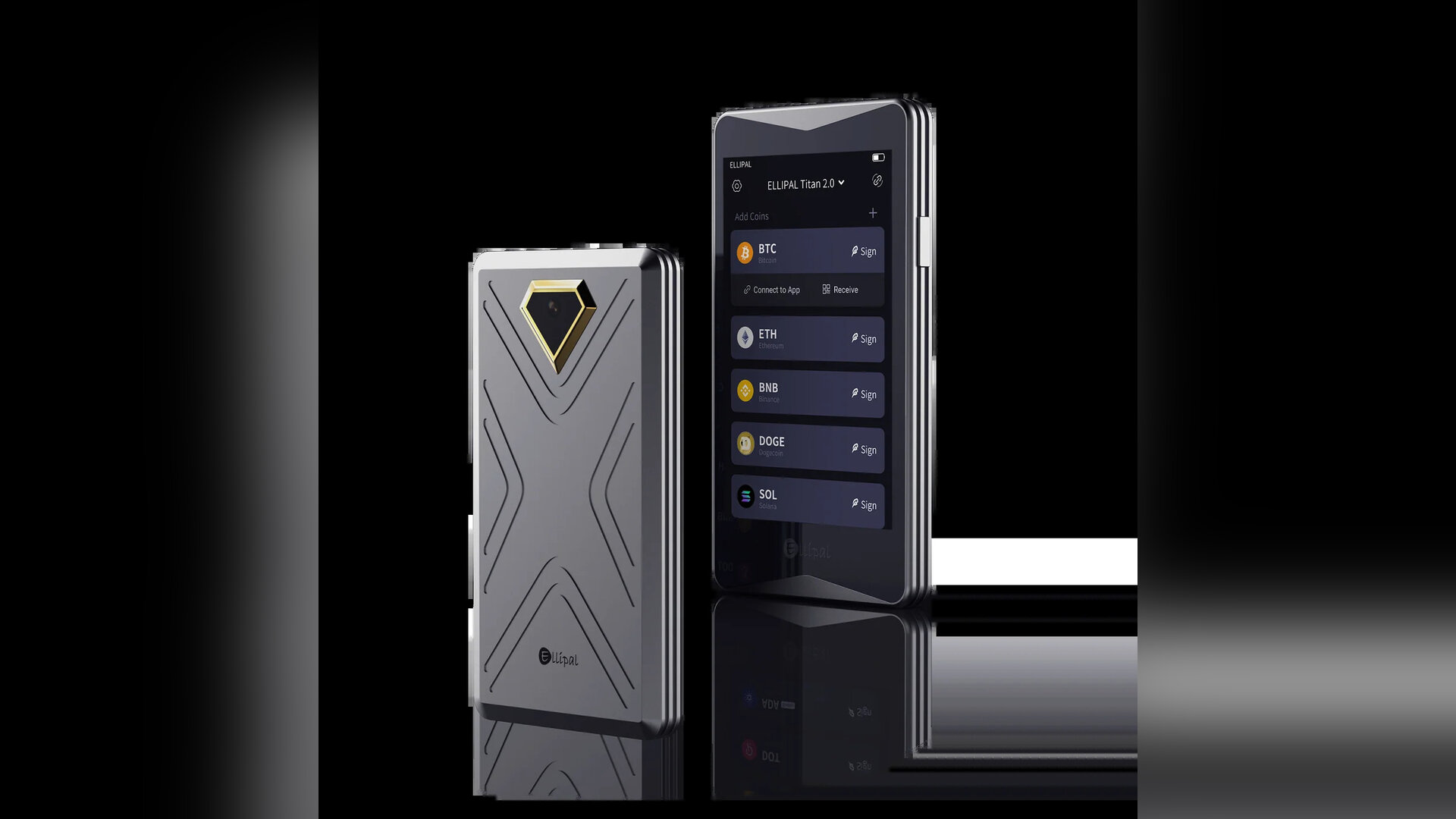
Digital asset holders face persistent threats from online theft, exchange collapses, and sophisticated phishing schemes. Relying on centralized platforms or internet-connected software wallets leaves private keys exposed to malware and remote exploits. At the same time, many conventional hardware wallets rely on USB connections or wireless links, creating potential attack surfaces that make everyday users uneasy about managing their own funds.
David Tian founded ELLIPAL to solve this vulnerability through true cold storage. By creating fully air-gapped hardware wallets like the Titan 2.0 and portable NFC solutions like the X Card, ELLIPAL keeps private keys completely offline while maintaining mobile usability. In this executive Q&A, Tian discusses the mechanics of air-gapped security, supply-chain defense, and how ELLIPAL simplifies self-custody for digital asset holders around the world.
Q: Centralized exchanges and hot wallets continue to expose crypto investors to security breaches. What core vulnerabilities in traditional storage inspired you to launch ELLIPAL?
David Tian: When we founded ELLIPAL, we saw a fundamental contradiction in crypto: blockchain gives people ownership, yet many still depend on third parties to protect their assets. Exchanges introduce custodial risks, and internet-connected wallets face remote threats. We believed private keys should never need to touch the internet, and protecting crypto should not require technical expertise. That belief became the foundation of ELLIPAL: making genuine self-custody both secure and accessible.:
Q: The ELLIPAL Titan 2.0 relies on an entirely air-gapped architecture with QR code data transmission. How does this system eliminate attack vectors compared to standard USB or Bluetooth hardware wallets?
David Tian: Air-gapped security removes the need for a direct electronic connection between the wallet and an internet-connected device. Titan 2.0 transfers transaction data through QR codes while keeping private keys offline and signing transactions on the device. This reduces the remote attack surface associated with connected interfaces. We also emphasize clear signing, so users can review transaction details before approval. Our philosophy is simple: See it. Check it. Sign it.:
Q: Physical tampering and supply-chain attacks are major concerns for hardware wallet users. How does ELLIPAL's sealed metal body and built-in self-destruct mechanism safeguard user keys against physical compromise?
David Tian: We believe security must address both remote and physical threats. The Titan series uses a sealed metal enclosure to make unauthorized access more difficult and tampering more evident. Its anti-tamper protections are designed to protect sensitive information in certain physical intrusion scenarios. No device is absolutely invulnerable, which is why we take a layered approach combining offline architecture, secure hardware, physical protection, and user verification. Real security is a system, not a single feature.:
Q: Many users find cold storage intimidating, which often delays their shift to self-custody. How does the ELLIPAL X Card bridge the gap between everyday convenience and cold storage protection?
David Tian: For years, security and convenience have been treated as competing priorities. X Card is our effort to change that. With NFC, users interact with their wallet by tapping a card with a smartphone—without charging a battery or connecting a cable. They can get started in minutes, use multiple cards for backup or separate wallets for different purposes, and import an existing wallet using its recovery phrase when compatible. Our goal is to make self-custody feel natural while keeping users in control of their keys.:
Q: The ELLIPAL app allows users to trade, stake, and connect to decentralized applications across dozens of blockchains. How do you balance seamless Web3 utility with strict offline key isolation?
David Tian: Our principle is simple: the hardware wallet protects your keys, while the app helps you use your assets. The ELLIPAL App supports asset management and access to services such as swaps, staking, and decentralized applications, while transaction authorization remains on the hardware device. This separation helps users participate in Web3 without placing private keys in an internet-connected environment. Offline keys do not remove smart-contract or phishing risks, so clear verification and user education remain essential.:
Q: As institutional adoption rises and regulatory standards tighten, where do you see the self-custody landscape heading over the next few years?
David Tian: I believe self-custody will become a fundamental part of digital asset infrastructure. As crypto expands beyond trading into payments and long-term wealth management, independent control will matter more. The biggest obstacle is still complexity. The next generation of wallets must pair strong security with consumer-level simplicity. At ELLIPAL, Titan serves users seeking advanced hardware protection, while X Card makes everyday self-custody more approachable. Our long-term vision is to make self-custody the default, not the exception.:
The discussion with David Tian underscores that true financial sovereignty depends on uncompromising private key security. By combining 100% air-gapped hardware with verifiable QR code signing, ELLIPAL removes the network risks that plague hot wallets and connected devices. Their two-tier approach—pairing the vault-grade Titan series with the pocket-sized X Card—proves that robust cold storage does not have to come at the expense of everyday usability.
As digital assets integrate further into global finance, individual ownership and self-custody will become fundamental requirements for investors. Platforms that eliminate single points of failure while streamlining the user experience will lead this transformation. Through continued hardware innovation and rigorous anti-tamper engineering, David Tian and ELLIPAL provide the dependable tools users need to protect their wealth independently.
To learn more visit https://www.ellipal.com/