QRivacy offers a free, wearable QR code that lets people flag non-consent and be directed to footage of themselves online, amid growing scrutiny of covert recording by smart glasses.
Meta’s Ray-Ban and Meta Glasses lines have been facing fierce backlash online after a string of covert recordings, and the response has moved well beyond social media as the legal system struggles to keep pace. Courts in the UK and US have banned the devices outright, and convention organiser Monopoly Events barred Meta glasses and other wearable recorders from its Comic-Con events after attendees and guests raised covert-filming concerns.
A backlash that’s already reshaping public spaces
Smart glasses put a camera at eye level with no phone to hold up and no obvious tell that recording has started.Independent trackers estimate TikTok alone receives somewhere between 23 and 34 million video uploads a day, while YouTube’s own long-standing figure puts video uploads at roughly 500 hours of footage every minute. Meta doesn’t publish upload volumes for Instagram or Facebook, but smart glasses shipments are accelerating: the wider category of camera-equipped smart glasses grew 167% year-on-year in the first quarter of 2026, with Meta capturing roughly 69% of that market.
Meta has responded with some soft fixes of its own, enlarging its recording indicator light and moving to close a loophole that lets wearers cover or tamper with it to keep filming undetected. Privacy advocates argue the fix doesn’t address the underlying problem: bystanders still have no way to know they were caught on camera once footage has left the room, and in most jurisdictions filming someone in public isn’t a privacy breach in the first place. The copyright in that footage belongs to whoever filmed it, not the person in it, leaving a platform takedown – often a confusing and cumbersome process – as the only realistic route back to control.
“Not everyone wants to be content,” say Keith Breavington, co-founder of QRivacy. “Getting that content taken down, usually after it has already hit maximum spread, is one thing. The real battle with all types of covert recording is how to even know you were filmed in the first place.”
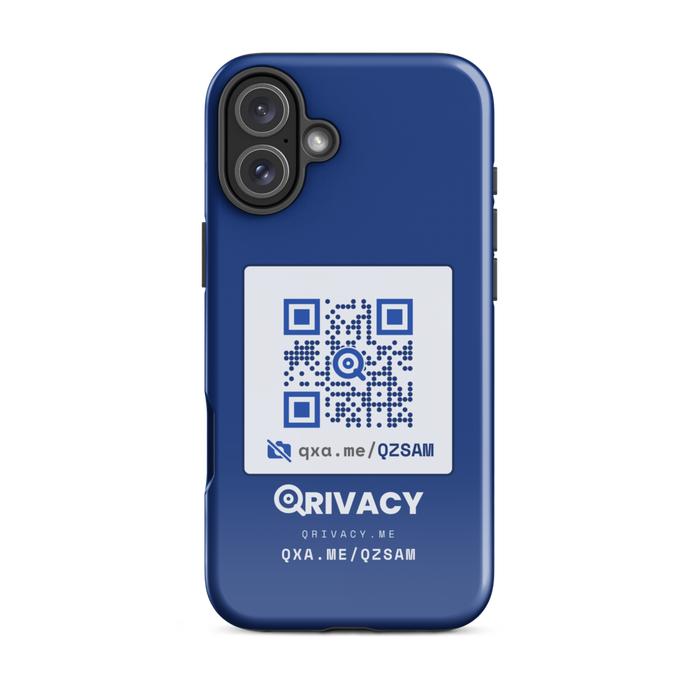
QRivacy is a free tool that lets people flag that they haven’t consented to being filmed and find out where their image has been used online. Built around a single wearable QR code, anyone who spots it in a photo or video online can scan it and anonymously tell the wearer where it appeared with no account or sign-in required. The wearer gets an alert, a private log of every sighting, and step-by-step guidance for getting the content taken down.
“Allowing for anonymous reporting and giving everyone the power to say ‘hey, you’re in this video online’ shifts the power balance,” Breavington adds. “We tried to make it as easy as possible, hence the idea of not needing an account. If you see someone wearing or holding a QRivacy code, scan the code. It really is that simple.”
Regarding the decision to make the tool entirely free and without any feature paywalls or advertising, Breavington was quick to respond: “We wanted to get this system into peoples’ hands immediately. Implementing a business model would have slowed things down, and there won’t be an opportunity to put the genie back in the bottle. We’re at a real precipice and it affects everyone, some to a particularly dangerous degree.”
When being seen is more than embarrassing
For most people, an unwanted cameo online is an inconvenience, but there have already been cases of serious fallout due to uploads created from smart glasses recordings.
A Brazilian bank employee was filmed in December 2024 refusing to swap her plane seat on a domestic flight; by March 2025 she said the fallout had cost her the banking career she’d built. A BBC investigation published in January 2026 found dozens of male influencers using Meta’s smart glasses to secretly film women without their knowledge. One case involved a 21-year-old filmed on her lunch break, whose footage reached 1.3 million views on TikTok and showed her phone number on screen, prompting a flood of unwanted messages and calls. Another woman was filmed on a West Sussex beach in summer 2025 and, unaware she was being recorded, disclosed details about her employer and family to the man filming her.
Serious concerns have also been raised for survivors of domestic abuse and stalking, protected witnesses, and people who have relocated to escape coercive control or trafficking since they can have their location exposed by a single clip they never knew was taken. In the UK, research by Refuge has found that 1 in 3 women have experienced online abuse at some point, and data gathered for the Crown Prosecution Service found that effectively all reports made to the National Stalking Helpline involved some form of digital stalking.
How QRivacy works
QRivacy wearers claim a unique QR code, worn as a pin, patch or sticker. The code carries no name, email or personal detail, only an anonymised identifier. If someone sees it in content online, they scan the code, land on a page confirming the wearer hasn’t consented to being filmed or photographed, and are asked to remove or anonymise the person before publishing. They can then submit the link anonymously through a simple form, no account required.
The wearer sees every sighting reported against their code in a private dashboard, along with platform-specific guidance for requesting removal and signposting to services providing emotional and mental health support. QRivacy never learns who reported a sighting, and the person reporting never learns who the wearer is. There’s no facial recognition, no scanning of the internet, and no image-matching involved: every sighting comes from a person who noticed the code, not from automated surveillance.
QRivacy is freely available now at https://qrivacy.me/. Guidance on getting footage removed from major platforms is also freely available via the website without claiming a code.