Marijke McCandless is an award-winning author, mindfulness coach, and playfulness instigator who helps others shed their inhibitions and skinny dip in the present moment.
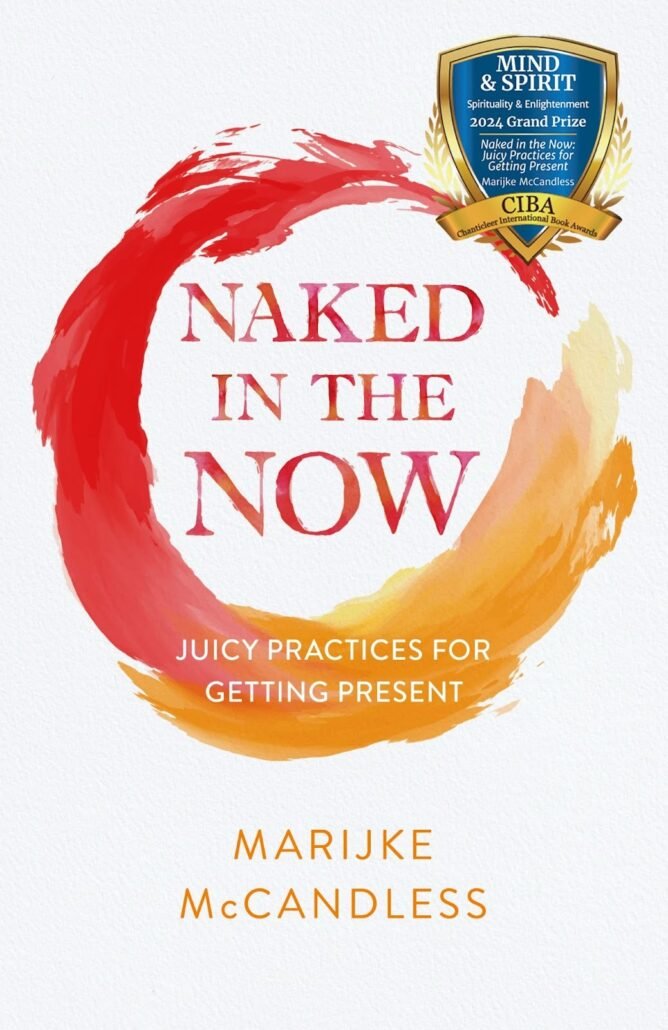
Her latest book, Naked in the Now: Juicy Practices for Getting Present (Collective Ink, 2024), has earned wide acclaim, including the Grand Prize at the CIBA Mind & Spirit Awards, a Gold Medal at Readers’ Favorite, and honors from the Wishing Shelf and NIEA Awards. It was named a 2026 Mindful Upgrade by New York Lifestyle Magazine and featured in Spirituality & Health’s “Books We Love.” Kirkus Reviews gave it a “Get It” verdict, calling it “refreshingly uncomplicated ways to improve relationships with a partner or with oneself,” while Publishers Weekly’s BookLife Prize described it as “inviting, simple, and motivating… comprehensible and easy to navigate.”
She is also the author of More: Journey to Mystical Union Through the Sacred and the Profane, an award-winning memoir with a devoted readership.
Marijke is the creator of the Naked Writing method — rooted in the contemplative writing tradition and her decades of awareness practice — shared through Write Now Mind, a global writing and awareness community she founded during COVID. The practice was featured by Arianna Huffington on Thrive Global as an example of a life-changing habit.
Her essays and articles have appeared in Spirituality & Health, Thrive Global, Woman’s Day, Best Self, More to Life Magazine, and The Seattle Times, among others, and she was profiled in RJ Magazine (Las Vegas Review-Journal).
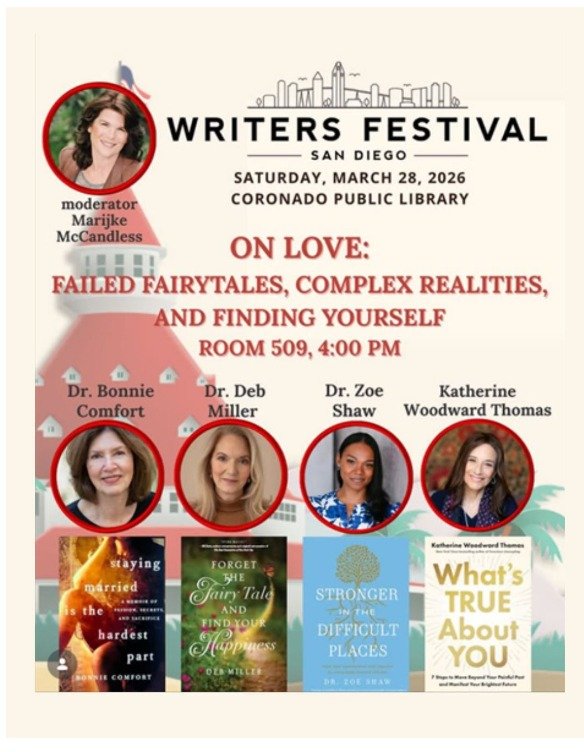
Join her on March 28th at the San Diego Writers Conference.
Tell us about your workshops and retreats.
In the last five years, teaching has become a devotion. I work at the intersection of awareness practice and writing, rooted in my belief that when we allow words to flow without interference, our natural voice gets heard — and the themes that want to be expressed through us begin to surface.
I’ve worked with writers across the full spectrum — complete beginners to highly skilled practitioners — in settings ranging from intimate workshops of a few writers to retreats with nearly a hundred participants, such as Outwild™. I teach monthly in-person workshops in Las Vegas through Write by Red Rock, and I lead Write by the Sea — a weekly writing practice I originated in Loreto, Baja California. During COVID, I founded Write Now Mind, a virtual writing and awareness community that continues to draw participants worldwide, generating a profound sense of connection among strangers who have never met or even seen each other. Arianna Huffington featured the practice on Thrive Global as an example of a life-changing habit.
I’ve also guest taught at the University of San Diego Extension, San Diego Writers Ink, and with the International Memoir Writers Association, and have led retreats on my own and in collaboration with others — including Marni Freedman, co-founder of the San Diego Writers Festival and the International Memoir Writers Association. I’ll be moderating a panel at the San Diego Writers Festival this year and teaching multiple workshops at the Las Vegas Writers Conference this spring.
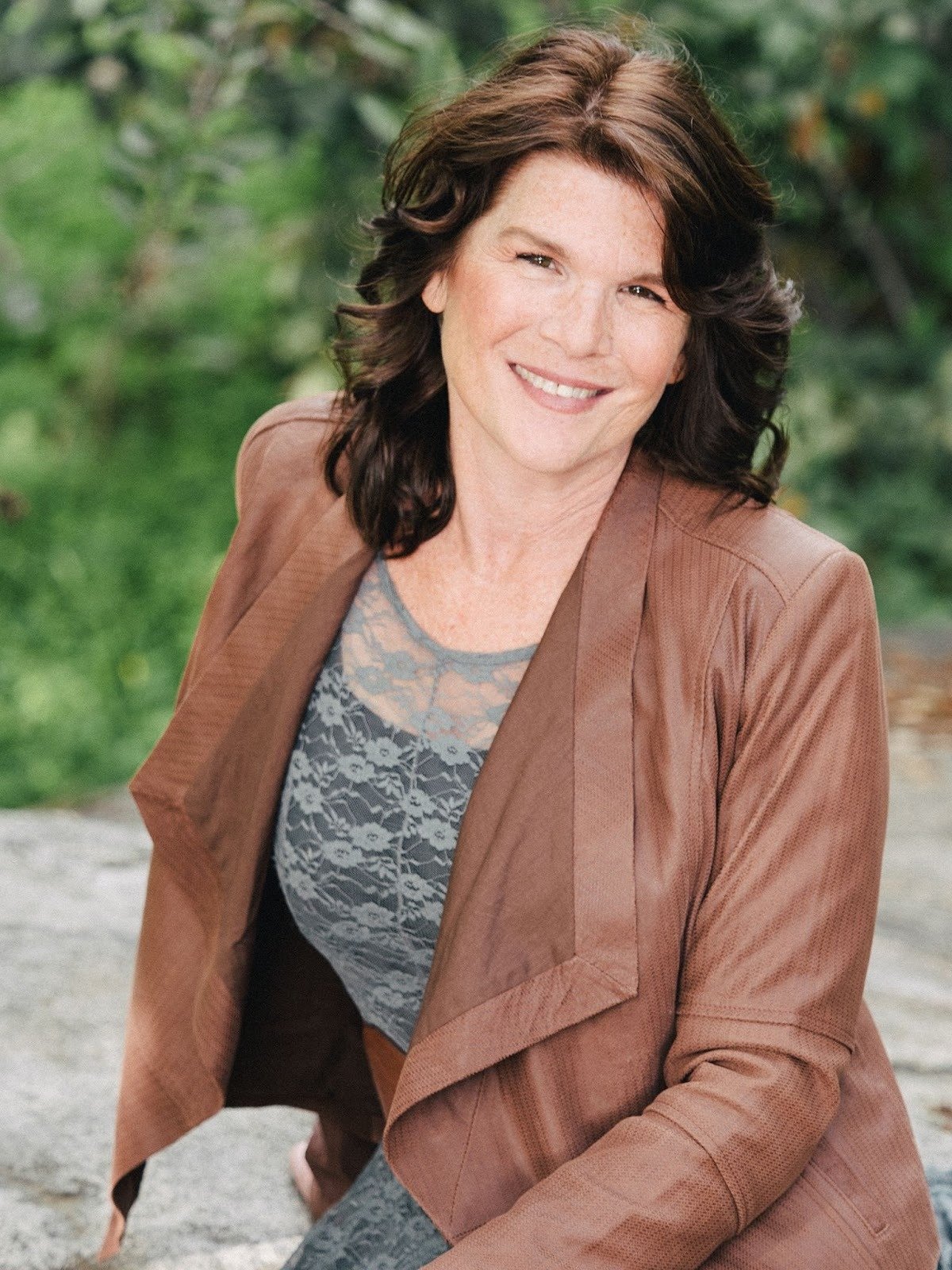
Photo Credit- Chad Thompson, Monkey C Media.
Share your signature Naked Writing method.
At a writing workshop I led for Outwild™ beside the South Fork of the American River — with nearly a hundred hikers, climbers, and adventurers, most of whom didn’t consider themselves writers — a man responded to a simple open-ended, two-word prompt and found himself writing about his mother’s deathbed. Gratitude tangled with regret. Love that was imperfect yet full. His voice trembled. Almost everybody wept. He had entered the session guarded and left open — and in five raw minutes, so had the rest of us. What draws people in is never polished perfection — it’s authenticity.
That is the power of Naked Writing. The practice speaks to something I believe is true for all of us: that we have a curious dual need — for inward soul-searching and outward expression.
People often ask, “Isn’t this just journaling?” Not exactly. Journaling tends to look backward — recording a day, reflecting on feelings, making sense of an experience. Naked Writing is presence-based. Raw expression without agenda or polish. Journaling records. Naked Writing reveals. For many of us, perfectionism and self-censorship are constant hurdles — Naked Writing bypasses both. That raw material often contains the unexpected gold that later shapes our most powerful work.
We start by following four simple rules — borrowed from writing practice pioneer Natalie Goldberg: keep your hand moving, be specific, lose control, and don’t think. The prompts are deliberately brief, often just two or three words — the grease that gets the writer moving. What matters is not staying on topic but following what surfaces.
What makes it especially powerful is the second layer: the sharing. Writers read aloud without apology, and the group listens with deep, supportive attention — not critique. I liken it to belaying a climber: our job is to keep the writer safe enough to dare. But the magic works in both directions. When we witness someone else sharing their uncurated thoughts — raw, unpolished, unperformed — something in us relaxes. We see what becomes possible when the guard comes down. And that makes us braver, too.
What will people notice when working with you?
I bring an unusual combination to my teaching: a background in awareness practice and an entrepreneurial spirit that helped me found several businesses, taking me from top executive corporate boardrooms to mountain faces to silent retreats in the Sierra Nevadas to writing retreats on the Sea of Cortez. But what shapes my teaching most deeply is something harder to put on a resume.
I’ve learned that we have to be willing to face the most difficult corners of a life honestly — within ourselves and on the page — and find the words anyway. The most important thing I can offer is not technique but a safe enough container for truth to surface.
They’ll also notice the playfulness. I call myself a playfulness instigator for a reason. To me, play means being lighthearted as often as possible — participating naturally, without agenda, remembering to accept everything as it comes. Life is bound to have “hard” times—people get sick, people die, pandemics come along—but when I approach these with a light-hearted attitude of openness and willingness, I am much better prepared to respond than when I waste energy resisting and arguing with what is. I think people will see that for me frivolity and unstructured time are as important as discipline, because it’s play that keeps the creative, wild, messy spirit alive. Disciplined play and serious craft are not opposites — they need each other.
I model what I teach. I rock climb, travel, work hard, seek out beauty, and love listening to strangers. Writers who are awake to their own lives write better — and I try to live that way. At my workshops, people often arrive guarded and leave open and surprised by what they wrote. That transformation is what I love most.