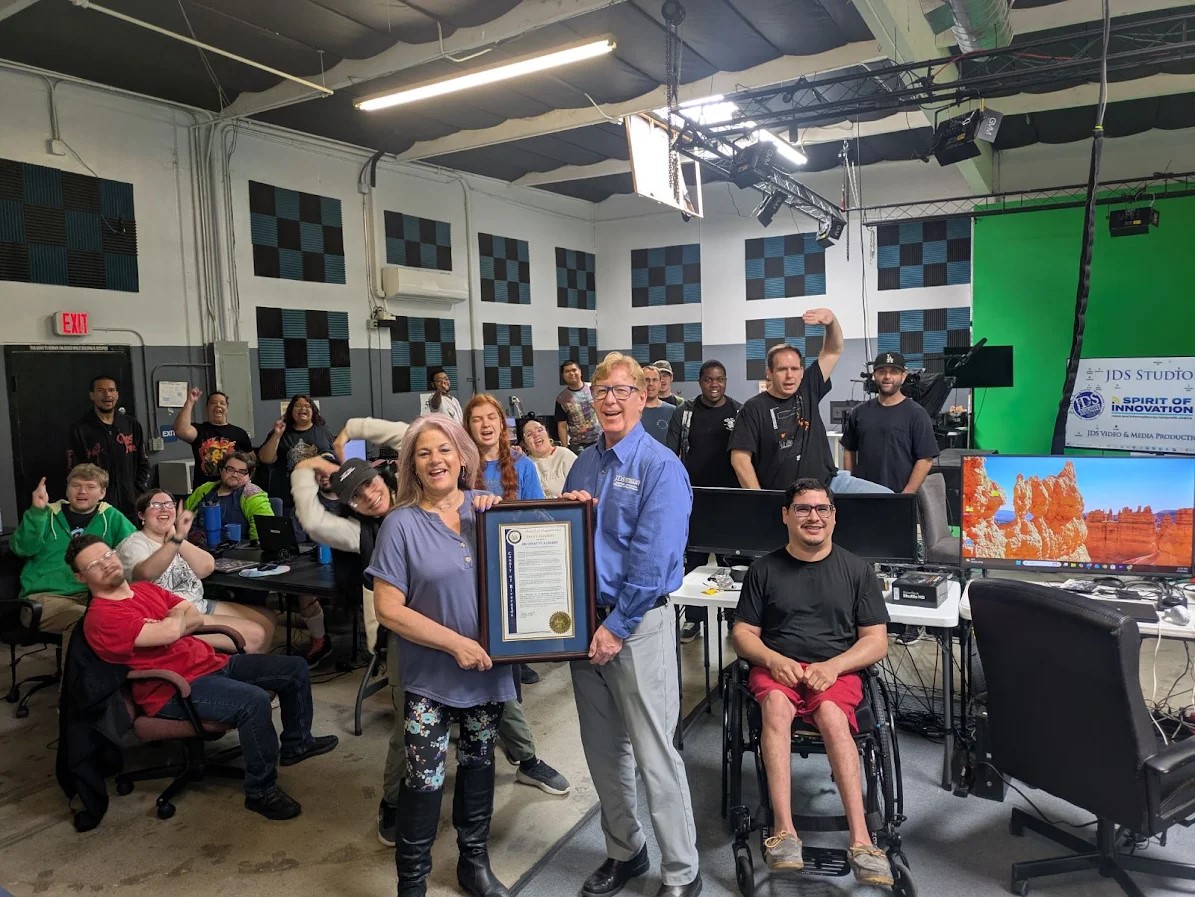
Access to education and training in the visual, performing, and digital arts remains limited for many individuals. While creative fields drive modern economies, entering these industries often requires resources and connections that are hard to secure. Communities need inclusive platforms that bridge this gap and provide practical workforce development for diverse populations.
Diane Strand and JDS Creative Academy offer a direct answer to this challenge. As a nonprofit organization based in Temecula, California, JDS Creative Academy provides essential hands-on training to aspiring creatives. The academy recently marked a major milestone by expanding its television series, Spirit of Innovation: Arts Across America, to national streaming platforms like Amazon Fire and Roku. We sat down with Diane Strand to discuss the academy's 10-year journey, the importance of inclusive education, and what it takes to bring community stories to a nationwide audience.
Q: JDS Creative Academy is approaching its 10th anniversary. Looking back at the past decade, what are you most proud of regarding the organization's growth and its impact on workforce development?
Diane Strand: Actually, JDS Creative Academy has completed its 12th year, and we're now in our 13th! When I look back, what I'm most proud of is how we've taken creativity and turned it into real workforce pathways.
We have a California state-approved apprenticeship program connected to 10 O*NET codes within the entertainment industry, along with pre-apprenticeship programs connected to four school districts that can help prepare students to move into those career pathways.
We also took what we learned through workforce development and built our Title 17 program for adults with developmental disabilities. That program combines workforce training and education with independence, skill-based learning, life skills, and real-world opportunities.
We've now placed at least 13 individuals into workforce opportunities, and I think we've actually reached 14! Those are the moments I'm incredibly proud of because we're seeing what happens when training turns into opportunity.
But there is another kind of impact that isn't as easy to count. It's the person who watches our television show, attends DigiFest®, comes to a performance or community event, discovers us through social media, or watches a loved one find confidence and purpose through one of our programs.
When I stop and think about how many people we've reached in all those different ways, it still stops me in my tracks.
That's impact, too.
Q: The academy focuses heavily on creating an inclusive environment for diverse populations. Why is this specific focus so critical for the future of the visual and digital arts industries?
Diane Strand: Because human beings, by nature, are diverse. We come from different backgrounds, have different abilities, experiences, perspectives, and ways of seeing the world, and creativity thrives on those differences.
When you're creating, entertaining, or educating, diversity of thought allows you to imagine someone else's experience, share your own story, and help another person discover how to tell theirs.
I don't think that's only critical to the arts industry. It's critical to human connection, and the arts give us tools to build that connection.
Think about theater. You can go into almost any community, anywhere in the world, get involved with a theater program, and find your people. You find collaboration. You find communication. You find a place to belong.
The same principles apply to life and business. We have to communicate our ideas, understand different perspectives, collaborate with people who aren't exactly like us, and learn how to tell stories that connect.
Diversity isn't simply something the arts include. Diversity is part of what makes the arts, and human connection, really work.
Q: Your television series, Spirit of Innovation: Arts Across America, recently expanded to the Binge Network, Amazon Fire, Roku, and ABC local affiliates. How does this national reach change the way you approach storytelling?
Diane Strand: I don't think it changes how we approach storytelling as much as it expands who we're able to tell those stories to.
We've always built Spirit of Innovation: Arts Across America around good-to-know, need-to-know, innovative, educational, and creative stories stories people can take something from regardless of where they live.
A business, nonprofit, innovator, or community we feature might be thousands of miles away from you, but you can still watch what they're doing and ask, "What could an idea like that do in my community?"
That's really the point.
We want to bring new ideas, different ways of thinking, creativity, innovation, and business ingenuity forward so people don't simply watch a story. We want them to see what's possible.
Great storytelling doesn't just tell you what someone else is doing. It can inspire you to imagine what you could do next.
Q: The show features a wide range of guests, from everyday community innovators to well-known figures like Cheech Marin. What specific elements make a story "worth sharing" on your platform?
Diane Strand: Something innovative. Something creative. Something educational. And sometimes, simply something people need to know.
We're very open to ideas. In the eight years we've been producing the show, there aren't many stories we've simply turned away. Sometimes we need to find the right way to tell a story, or the timing has to be right. A time-sensitive story may need to take precedence, while another great story might wait until its moment comes around.
What matters editorially is that the story offers value to the audience.
We don't want something that's simply promotional. There is a place for promotional content and sponsored opportunities, but an editorial story should give the viewer something; an idea, information, inspiration, education, or a different way of looking at the world.
So if you're doing something innovative, educational, creative, impactful, or simply something people need to know about, we want to hear the story.
Q: Spirit of Innovation won multiple Telly Awards, including honors in the Diversity and Inclusion category. How do your job-training participants directly contribute to the production of these award-winning segments?
Diane Strand: In all aspects!
We've had segments that our participants have written, shot, hosted, and edited themselves, and those segments have won awards. The work was theirs. We provided the structure, training, mentorship, and guardrails, but they created the work.
Our participants also contribute throughout the larger production process. They're running cameras, learning the flow of a television production, working in different crew positions, shadowing professionals, developing technical and communication skills, and then stepping into those roles themselves. Some have taken segments all the way through post-production and editing.
That's what workforce training should look like.
They aren't standing on the sidelines watching somebody else make television. They're making television.
They're members of the production team, and their contribution matters just as much as Scott and mine when we're hosting, directing, producing, or helping bring the show together.
That's how you build a workforce pathway: you teach the skill, create a safe environment to practice it, provide real-world experience, and then create opportunities for people to use what they've learned.
Q: As both the academy and the television series continue to grow, what is your primary goal for spreading the arts across America over the next few years?
Diane Strand: Well, it's quickly becoming Arts Across America and the Globe!
And that isn't just an idea anymore. I'm currently in Kenya, where Scott and I have been experiencing firsthand what can happen when creativity, education, leadership, and opportunity cross borders.
We've visited schools, connected with educators and leaders, seen the impact technology and education can have on young people, and explored ways to bring more arts-based learning and creative resources into communities. We're also looking at how workforce-development models, including programs supporting individuals with developmental disabilities, can be adapted and strengthened in other parts of the world.
That's where I see this going.
The larger vision is to help more people create organizations and programs that use creativity to do good and build sustainable opportunities. It doesn't have to be video production. It doesn't have to be acting. The creative economy is enormous, and there are so many art forms, technologies, industries, and areas of expertise that can become pathways to education, employment, entrepreneurship, and independence.
What we've learned through JDS Creative Academy doesn't need to stay inside our four walls; or even inside the United States.
We can take what works, share it, collaborate with others, adapt it to their communities, and create more pathways for people of all abilities to learn, work, create, and contribute.
That's what Arts Across America and the Globe means to me. It's not about taking our organization everywhere. It's about taking the idea that creativity creates opportunity everywhere.
The work done by JDS Creative Academy proves that combining practical job training with real-world production experience yields strong results. By giving diverse populations the tools to succeed, the organization removes traditional barriers in the creative industries. The national expansion of their television programming also confirms a high public demand for authentic, community-driven stories.
As the media landscape shifts, programs that prioritize practical education will play a vital role in shaping future talent. JDS Creative Academy serves as a reliable model for how communities can support and train the next generation of storytellers.
To learn more, visit www.jdscreativeacademy.org