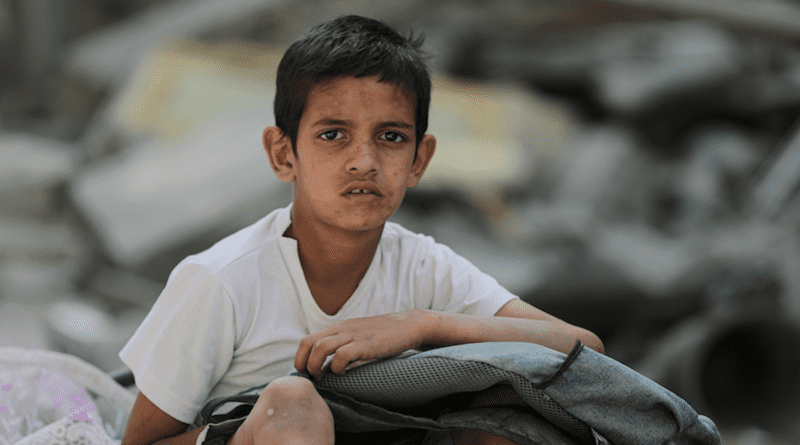
For tens of thousands of orphaned children in Gaza, surviving the immediate humanitarian emergency is only one part of an increasingly long-term challenge.
More than 56,000 children have lost one or both parents, according to UNICEF. Many have simultaneously experienced repeated displacement, hunger, injury, psychological distress and the destruction of the schools, homes and communities that once provided familiarity and routine.
Humanitarian organizations responding to their needs therefore face a question that reaches beyond the present emergency: what will these children need in the months and years ahead?
Food, shelter and medical assistance remain urgent. But orphaned children must also find ways to return to education, process grief and trauma, rebuild daily routines and eventually access the opportunities that will shape their adult lives.
With extended families under immense pressure and some institutions that previously cared for vulnerable children damaged or disrupted, supporting Gaza’s growing orphan population will require sustained assistance. Long-term orphan sponsorship is one model being used to help provide that continuity.
Gaza’s Orphaned Children Are Coping With Multiple Forms of Loss
Losing a parent is only one of the profound disruptions many children in Gaza are experiencing.
Neighborhoods have been destroyed, families have been displaced repeatedly and access to education has been severely interrupted.
In April 2026, UNICEF reported that nearly 98 percent of Gaza’s school buildings had sustained damage. More than 93 percent required either major rehabilitation or complete reconstruction, while approximately 420,000 children remained without access to face-to-face education.
For children already grieving a parent, losing the routines and relationships associated with school can deepen instability.
The physical damage across Gaza can be documented more easily than its emotional effects. Children experiencing prolonged displacement, grief and insecurity can face increased risks of anxiety, depression and post-traumatic stress, alongside difficulties with learning and emotional development.
However, those outcomes are not predetermined.
Consistent relationships with caring adults, access to education and opportunities to learn, socialize and play can help restore some of the predictability that children have lost. UNICEF has similarly emphasized the role that education, structured activities and play can have in rebuilding routine and supporting children’s emotional wellbeing during humanitarian crises.
For orphaned children, creating that stability also depends on whether the adults caring for them have enough support themselves.
Families Caring for Orphaned Children Are Also Under Pressure
Across Gaza, relatives have stepped forward to care for children who have lost parents.
Grandparents, aunts, uncles, siblings and other extended family members have absorbed thousands of children into their families. Yet many of these caregivers are simultaneously dealing with displacement, food insecurity and the loss of homes, employment and income.
Research referenced by the United Nations found that more than 40 percent of surveyed families in Gaza were caring for children who were not their own.
Formal care systems have also faced major disruption.
A United Nations Commission of Inquiry documented disruption and damage affecting orphanages in Gaza. SOS Children’s Villages, meanwhile, evacuated its facility in Rafah, with children who remained in Gaza later cared for in a temporary camp in Khan Younis.
The willingness of Palestinian families to care for orphaned children provides an essential source of connection and belonging, but family care alone cannot supply everything a child needs.
Food, housing, healthcare, education and psychological support still require resources.
That creates a longer-term humanitarian challenge: how can children receive consistent support when both the families and institutions caring for them are already under extraordinary pressure?
Emergency Relief Is Essential, but Children Need Continuity
Individuals, charities and humanitarian organizations around the world have mobilized assistance for Gaza.
Emergency relief can provide a family with food, offer medical treatment or give displaced people temporary shelter. These interventions are vital during a crisis, but the needs of an orphaned child can continue for years.
Following a visit to Gaza in January 2026, UNICEF Deputy Executive Director Ted Chaiban emphasized the need to think beyond expressions of concern.
“ThechildrenofGaza…donotneedsympathy.Theyneeddecisionsnowthatgive themwarmth,safety,food,education,andafuture.”
For children who have lost a parent, predictability can become particularly important.
Long-term orphan sponsorship is one approach humanitarian organizations use to create greater continuity. Programs differ, but many provide regular financial or material assistance to caregivers for necessities such as food, clothing, medical treatment and education.
Sponsorship cannot rebuild Gaza’s schools, replace its healthcare system or substitute for broader child protection and reconstruction efforts.
It can, however, provide an individual child and the family caring for them with a more reliable source of assistance over time.
Life for Relief and Development Expands Long-Term Support for Orphaned Children
Several humanitarian organizations are developing or expanding programs designed to support Gaza’s orphaned children beyond individual emergency distributions.
Life for Relief and Development’s orphan sponsorship program is one example.
LIFE has worked in Gaza for more than three decades and has sponsored orphaned children there since 2019. As the number of children requiring support has grown, the organization has expanded its efforts through a wider campaign focused on Gaza’s orphan population.
Through sponsorship, children and their caregivers receive assistance for needs including food, healthcare, education, clothing and other essentials.
LIFE says that its broader orphan sponsorship program currently reaches approximately 13,500 children in 22 countries. While Gaza’s humanitarian situation has required increased attention, the organization says programs supporting orphaned children in other countries are continuing.
Dr. Abdelwahab Alawneh, director of LIFE’s regional office in the Middle East, has described sponsorship as a commitment that must go beyond meeting immediate material needs.
“Thesechildrendon’tjustneedtheessentialsoflife,”Alawneh said while discussing the campaign.
Children who have lost parents, homes, schools and familiar surroundings also need security, stability and the reassurance that support will remain available as they grow.
Dr. Hany Saqr, CEO of Life for Relief and Development, has similarly emphasized the importance of looking beyond immediate survival.
“Helpingachildsurviveisonlythebeginning.Wemustalsogivethemtheopportunity tolearn,healandbuildafuture.”
That approach has led LIFE to combine orphan sponsorship with other programs addressing the wider environment in which children are growing.
In Gaza, the organization has supported education through Al-Amal School, a tent-based learning space where children can access teachers, books and school supplies despite the widespread disruption to formal schooling.
Education serves an academic purpose, but restoring a classroom environment can also give children structure, social interaction and a degree of normalcy. UNICEF has identified access to learning spaces and routine as important components of psychosocial support for children affected by crisis.
LIFE’s Global Orphans Party addresses another dimension of childhood that can be easily overlooked during an emergency.
Through games, activities and celebrations, orphaned children are given opportunities to socialize, play and participate in experiences centered on childhood rather than crisis.
These activities do not replace essential humanitarian assistance. Instead, they recognize that children’s development depends on more than survival alone.
Vicki Robb, LIFE’s director of programs, has also highlighted the interconnected pressures facing Gaza’s children, including inadequate access to safe drinking water, food insecurity, interrupted education and the potential long-term effects of malnutrition.
For an orphaned child, these conditions can intensify the consequences of losing a parent. Understanding the orphan crisis therefore requires looking not only at bereavement, but at the environment in which children are now expected to grow and recover.
LIFE has also used creative advocacy to bring wider attention to their circumstances, including releasing an original song focused on Gaza’s orphaned children.
Other humanitarian organizations are pursuing different forms of sustained support through financial assistance, healthcare, education and child protection programs.
The specific models vary. What they share is an acknowledgement that supporting orphaned children cannot end when an emergency distribution is completed.
The larger challenge will be expanding that support and maintaining it for the years in which children continue to need it.
The Children of Gaza Will Be Part of Its Future Recovery
Eventually, Gaza will face the enormous task of rebuilding schools, hospitals, businesses, public institutions and communities.
The children living through the current crisis will grow into teachers, physicians, engineers, entrepreneurs, artists, parents and community leaders who participate in that recovery.
Thousands of them are currently grieving a parent. Others are living in displacement, struggling to access education or growing up without many of the structures normally associated with childhood.
What happens between now and adulthood will matter.
Emergency humanitarian assistance can help meet the needs that a child faces today. The more difficult challenge is ensuring that children continue to receive education, healthcare, stability and opportunities after the immediate emergency has passed.
Gaza’s orphaned children cannot be given back everything they have lost.
However, sustained support can help ensure that those losses do not determine the limits of their future.
700,000ChildrenDeprivedofEducationinGaza
Humanitarian Organizations Call for Urgent Rehabilitation of Gaza Schools Ahead of the September School Year
Gaza Strip is facing one of the world’s worst education crises following the widespread destruction of its educational infrastructure since October 2023. According to the United Nations Children’s Fund (UNICEF), approximately 700,000 children between the ages of 4 and 17 have been deprived of their right to education. Nearly 98% of school buildings have sustained varying degrees of damage, with more than 93% requiring either major rehabilitation or complete reconstruction.
Around 81% of schools have been directly hit, rendering most educational facilities inoperable, while many have been converted into shelters for displaced families. The crisis has also devastated higher
education, with 95% of universities and colleges damaged, affecting nearly 90,000 university students and more than 5,200 academic and administrative staff as educational activities remain suspended.
Supporting Students’ Return to the Classroom
In response to these unprecedented challenges, Life for Relief and Development (LIFE)has completed the construction of a new school in Gaza as part of its efforts to restore access to education for children affected by the war. The project aims to provide a safe, fully equipped learning environment capable of accommodating growing numbers of students, helping to resume education while mitigating the long-term consequences of prolonged school closures.
Vicki Roob, National/International Programs Director, explained that the school was built on an emergency basis to help preserve educational continuity in Gaza.
“Theschoolwasconstructedona3,000-square-metersiteandincludes20fully equippedclassroomsfurnishedwithstudentdesksandwhiteboards,inadditionto twoadministrativeoffices,sevensanitationunits,acompleteelectricalsystem,a mainentrancegate,andasurroundingperimeterfence,providingstudentswitha safeandcomprehensivelearningenvironment.”
Accommodating Thousands of Students and Reducing Overcrowding
The school operates on a multi-shift schedule, with each shift serving approximately 800students, enabling a total of nearly 4,800studentsto receive education daily. The initiative is designed to reduce overcrowding in the few operational schools across northern Gaza while expanding access to education amid the severe shortage of functioning educational facilities.
Abu Suhaib, LIFE’s Gaza Office Coordinator, said the school is part of the organization’s broader efforts to improve educational access, reduce financial burdens on families, strengthen community stability, and enhance the quality of education.
“Theproject’sbeneficiariesextendbeyondstudentstoincludeparentsand caregivers,teachersandschoolstaff,students’families,andthewiderlocal community, all of whom will benefit from strengthened educational infrastructure.”
The project also represents a long-term investment in the recovery and resilience of Gaza’s education sector. Sustainability principles were integrated throughout the planning, construction, and handover phases to ensure that the school continues providing high-quality education for years to come.”
Contributing to Education Recovery Despite Extraordinary Challenges
LIFE implemented the project in close coordination with the Palestinian Ministry ofEducation and Higher Education and local community representatives to ensure compliance with national educational standards and address the population’s most urgent needs.
Despite operating under extremely difficult humanitarian and security conditions, including ongoing instability, movement restrictions, disrupted supply chains, and repeated interruptions affecting field operations, the implementation team successfully completed the project according to schedule.
A Safe Learning Environment that Supports Children’s Recovery
The organization emphasized that providing a secure educational environment helps improve school attendance, enhance learning outcomes, and strengthen the psychological and social well-being of children affected by the war. The project also contributes to reducing school dropout rates and long-term learning loss by ensuring that children have access to safe and accessible educational facilities.
The school was constructed using durable steel structures and arches with high-quality roofing materials suited to Gaza’s environmental conditions. Comprehensive electrical systems, water and sanitation networks, classroom furnishings, and protective site infrastructure were installed in accordance with approved engineering standards, minimizing future maintenance requirements while extending the facility’s operational lifespan.
Children Rediscover Their Dreams Inside the Classroom
Children enrolled in the new school expressed their joy at returning to education after many months away from the classroom.
Mohammad,11, said: “I felt incredibly happy when I entered the new school. I missed studying and seeing my friends. Now I have a classroom, teachers, and a place where I can learn again. I dream of becoming an engineer so I can help rebuild Gaza in the future.”
Sara,12, added with hope in her eyes: “I was afraid I would never return to school. When the new school opened, I felt like my future had begun again. I enjoy learning with my classmates, and I dream of becoming a doctor so I can help the people in my community.”
LIFE Continues Supporting Families and Orphans
Alongside its efforts to restore education, LifeforReliefandDevelopment is preparing to launch a campaign this month to support 60,000orphansacross the Gaza Strip.
Over recent months, LIFE teams have provided continuous assistance to orphans and their caregivers, particularly those living in displacement camps—through monthlyshoppingvouchers to help meet essential household needs, in addition to the regular distribution of comprehensive food baskets. These efforts aim to ease the growing humanitarian burden on the most vulnerable families and strengthen their resilience amid the ongoing crisis.
——————————————-END ——————————————–