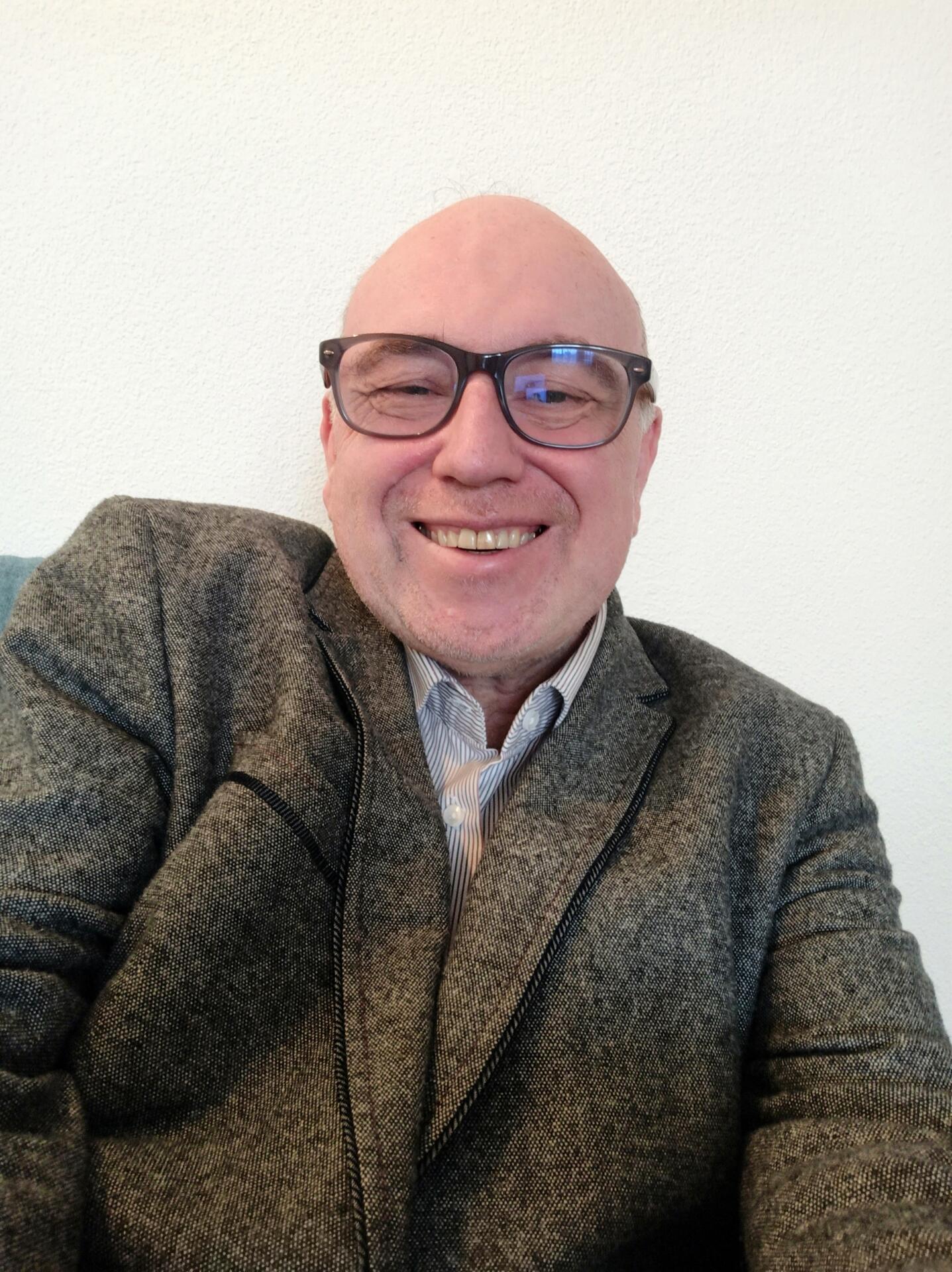
The same argument over and over again, hardly any intimacy: Jan Euskirchen from Safenwil knows the most common relationship problems. With targeted conversations and exercises, he helps couples to regain access to each other.
In autumn and winter, couples therapies are increasing, according to Jan Euskirchen.
This is what it’s all about
- Jan Euskirchen has been working as a self-employed couples therapist in Safenwil since 2019.
- Common problems include arguments, infidelity, lack of intimacy, and differing views on raising children.
- The therapy is intended to break through entrenched patterns of behavior and strengthen the understanding of the partner’s feelings.
- His guide “Before you throw everything away” offers exercises that couples can use to tackle their problems themselves.
The doorbell rings at his front door. Whether the couple entering decides on the sofa or the two armchairs that are slightly apart, Jan Euskirchen already gives an initial assessment of the state of the relationship. “On the sofa, you sit close to each other. The armchairs offer a certain distance,” says the couples therapist from Safenwil. He deliberately leaves the decision to the couples who come to him for couples therapy.
Jan Euskirchen is a graduate theologian. During his studies, he was also trained in psychology. He worked as a pastor for 16 years. His work as a pastor benefits him today in couples therapy. “Interpreting body language and feelings correctly is essential in couples therapy,” says Euskirchen.
Until 2017, he worked in church pastoral care. After that, he made a conscious decision to work independently as a couples therapist. From 2018 in Bern, since 2019 he has been helping couples in his practice Liebesengel in Safenwil. “In couples therapy and individual counselling, I can really help people. That fulfills me,” says Euskirchen.
The dark season brings problems to light
Most couples come to him from autumn to February. “When it gets colder and darker, couples are at home more. They have more time to deal with their problems.” Even during the Corona pandemic, more couples contacted him. It usually takes some time for the couples to come to him. Admitting that they have problems is not always easy. When the couple sits on the sofa – or the armchairs – in the couples counselling session at Euskirchen, however, there is largely agreement that something needs to be done.
After the first session, Euskirchen conducts an analysis. With a four-page questionnaire that the couples fill out, he explores where the problems lie. “There is usually more on paper than was said in the first session,” says the 57-year-old. Couples often come to him who have communication problems. Toxic behaviour with patterns that repeat itself, infidelity, lack of intimacy and unsatisfactory sexuality, as well as different opinions in raising children, are also often the source of the problems.
According to Jan Euskirchen, after three sessions, an improvement is usually already noticeable.
Image: Rafael Hüssy
Based on the analysis, Euskirchen develops a therapy plan. A session usually lasts 60 minutes. “After three sessions, an improvement is usually noticeable. After five sessions, it gets much better.” “I have couples from Switzerland, Germany and Austria who take advantage of this offer,” says Euskirchen.
Achieving the goal with two methods
Euskirchen works with two methods: systemic and emotion-focused couples therapy. “In systemic therapy, I don’t blame an individual. Together we look at the relationship system as a whole.” In this way, hidden problems can be brought to light and a solution can be worked out. “It’s not you who is the problem, but we together against the problem,” says Euskirchen. Repetitive toxic behaviors must be broken up and replaced by new ones.
Emotion-focused therapy focuses primarily on recognizing the feelings of the other person. Which feelings dominate the situation? Anger, disappointment, sadness? “It’s about understanding the feelings of the other person and putting yourself in the other person’s shoes,” explains Euskirchen.
His practical book: The emergency program for couples in crisis
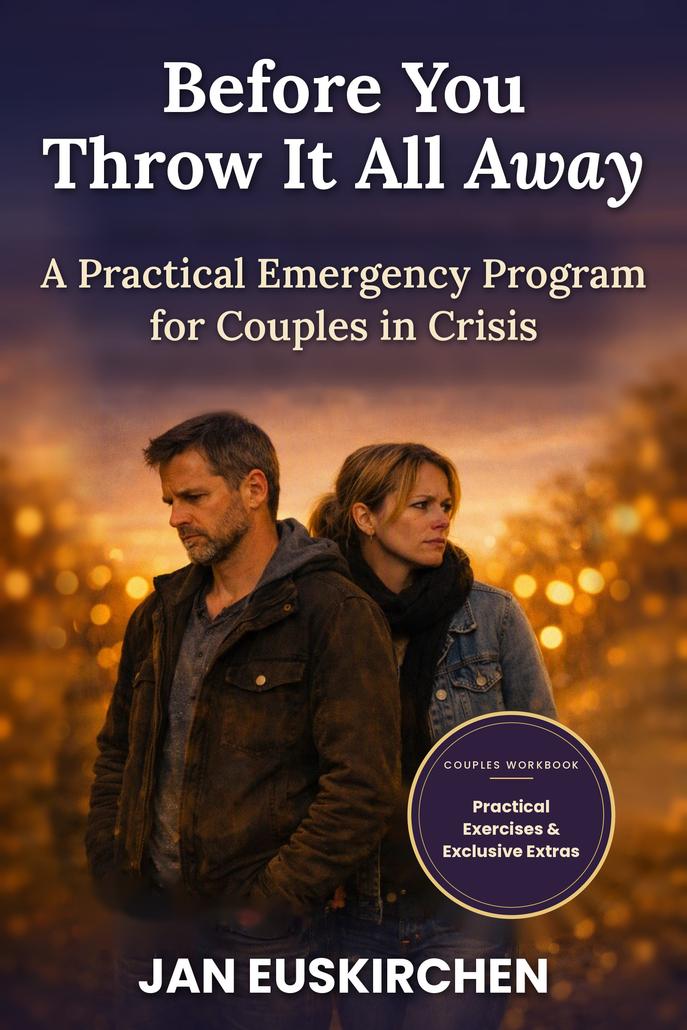
For all those who may have reservations at first and are afraid to start therapy, Euskirchen has written a relationship guide. In “Before you throw everything away”, he gives tips and presents exercises that couples can use to tackle problems themselves. “The practical emergency programme for couples in crisis,” it says on the cover. If therapy is still necessary, the inhibition threshold is often already overcome. More books are to follow.
With “Before you throw everything away”, Jan Euskirchen wants to help couples find their way back to each other.
During his work, Euskirchen is of course often confronted with crises and problems. Doesn’t that affect the mind? You have to set yourself apart clearly and it is important to have a balance to your job. In his free time, he likes to hike and is out and about a lot with colleagues. “I also like to travel,” he says.
And of course, it also helps that many couples therapies are successful. “When I see that a couple finds their way back to each other thanks to therapy, I am very happy. This is always a constellation that is also very good for me,” says Euskirchen.