Digital marketing ecosystems grow more complex every day, leaving brands exposed to serious blind spots in their referral streams. Many marketing, compliance, and performance teams struggle to verify where incoming web traffic actually originates, often relying on incomplete self-reported affiliate data. Undisclosed traffic sources, non-compliant promotions, and regional regulatory risks threaten brand safety and drain marketing budgets when transparency is absent.
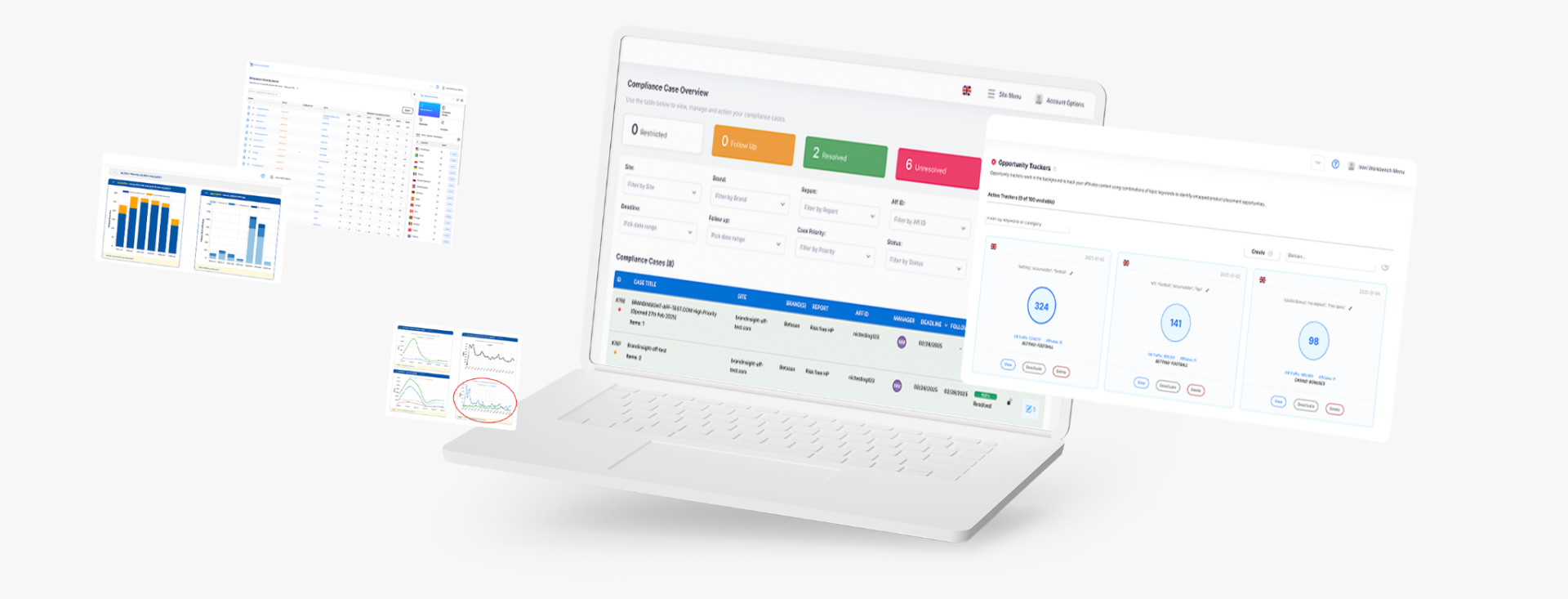
To solve this challenge, compliance monitoring specialist Rightlander launched Partner Intelligence, a tool built to give brands full visibility into partner traffic sources. In this executive Q&A, Ian Sims, Founder of Rightlander, discusses the industry demand for traffic accountability, how the new technology works, and how businesses can protect their marketing investments.
Q: What key industry challenges led Rightlander to develop the partner intelligence technology?
Ian Sims:The starting point for us was really the amount of information affiliate and marketing managers are expected to keep on top of.
You can have hundreds or even thousands of partners producing content across websites, social channels and other platforms. It’s not realistic for a team to manually keep up with all of that activity, particularly when a piece of content suddenly starts reaching a large audience. And often that content won’t even mention the brand directly, so it can be very easy to miss.
At the same time, managers need to understand where there is risk that could threaten a long-term partner relationship. The problem is that identifying a risk is only half the job. Teams need a quick and practical way to deal with it.
That’s where we’re taking Rightlander with partner intelligence. It’s not just about finding an issue. It’s about giving teams the information they need to understand the risk, take action and identify a path to growth. Our new Outreach function is a good example of that, helping teams move from identifying a potential problem to actually doing something about it.
Ultimately, we’re trying to give marketing teams a much clearer picture of what’s happening across their partner ecosystem, without expecting them to manually monitor all of it themselves.
Q: How does partner intelligence detect undisclosed or unknown referral sources that traditional affiliate tracking might miss?
Ian Sims: Traditional affiliate tracking is very good at telling you which affiliate received the commission. It doesn’t necessarily tell you who influenced the click before that.
That’s the gap we’re looking at.
Our technology looks at the referral journey and the traffic coming into a brand’s website to identify what sits behind the partner relationship. That can expose sub-affiliates, publishers or other traffic sources that aren’t necessarily visible in the standard affiliate reporting.
For me, that’s the important distinction. We’re not just asking, “Which affiliate sent this customer?” We’re asking, “Where did this customer actually come from?”
Once you can answer that question, you can start making much better decisions about partner quality, risk and performance.
Q: Regulatory compliance is critical in sectors like fintech and iGaming. How does this solution help brands spot regional compliance risks?
Ian Sims: One of the biggest problems with compliance is assuming that because you’ve checked a partner once, you know what they’re doing everywhere.
You don’t.
A partner can operate across multiple countries, use different channels and promote different offers depending on the market. The regulatory requirements can also be completely different.
Partner intelligence gives brands more visibility into where their partners are actually generating traffic. When you combine that with our compliance monitoring, you can start connecting the dots between where the traffic is coming from, what the partner is doing and whether it’s appropriate for that market.
That’s particularly important in regulated sectors. You need to be able to identify issues early, rather than finding out about them because a regulator, customer or competitor has spotted them first.
Q: What can teams expect regarding deployment and data timelines when setting up partner intelligence on their sites?
Ian Sims: We’ve kept the implementation deliberately simple. We’re not asking brands to replace their existing affiliate platforms or rebuild their tracking infrastructure.
The technology sits alongside what they already have and starts capturing the information needed to build a picture of their partner traffic.
The more traffic you see, the more useful the intelligence becomes. You can start to see patterns, identify unusual activity and understand which partners and traffic sources are actually contributing to your programme.
The objective is to get teams to useful information quickly. This isn’t supposed to become another six-month technology project.
Q: How does the platform combine website traffic data with social media brand mentions and follower activity?
Ian Sims:The reality is that partners don’t operate in neat little boxes anymore.
An affiliate might have a website, a social following, a YouTube channel and a number of other ways of influencing customers. If you’re only looking at the affiliate link, you’re missing part of the picture.
That’s why we look at different signals across the ecosystem. Website traffic tells you where people are coming from, while social intelligence can help you understand where a partner has influence and how they’re talking about the brand.
Putting those things together gives you a much better understanding of the partner itself, rather than just the transaction it generated.
Q: How do you see the demand for partner transparency evolving for digital brands in the coming years?
Ian Sims: I think we’re going to see a big shift from partner management to partner intelligence.
Brands have traditionally focused on managing the partners they know about. The problem is that they don’t always know everything that’s happening behind those relationships.
As partner ecosystems become more complicated, and as brands come under more pressure to demonstrate marketing performance and manage risk, that isn’t going to be enough.
You need to know who you’re working with, where their traffic comes from, what they’re doing with your brand and whether they’re actually adding incremental value.
And there’s another side to this. Transparency isn’t just about finding bad activity. It’s also about finding good opportunities.
If you can see that a partner is generating valuable traffic from a particular channel or market that you weren’t aware of, that’s potentially a growth opportunity.
That’s really where I see partner intelligence going. It’s about giving brands the visibility to protect what they’ve built, but also the information to find what’s next.
Full visibility into partner traffic is no longer optional for brands operating in highly regulated, competitive digital sectors. As modern affiliate networks expand across complex web and social channels, identifying non-compliant routes and undisclosed domains protects both brand reputation and marketing ROI.
Rightlander’s partner intelligence bridges the gap between marketing growth and compliance oversight through automated, real-time traffic discovery. By equipping performance and risk teams with clear data on where their users truly come from, brands can scale their partner programs with total confidence.
To learn more, visit https://www.rightlander.com/