New research from scientists from Felidae Conservation Fund and Irvine Ranch Conservancy highlights the threats faced by pumas at the urban wildland interface.
While a growing number of studies illustrate how wildlife are affected by growing human disturbance and habitat fragmentation, less is known about how specific aspects of urban environments affect animal activity, especially when it comes to light and noise.
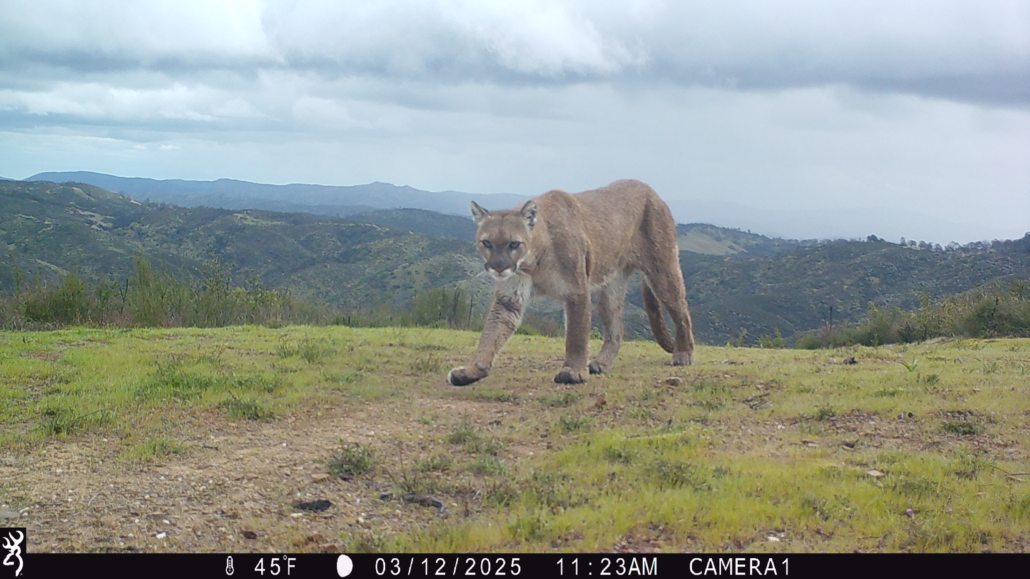
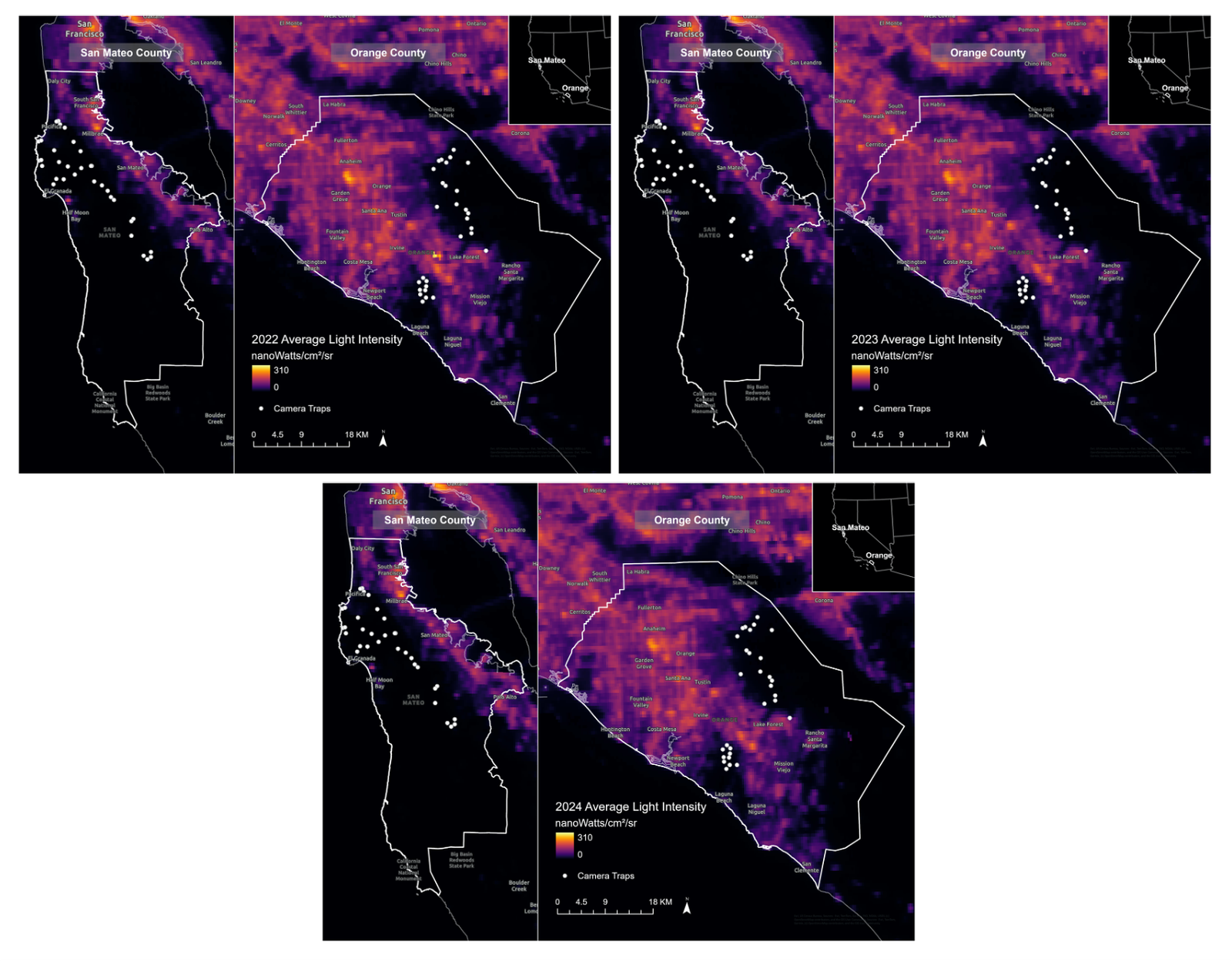
This new research explores how urbanization affects the behavior of an apex predator, the puma, a co-occurring mid-sized carnivore (the bobcat), and the primary prey for pumas, mule deer. Using data from 61 camera trap stations over three years, the researchers analyzed how artificial light pollution and human activity shape wildlife activity patterns in protected areas in Orange and San Mateo counties.
The study’s findings highlight how different species respond to urban development. Both pumas and bobcats avoided areas with more artificial light pollution, and pumas were also less active at night in more brightly lit areas while also avoiding areas with heavy human activity. In contrast, mule deer increased their nighttime activity in illuminated areas, suggesting they prefer places where predators are less likely to roam. The study also highlighted how urban context can affect the way wildlife responds. In Orange County, where urban development is more intense and there’s more habitat fragmentation, puma activity peaked later than in the darker and more connected landscapes of San Mateo County.
Implications
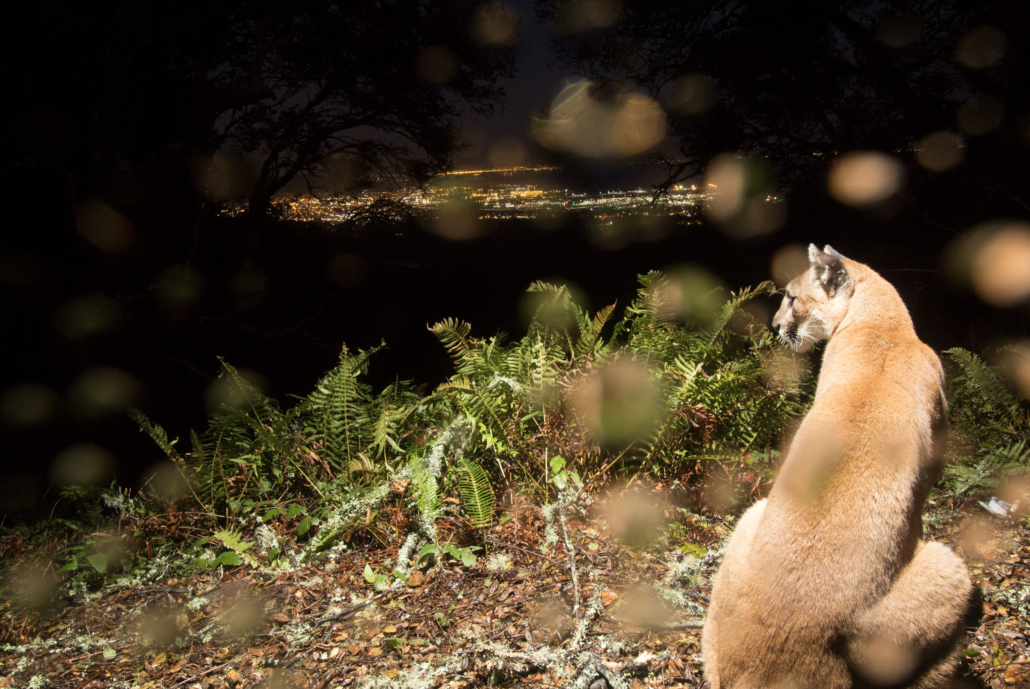
These findings highlight that while development and roads have long been recognized as barriers to wildlife, light pollution may be just as important in terms of its impact on species activity.
Light pollution is expanding globally, and even protected areas are increasingly exposed to nighttime illumination. Unlike habitat loss, however, artificial light tends to be overlooked as a potential driver of changes in species activity. Nocturnal predators, like pumas, have vision adapted to low light levels, so bright nights can reduce hunting efficiency and lead to shorter activity windows.
The study highlights the need for darker and connected open spaces in and around urban regions to buffer wildlife from sensory disturbance. This may include for example, the implementation of dark sky areas into land use planning.
This work is more relevant than ever, given the recent change in status for pumas in the San Francisco Bay Area and southern California. Both populations were recently granted permanent Threatened status in California due to reduced genetic diversity and extreme habitat isolation.