Dental care has entered a defining transition period. For decades, conventional dentistry relied heavily on physical impressions, manual models, and lengthy treatment schedules that often caused patient anxiety and diagnostic inaccuracies. In restorative and cosmetic procedures, achieving predictable, natural-looking results proved challenging without precise imaging and integrated design tools. As patient expectations rise, practices that depend on legacy workflows struggle to balance clinical precision with a comfortable, efficient care environment.
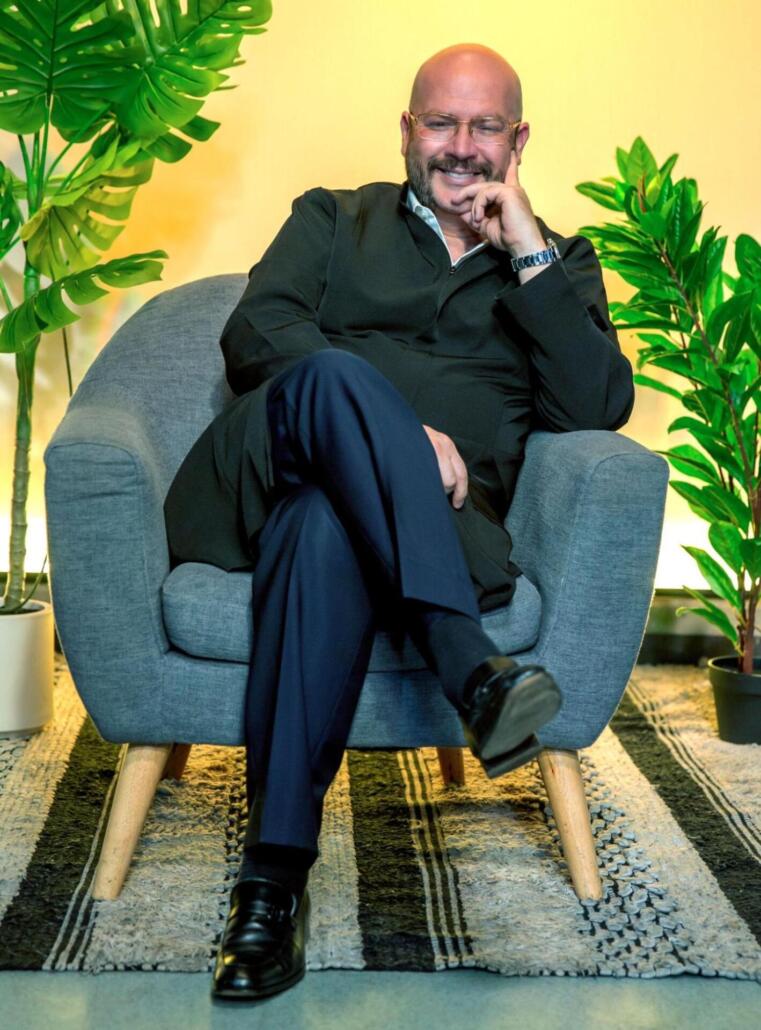
Dr. Jairo Quintana addresses these clinical challenges through complete digital workflows and advanced restorative techniques. With over 25 years of experience across Colombia, the United States, and Mexico, Dr. Quintana serves as President of the Colombian Association of Aesthetic and Digital Dentistry (ACOED) and leads Probocarte Dental Group. In this Executive Q&A, Dr. Quintana discusses how 100% digital dentistry eliminates procedural guesswork, elevates aesthetic standards, and reshapes modern patient care across international borders.
Q: Traditional restorative dentistry often struggles with patient discomfort, manual impressions, and inconsistent fits. How does transition to a 100% digital clinical workflow solve these persistent diagnostic and procedural bottlenecks?
Jairo Quintana: A fully digital workflow does not replace clinical judgment; it gives that judgment better information. The fundamental change is that we move from a sequence of disconnected, largely manual steps to a traceable clinical process built around precise digital records. An intraoral scan can capture anatomy without the discomfort and variability associated with conventional impression materials. That information can then be integrated with photography, radiographic imaging when clinically indicated, occlusal analysis, and restorative design.
For the patient, the difference is immediate: greater comfort, clearer communication, and often fewer unnecessary repetitions. For the clinical team, the value is consistency. We can identify incomplete data before the patient leaves, communicate more accurately with the laboratory, compare changes over time, and verify the proposed restoration before fabrication. Digital tools also create a shared visual language. Instead of asking a patient to imagine an outcome, we can explain the diagnosis and proposed treatment using their own clinical information.
The real advantage, however, is not simply speed. It is predictability. When diagnosis, planning, design, fabrication, and clinical verification are connected, we reduce avoidable uncertainty while maintaining the dentist’s responsibility to evaluate biology, function, and long-term stability. Technology is most valuable when it makes every decision more informed and every stage of care more transparent
Q: Aesthetic dentistry has evolved away from artificial, uniform smiles toward subtle and natural personalization. How do digital smile design and CAD/CAM technologies help you preserve natural dental anatomy while meeting aesthetic expectations?
Jairo Quintana: The objective of aesthetic dentistry should never be to give every patient the same smile. A successful result must belong to the person: it should respect facial proportions, age, expression, dental anatomy, function, and individual expectations. Digital smile design helps us study those relationships before making irreversible clinical decisions. It allows the patient and the clinical team to evaluate proportion, symmetry, tooth position, gingival architecture, and the way the smile moves within the face.
CAD/CAM technology then helps translate that plan into a restoration with controlled dimensions and reproducible detail. But precision should not be confused with uniformity. Natural teeth are not perfectly identical; they have texture, translucency, subtle asymmetries, and anatomical transitions that create vitality. The clinician and technician must use digital tools to preserve those characteristics rather than erase them.
This is also an ethical advantage. A digital preview can support a more conservative conversation: What truly needs to change? What healthy structure can be preserved? What result is realistic? My philosophy is that technology should help us intervene with greater intention and, whenever possible, with less unnecessary reduction of natural tooth structure. The most sophisticated smile is not the one that looks designed; it is the one that looks completely natural on that individual.
Q: As President of ACOED and former President of the Colegio Colombiano de Odontólogos, you have observed regional adoption trends firsthand. What are the primary hurdles dental practitioners face when integrating advanced digital tools into daily practice?
Jairo Quintana: The first barrier is often described as financial, but the deeper barrier is organizational. Purchasing a scanner or design system does not automatically create a digital practice. The team needs training, protocols, calibrated decision-making, and a clear understanding of where the technology improves care. Otherwise, a clinic simply digitizes its existing inefficiencies.
A second challenge is fragmentation. Devices, software platforms, laboratories, and patient records do not always communicate seamlessly. Practitioners may acquire excellent individual tools without designing the workflow that connects diagnosis, planning, production, documentation, and follow-up. There are also legitimate responsibilities involving data protection, informed consent, maintenance, cybersecurity, and the clinical validation of new applications.
Finally, we must address the learning curve. Digital dentistry requires continuing education not only for dentists, but for assistants, technicians, administrative teams, and specialists. Professional associations have an important role here: helping clinicians distinguish meaningful innovation from novelty, promoting evidence-based training, and creating communities in which knowledge can be shared. The goal is not for every practice to adopt every technology immediately. It is for each practice to adopt the right technology responsibly, with a measurable benefit for the patient.
Q: You recently expanded your clinical operations with a new center in Mexico City alongside your locations in Bogotá and Cúcuta. What operational adjustments are necessary when delivering consistent, high-standard digital dental care across different healthcare markets?
Jairo Quintana: Expanding across markets teaches you that consistency does not mean copying a clinic room by room. It means defining which principles and clinical standards cannot change, while adapting operations to the regulatory, cultural, and patient-service realities of each location. The patient should encounter the same commitment to diagnosis, documentation, safety, treatment planning, materials, and follow-up, regardless of the city in which care begins.
Digital systems make that possible only when the protocols behind them are standardized. Teams must be calibrated around how records are captured, how cases are reviewed, how laboratories and specialists communicate, how quality checkpoints are documented, and how patient information is protected. Equipment compatibility, supplier relationships, technical support, and staff training also become operational priorities because a sophisticated workflow is only as strong as its least connected step.
At the same time, healthcare remains deeply human and local. Patients may have different expectations about communication, timing, financing, or the way treatment options are explained. The challenge is therefore to build one clinical philosophy with locally intelligent delivery. For me, international growth is not simply geographic expansion; it is the ability to make high standards reproducible without making care feel impersonal.
Q: Emerging tools like digital saliva diagnostics and 3D intraoral scans connect oral health directly to systemic wellness. How does technological integration help clinicians address functional disorders like bruxism or airway issues alongside cosmetic treatments?
Jairo Quintana: A smile cannot be evaluated responsibly as an isolated cosmetic object. Tooth wear, muscle activity, occlusion, periodontal condition, sleep-related symptoms, breathing patterns, medications, and systemic factors may all influence both the diagnosis and the longevity of treatment. Digital records help us see patterns that can be difficult to appreciate in a single conventional examination.
Serial intraoral scans, for example, can provide comparable three-dimensional records that help document changes in tooth wear, recession, or occlusal relationships over time. Digital imaging and emerging salivary tools may add useful information to risk assessment when they are clinically validated and interpreted in context. For a patient with suspected bruxism or airway-related concerns, these technologies can support a more complete investigation and more precise communication among dentists, physicians, sleep specialists, physical therapists, and other professionals when referral is appropriate.
The important point is that technology supports diagnosis; it does not justify overdiagnosis or replace multidisciplinary judgment. Before beginning an aesthetic treatment, we should understand the forces and health conditions that could compromise it. Beauty, function, and health are not competing objectives. When planning is truly integrated, aesthetics becomes the visible expression of a treatment designed to perform well and remain stable over time.
Q: Looking at the future of dental medicine, how will emerging technologies like artificial intelligence in treatment planning and chairside 3D fabrication reshape the dental visit for the next generation of patients?
Jairo Quintana: The next generation of patients will experience dentistry as a more visual, participatory, and personalized process. Artificial intelligence can help clinicians analyze large volumes of imaging and clinical data, recognize patterns, compare treatment alternatives, and automate repetitive design tasks. Chairside fabrication and 3D printing can shorten the distance between planning and delivery, making provisional restorations, models, guides, appliances, and selected definitive solutions available with greater efficiency.
But the most important transformation will not be that machines make dentistry faster. It will be that clinicians have more time and better information to make consequential decisions. AI should function as augmented intelligence: a second layer of analysis that supports, but never replaces, professional accountability. Its recommendations must remain explainable, clinically validated, and subject to human review. Patient privacy, bias, data quality, and appropriate regulation will be as important as technical capability.
I also believe patients will become more active participants in their care. They will be able to see their condition, understand alternatives, preview scenarios, and follow changes over time. The future dental visit should therefore feel less like a sequence of procedures and more like a transparent collaboration. The practices that lead this transition will not be those with the most technology, but those that use it most intelligently to deliver safer, more precise, and more human care.
Digital innovation in oral healthcare extends well beyond technological novelty; it represents a fundamental advancement in clinical precision and patient experience. By replacing traditional, invasive methods with guided digital workflows, clinicians can diagnose issues earlier, reduce treatment timelines, and achieve consistent restorative outcomes. Embracing integrated digital systems ensures that patient care remains predictable, functional, and aesthetically natural.
Dr. Jairo Quintana’s extensive leadership across Latin America and the United States illustrates the clinical value of continuous modernization. As digital tools continue to evolve, the integration of advanced imaging, automated fabrication, and multidisciplinary oral care will define the standard of dental excellence. Practices that invest in modern digital workflows will protect clinical longevity and elevate the quality of oral healthcare globally.
To learn more, visit https://www.instagram.com/doctorjairoquintana/
https://www.linkedin.com/in/doctorjairoquintana