Most traditional conflict resolution strategies focus on the surface. When disagreements arise, people naturally ask what happened, who is at fault, and how to settle the issue quickly. These questions offer temporary relief, but they rarely address the root causes of the friction. Ignoring the deeper emotional elements means the same disputes often resurface. True resolution requires us to look past the symptoms and understand the internal forces that drive external clashes.
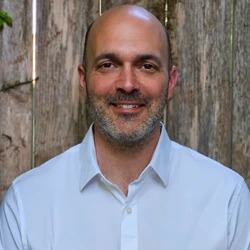
Ian Renaud offers a direct solution to this problem. As a conflict resolution expert and the creator of the Seven Levels Framework, he developed Conflict Intelligence Training to help people manage disagreements by looking inward. His approach, detailed in his book Resolving from Within, treats conflict as an opportunity for personal and professional growth. We sit down with Ian to discuss his background, the core principles of Conflict Intelligence, and how mastering our inner landscape creates lasting peace.
Q: You started your career in police training at seventeen before realizing that control-based approaches to conflict missed the mark. How did that early realization lead you to create the Seven Levels Framework?
Ian Renaud: I went into that training at seventeen wanting to help people, and what I found instead was a model built almost entirely around control — contain the situation, manage the behavior, restore order. It works in the moment, but it never asked what was actually happening underneath the behavior. Years later, when my own life fell apart through addiction, I had to face that same question about myself. I could not control my way out of it. I had to go inward and understand what was actually driving it. The Seven Levels Framework grew out of that same shift — instead of asking "how do we control this conflict," it asks what is happening at each layer of the human experience that is generating it, from safety, to emotion, to identity, all the way through to how we make meaning of it.
Q: Traditional mediation asks how to settle an issue, but Conflict Intelligence asks what the conflict is trying to teach us about ourselves. Why is this internal shift necessary for real resolution?
Ian Renaud: Because if we only settle the issue on the surface, we have not actually changed the conditions that produced it, so it tends to come back wearing a different outfit. Conflict Intelligence treats the disagreement as information. What is it revealing about how safe I feel, about what I believe about myself, about how I am relating to the other person? When we get curious about that instead of just trying to make the friction go away, the resolution tends to hold, because we have addressed the actual source rather than the symptom.
Q: Your framework spans seven distinct levels, including Space, Emotions, Identity, and Spirituality. How does working through these specific layers help people avoid superficial fixes?
Ian Renaud: Most conventional conflict training focuses on behaviour or communication, and that is real territory, but it is only part of the picture. The seven levels give us a fuller map — Space, which is about safety; Emotions; Identity; Relationships; Expression; Intuition; and Spirituality, which is about the deeper unity beneath the disagreement. Not every conflict activates all seven equally; sometimes it is really one or two levels doing most of the work. But having the full map means we know where else to look instead of stopping at the first plausible explanation. I think of it less as a staircase to climb in order and more as a set of dimensions we can explore simultaneously, to find where the real weight is sitting.
Q: In your book, Resolving from Within, you encourage readers to pay close attention to physical sensations during a dispute. How does physical awareness change the way a person handles a tense conversation?
Ian Renaud: The body usually knows before the mind does. A tightening in the chest, a clenched jaw, a shift in breathing — those are signals that something at the Space level has been triggered, that safety has been compromised in some way. When we notice that sensation instead of overriding it, we get a moment of choice we would not otherwise have. Rather than reacting from that activated state, we can pause, recognize what is happening in the body, and respond from a steadier place. It sounds simple, but that pause is often the entire difference between escalation and understanding.
Q: You offer a 7-Day Conflict Prevention Challenge for people looking to build these skills. What is one practical step someone can take today to stop reacting defensively and start responding intelligently?
Ian Renaud: I would invite someone to simply notice, the next time they feel defensive, where they feel it in the body and what it might be protecting. Defensiveness is rarely about the immediate comment — it is usually guarding something at the Identity level, some sense of who we are that feels under threat. Just naming that to yourself, even silently, creates a bit of space between the trigger and the reaction. That small pause is where responding intelligently becomes possible.
Q: Whether applied to business leadership or personal relationships, what is your ultimate vision for how Conflict Intelligence can change the way society handles disagreement?
Ian Renaud: My hope is that we stop treating conflict as something to fear or avoid and start treating it as one of our most honest teachers. Whatever the context — a boardroom or a living room — the pattern is the same: real resolution starts inside us before it can show up between us. If more leaders and more people generally build that kind of inner awareness, disagreement stops being something that divides us and becomes something that deepens understanding instead. That, to me, is what lasting peace actually looks like.
This conversation shows that external peace requires internal awareness. By shifting the focus away from assigning blame, individuals can turn rigid disputes into opportunities for better communication. The Seven Levels Framework gives people a practical map for managing the complex emotions and identity threats that block healthy relationships.
The demand for intelligent conflict resolution will only increase as workplaces and communities face new pressures. Leaders who adopt a comprehensive, inward-looking approach will handle disagreements much more effectively. Frameworks like the one developed by Ian Renaud provide the exact tools people need to stop fearing conflict and start using it to drive positive change.
To learn more visit https://conflictintelligencetraining.com/