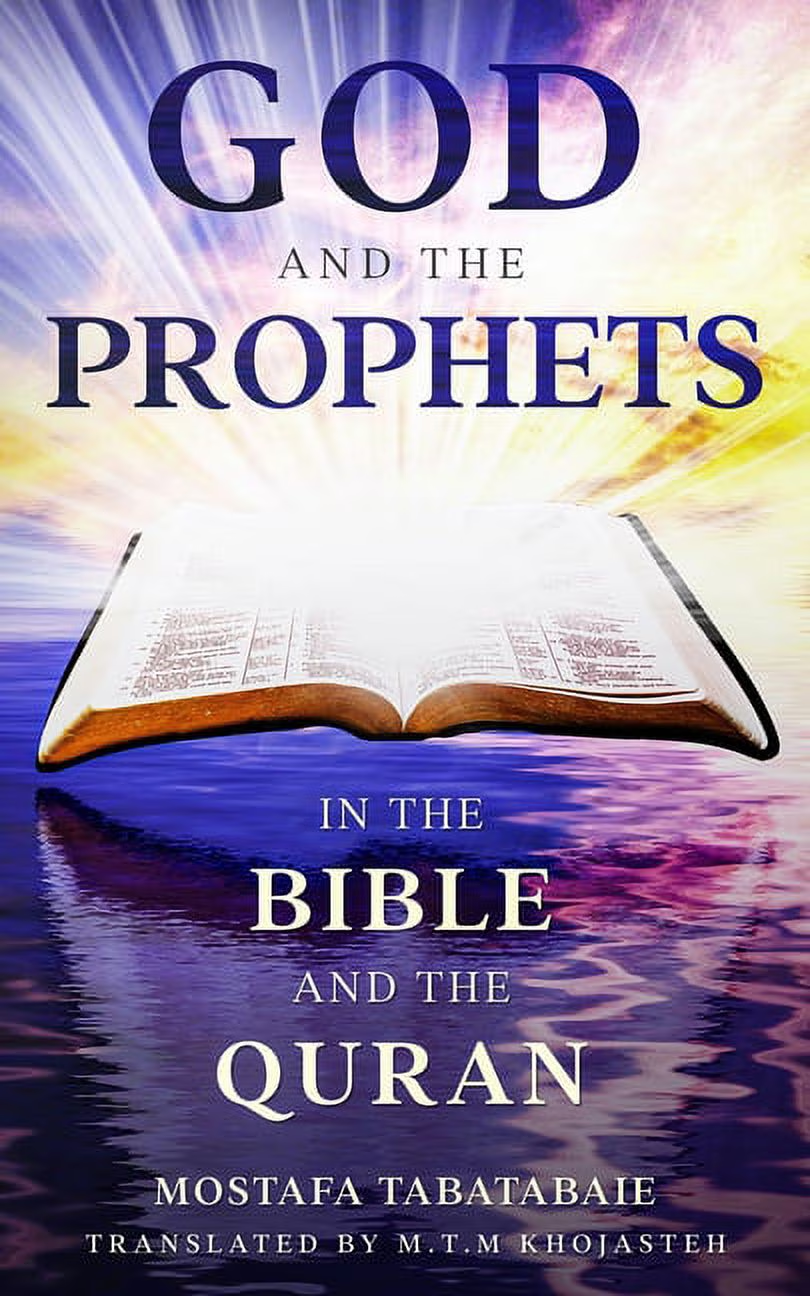
When reading holy scriptures, one encounters ancient historical accounts. One can either accept them at face value or analyze them critically, which may lead to contradictory conclusions and could trigger accusations of disbelief and heresy from religious zealots. Take, for example, the Exodus of the Jews from Egypt under the leadership of Moses—a monumental event framed as a grand divine miracle involving the parting of the Red Sea, the crossing of the Jews into Sinai, and the drowning of the pursuing Egyptian army. Since this event was recorded in the 6th century BCE, generations passed this story down for over twenty-five centuries virtually unchallenged, save for a few dissenting voices considered out of harmony.
Examining a single concept here illustrates how the book analyzes prophetic narratives. The Torah states in Exodus that 600,000 Jewish men departed with Moses, excluding women and children, bringing the total population to over 2 million people. The Torah also notes that the Egyptians enslaved them. If the slave population reached this figure, how large was the population of their masters? Applying a modest ratio relative to the Torah’s figures, we might assume there were at least 3 million adult men among the masters (excluding women and children), implying an Egyptian population of at least 12 million. Adding the Jewish population brings Egypt’s total population at the time of the Exodus to 15 million people.
However, historical estimates place Egypt’s total population around the time of the Exodus (circa 1203 BCE) at only 3 to 5 million people. Furthermore, why would such a massive group wander into a barren desert like Sinai? Could they not have formed an army and invaded any fertile region near Egypt?
What, then, is a more historically accurate estimate of those who departed with Moses?
Exodus 5 provides a clue: those who arrived in Egypt to join Joseph numbered seventy souls descended from Jacob. Moses was the great-great-grandson of Joseph’s brother Levi (son of Amram, son of Kohath, son of Levi), and a simple mathematical calculation suggests a different picture.
If 70 individuals each had 5 children, they would become 350 people. If each of those had 5 children, the total would reach 1,750 individuals. Subtracting deceased individuals leaves a population during Moses’ time ranging between 750 and 1,000 people. I lean toward the lower figure of no more than 750 people, noting that enslaved populations had shorter lifespans. Admittedly, this calculation rests on many unscientific assumptions—such as assuming the seventy souls were strictly male, that no one returned to Palestine, or that strict matrilineal/lineage rules were suspended.
Nevertheless, the population likely did not exceed 750 people. Moses could reasonably organize a group this size to travel along the era’s standard transportation route: north along the Nile River. They were forced into the Sinai desert because Palestine was under Egyptian rule and inhabited by formidable local tribes. In contrast, Egyptian forces failed to pursue them because of civil war and two competing pharaohs vying for power. I leave the accuracy of these numbers to the reader’s judgment.
Life, Meaning, Prophets, and Philosophy
The preceding example shows how various historical issues are examined—topics mainly suited to those interested in ancient history, which a casual reader might skim past. What truly matters to readers is the life we live today and humanity’s future.
Consider the poignant question posed by Russian writer Maxim Gorky (1868–1936):
“Is it reasonable that a human is born merely to work, earn money, build a house, have children, and die?”
Gorky’s question was even more pressing in antiquity, demanding an honorable exit from this existential dilemma.
The solution was readily provided: eternal life was lost, but it exists, and we must reclaim it.
Earth is filled with misery, hardship, struggle, and fatigue, so the tormented on Earth who sided with good must be rewarded, while the wicked who strayed from the straight path must be punished. Thus spoke the prophets, imposing their vision of life and answering humanity’s core questions:
Why are we born, how should we live, and what is our fate after death?
This was not the prophets’ sole preoccupation; it has been the primary concern of philosophers throughout history. The difference is that prophets imposed their vision, whereas philosophers spoke their minds and walked away. What unites both groups is the underlying fear of death and the short duration of individual life on this planet.
Scientific Progress and the Future of Humanity
But what if we were to eliminate death? What if humanity were freed from the fear that has accompanied consciousness since family, school, and society formed it? What would happen to current heavenly religions? What would happen to philosophy predicated on death’s existence? Until recently (starting from 1950 ), this premise was pure science fiction. However, rapid scientific advancement over the next two centuries will resolve cellular senescence (apoptosis or cell death) responsible for aging, eradicate fatal diseases, enable organ replacement, and advance cloning.
When that occurs, the decision to die—or rather, to end one’s life—will become a personal choice based on an individual’s desire rather than involuntary external circumstances like bodily degradation.
Yet this state will create new challenges, perhaps far greater than those we face today. For instance, the wealthy, who previously accumulated riches for their heirs, will hoard them for themselves, turning the rest of humanity into enslaved people to these “new gods”.
Alternatively, humanity might reach a radical resolution by viewing planet Earth as a massive spaceship, where each individual receives their required share of air, water, and food in exchange for contributing their best effort. This scenario would necessitate a global government to manage, maintain, and secure this vessel for humanity’s future.
On the bright side, humanity will nurture more minds like Albert Einstein. Einstein’s family gave him an environment rich in books and scientific curiosity, helping his imagination develop revolutionary theories. Today, similar foundations are accessible worldwide through the internet and search engines, serving as a vast virtual public library that gives new generations unprecedented opportunities to research and think critically. Human intelligence is rising, with each generation growing smarter than the last, potentially leading to an evolutionary leap in the human brain, as science fiction writers have predicted.
On the dark side, the future may produce more destructive figures like Jim Jones, who led his followers to mass death, as some individuals remain incapable of keeping pace with rapid scientific progress.
I conclude this article with a quote from a philosopher and thinker who may be unfamiliar to readers in the United States:
“Through reason alone, human beings have no need for prophecy or for any religions and heavenly scriptures.
Through reason alone, you distinguish good from evil and truth from falsehood.
There is no authority except the authority of reason, and no faith except in reason.”
— Abu Bakr al-Razi (864–923 C)