Health is often treated as a reaction rather than a daily practice. Many people only take action when they get sick or injured. They view preventive care as an expensive luxury rather than a basic need. At the same time, professionals in the hospitality and fitness industries often cater only to the few who can afford premium services. This leaves a gap in global health, where practical, everyday wellbeing remains out of reach for most communities.
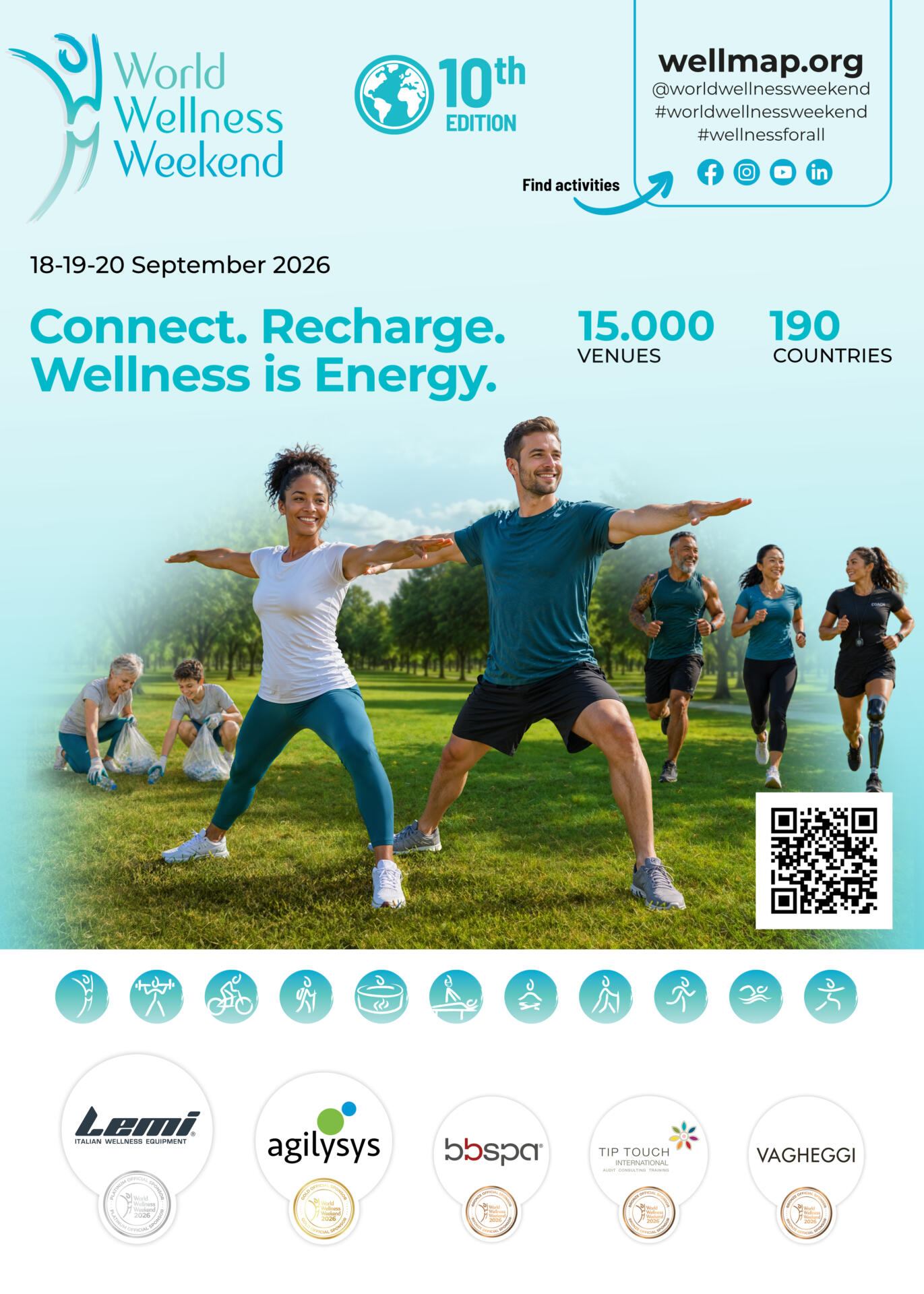
Jean-Guy de Gabriac recognized this disconnect and founded World Wellness Weekend to fix it. His organization connects thousands of venues across more than 180 countries to offer free, accessible activities built around five core pillars of health. By partnering with local coordinators and global federations, his team makes health a community event rather than an isolated privilege. We sat down with de Gabriac to discuss his approach, the importance of universal access, and how his movement continues to grow.
Q: You launched World Wellness Weekend to support the United Nations' goal of "Good Health and Wellbeing for All." What specific gaps in the wellness industry prompted you to take this global action?
Jean-Guy de Gabriac: The seed was planted in 2015, when the United Nations adopted SDG3, "Good Health & Wellbeing for All," as part of its 2030 Agenda. It struck me immediately as the rallying point for our industry (Tourism, Hospitality, Spa, Fitness…) But when I started talking to General Managers and Spa Directors in 2017, almost none of them had heard of it, and very few were acting on it. That gap had to be filled.
I had spent two decades as a spa consultant and educator, witnessing extraordinary wellness experiences reserved for a privileged few. So I asked myself: what if we opened those doors, even for one weekend a year? That is the transformative power of "freemium", when something meaningful is offered at no cost, you remove the feeling that it is "not for people like me." We launched in September 2017 with 160 venues in France and Belgium. A drop in the ocean, perhaps, but it still makes ripples today, and this September, for our 10th edition, we expect over 11,000 venues across 190 countries.
Q: The movement relies heavily on local ambassadors and coordinators across different continents. How do these leaders adapt your core mission to fit the specific needs of their communities?
Jean-Guy de Gabriac: We all share the same vision: Think Global, act Local, make Wellness Social.
Culturally, the word “wellness” means different things in different places on the planet. In Japan, over 500 venues activate across almost all 47 prefectures with support from the Japan Tourism Agency, blending forest bathing traditions with cutting-edge fitness technology at fitness clubs like Mizuno Sport Services and Renaissance.
In Mexico, 200 venues from Coast to Coast with outstanding participation in Quintana Roo: Cancún's public parks to Isla Mujeres, ambassadors have secured government support from SEFOTUR in Yucatán, rooting our five pillars in temazcal ceremonies and coastal traditions you won't find anywhere else.
In Argentina, 178 venues participate, and cities like Cabalango officially declare us an event of public interest, weaving in horseback riding and mindful cycling that reflect their culture.
What never changes is the Clients, Colleagues, and Community framework: every activation, wherever it happens, should touch more than just paying guests. What changes is everything else: the language, the ritual, the partner institution.
In Brazil, all 150 Buddha Spas are running a national campaign. In Italy, the Sport City Foundation is activating 116 cities with the support of the Minister of Sport. Our ambassadors are not franchisees executing a script; they are Wellfluencers translating one philosophy into a hundred and ninety local dialects! THAT is Wellness FOR All and BY All!
Q: World Wellness Weekend operates on five pillars, including "Sleep & Creativity" and "Purpose & Solidarity." How do these categories move the conversation beyond standard diet and exercise advice?
Jean-Guy de Gabriac: Vitality & Movement, Mindfulness & Serenity, and Nutrition & Immunity cover the territory that people expect when thinking about the benefits of Wellness. Sleep & Creativity and Purpose & Solidarity are where the real conversation shifts. McKinsey's Future of Wellness research shows 84% of consumers now rank wellness as a top life priority, but people are also learning that a great workout means little if they're not sleeping, and that no supplement replaces a sense of purpose. Sleep & Creativity pushes people to see rest as generative, not as a waste of time.
Purpose & Solidarity is the pillar that turns individual wellness into a shared act. It's the difference between a gym membership and Maharaja Yoga in Kharkiv offering trauma-sensitive yoga to veterans in a frontline city. There, "wellness without borders" is not a slogan, it is about survival.
World Wellness Weekend does not only encourage improving lifespan, and health span, but also "joy span": not just years added to life, but joy and vitality added to those years. Diet and exercise extend the body. These two pillars extend meaning.
Q: Your events encourage people to experience activities firsthand rather than just reading about them. Why is this hands-on, community-driven approach more effective for long-term health?
Jean-Guy de Gabriac: Knowledge alone rarely changes behavior, experience does. You can read a hundred articles about breathwork and it won't move you the way one sunrise session on a beach in Baja California will, when it brings unexpected tears you didn't see coming.
That's why we built World Wellness Weekend around free, in-person collective sessions and experiences. McKinsey's data confirms that consumers expect to increase spending on in-person wellness services by 14 to 18%, because people are craving what a screen cannot give them.
There's also the community multiplier. When one person experiences a moment of real WOW (Wonders of Wellness) they tell three people, who tell more. In Buenos Aires, eight wellness professionals ran free sessions on a lakeside beach and asked participants to bring a friend and, if they could, food to donate. By the end of the day, participants had contributed 285 kilograms of food to local charities. That is not a habit you build from an app notification. That's why a Wellness Buddy (someone who holds you joyfully accountable) matters more than any tracking device.
Q: Hospitality brands and fitness centers often treat wellness as a premium, paid service. How do you convince these businesses to open their doors and participate in free, community-focused events?
Jean-Guy de Gabriac: The most valuable currency is the positive influence we have on each other. Therefore, wellness offerings should have a soul, not just a price tag.
150 David Lloyd Clubs in Europe and 95 Planet Fitness clubs in the U.S. open their doors to the public during the World Wellness Wellness Weekend: that is not charity, that's a democratization statement about Wellness For All.
Owners spend millions on architecture and design and comparatively little on training their teams (front desk, chef, housekeeping, not just spa therapists) in the five pillars of Wellness.
One free activity for Clients, one for Colleagues, one for Community earns a property our Wellness Champion badge, and properties that do this consistently, like Molitor Paris MGallery partnering with the French cancer association CAMI, or Les Cures Marines opening aqua Pilates to seniors who'd never otherwise enter a thalassotherapy spa, find that the goodwill converts directly into paid bookings afterward. Freemium isn't a loss leader. It is a tide that raises all boats.
Q: As the movement expands into over 180 countries, what is your biggest challenge in maintaining a unified message of "Wellness Without Borders"?
Jean-Guy de Gabriac: Free collective activities will start at sunrise on Sept 18 in New Zealand with the Maori people driving through rural villages with a bus to conduct health checks and will finish in Hawaii with a traditional blessing. Wellness for All will resonate differently from a Rosewood Las Ventanas al Paraiso to Maharaja Yoga & Spa in Ukraine with people living radically different realities.
In Kharkiv, "without borders" includes trauma-sensitive yoga for veterans. In Baja California Sur, it's an invitation to transformation. We strive to hold both truths, without flattening either one into a marketing slogan.
The second challenge is translation, literal and cultural. Wellmap.org now runs in 18 languages, including Spanish, Japanese, Hindi and Ukrainian, because each venue needs to understand in their own language the simple ways to participate and make a difference on a local level, connected to a global movement.
What keeps World Wellness Weekend growing each year is not central control: I do not script what Marbella should do over its four-day celebration versus what Tigre does outside Buenos Aires. We share a framework (Clients, Colleagues, Community) and the belief that wellness starts with WE, not ME.
As Rumi said, you are not a drop in the ocean but the entire ocean in a single drop. The message of Wellness For All and Wellness Without Borders is not repeated identically, but expressed authentically around the globe and around the corner, across the world and across the street!
This discussion shows a necessary shift in how we approach global health. Treating wellness as a shared community goal instead of an exclusive service helps bridge the gap between intent and action. De Gabriac's strategy relies on local engagement. This proves that massive global initiatives succeed when they are driven by the people living in those communities.
Access to preventive health resources will become a higher priority as populations grow and daily stress increases. Organizations that focus on accessible care set the standard for the next decade of public health. World Wellness Weekend proves that when businesses and leaders work together, making health a universal reality is entirely possible.
To learn more visit www.wellmap.org