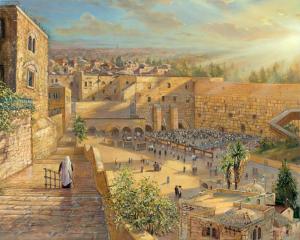
Art has always served as a bridge between the physical world and the spiritual realm, yet few cities evoke as much emotion and reverence as Jerusalem. For centuries, artists have attempted to capture the ancient stone walls, golden sunlight, and sacred energy of the Holy City. However, translating Jerusalem's multi-layered history, spiritual weight, and enduring resilience onto canvas requires more than technical skill—it demands a deep personal connection and a unique artistic vision.
Renowned Israeli-American painter Alex Levin has dedicated over three decades to capturing this sacred energy through his acclaimed Judaica and fine art collections. Utilizing a layered 16th-century painting technique alongside modern surrealism and realism, Levin's artwork brings the spirit of Jerusalem directly into homes and galleries around the world. In this executive interview, Levin discusses his creative process, the inspiration behind his iconic Jerusalem collection, and how fine art preserves cultural identity for future generations.
Q: What initially drew you to focus your artistic career so heavily on Jerusalem, and how has your connection to the city evolved over the past thirty years?
Alex Levin: When I first visited Jerusalem in 1990, I was overwhelmed by its beauty and extraordinary light. The city felt heavenly, and I immediately knew that I needed to capture it in my Jerusalem paintings. Having grown up in Ukraine with very little knowledge of Judaism, arriving in Israel opened an entirely new world for me. Over the years, my connection to Jerusalem has grown from visual admiration into something much deeper. It has become a connection to my faith, my heritage, and the history of the Jewish people. Jerusalem is now the cornerstone of my art. Each time I paint it, I discover another layer of its spirit, memory, and eternal beauty.
Q: Your work seamlessly blends classical 16th-century techniques with elements of surrealism and modern abstract style. How do these technical choices help you express the spiritual dimensions of the Holy City?
Alex Levin: The classical multi-layered technique allows me to build a painting slowly, beginning with tempera and adding transparent layers of oil paint. This creates depth, luminosity, and a sense that the light is coming from within the painting. Realism allows viewers to recognize Jerusalem’s stones, streets, and sacred landmarks, while surrealism and abstraction give me the freedom to paint what cannot be seen physically. I can express prayer, memory, hope, and spiritual energy through color and light. I do not simply paint Jerusalem exactly as it appears. I paint how it feels to me, whether it is awakening in the early morning, glowing at sunset, or illuminated by what I experience as divine light.
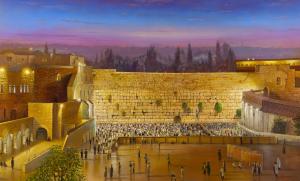
Q: The Jerusalem collection features iconic landmarks like the Western Wall alongside visions of the Third Temple and abstract interpretations of light. What central message do you hope viewers take away from these pieces?
Alex Levin: The central message is one of continuity, faith, and hope. Jerusalem carries thousands of years of Jewish history, but it is not only a city of the past. It is a living city and an eternal promise. The Western Wall represents generations of prayer, longing, and connection. My paintings of the Temple express a vision of spiritual renewal and a more peaceful future. In many works, I remove modern distractions such as cars and buses so the viewer can encounter an ideal Jerusalem filled with sacred architecture and golden light. I want people to feel that Jerusalem belongs not only to history, but also to memory, imagination, and the future.
Q: In addition to original oil paintings, you offer fine art reproductions on canvas, acrylic, and weather-resistant materials for holiday traditions like Sukkot. Why is accessibility so important in your approach to fine art?
Alex Levin: An original painting is unique, but the message within it should not be limited to a single collector. Fine art reproductions allow families, schools, synagogues, and Jewish communities throughout the world to bring an image of Jerusalem into their own spaces. Different materials also allow the artwork to become part of both traditional and contemporary interiors. Weather-resistant Sukkah banners are especially meaningful because they bring Jerusalem and Jewish imagery directly into the celebration of Sukkot. Accessibility does not lessen the importance of the original artwork. It extends its purpose. I want people of different backgrounds and budgets to experience the beauty, history, and spiritual energy that inspired the painting.
Q: How do you see fine art playing a role in preserving Jewish heritage and fostering connection within global communities today?
Alex Levin: Art preserves emotions and memories in a way that words alone cannot always accomplish. A painting can show younger generations how Jewish families prayed, celebrated holidays, studied Torah, and lived in communities that may no longer exist. It can also encourage children to ask questions and inspire families to share their own histories. This is especially important to me because I grew up knowing very little about my Jewish identity. Today, Jewish communities are spread throughout the world, but images of Jerusalem, the Western Wall, Jewish traditions, and everyday Jewish life give us a shared visual language. Fine art connects the past with the present and helps carry our heritage, faith, and collective memory into the future.
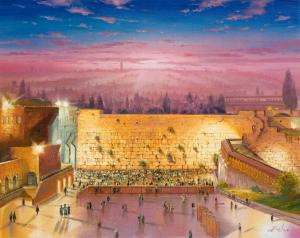
Alex Levin’s masterworks demonstrate that fine art can transcend mere decoration, acting as a gateway to heritage, memory, and spiritual connection. By combining traditional craftsmanship with visionary storytelling, his paintings capture the timeless essence of Jerusalem and make its sacred light accessible to a global audience. Through both original canvases and meticulously crafted prints, Levin continues to redefine modern Judaica art while strengthening the bond between physical spaces and cultural identity.
As appreciation for meaningful, heritage-focused art grows worldwide, Levin's collections offer collectors and families an enduring way to honor tradition within contemporary spaces. His work underscores the vital role art plays in celebrating history, sparking reflection, and uniting communities across geographic boundaries.
To learn more visit https://artlevin.com/product-category/judaica/jerusalem-paintings/