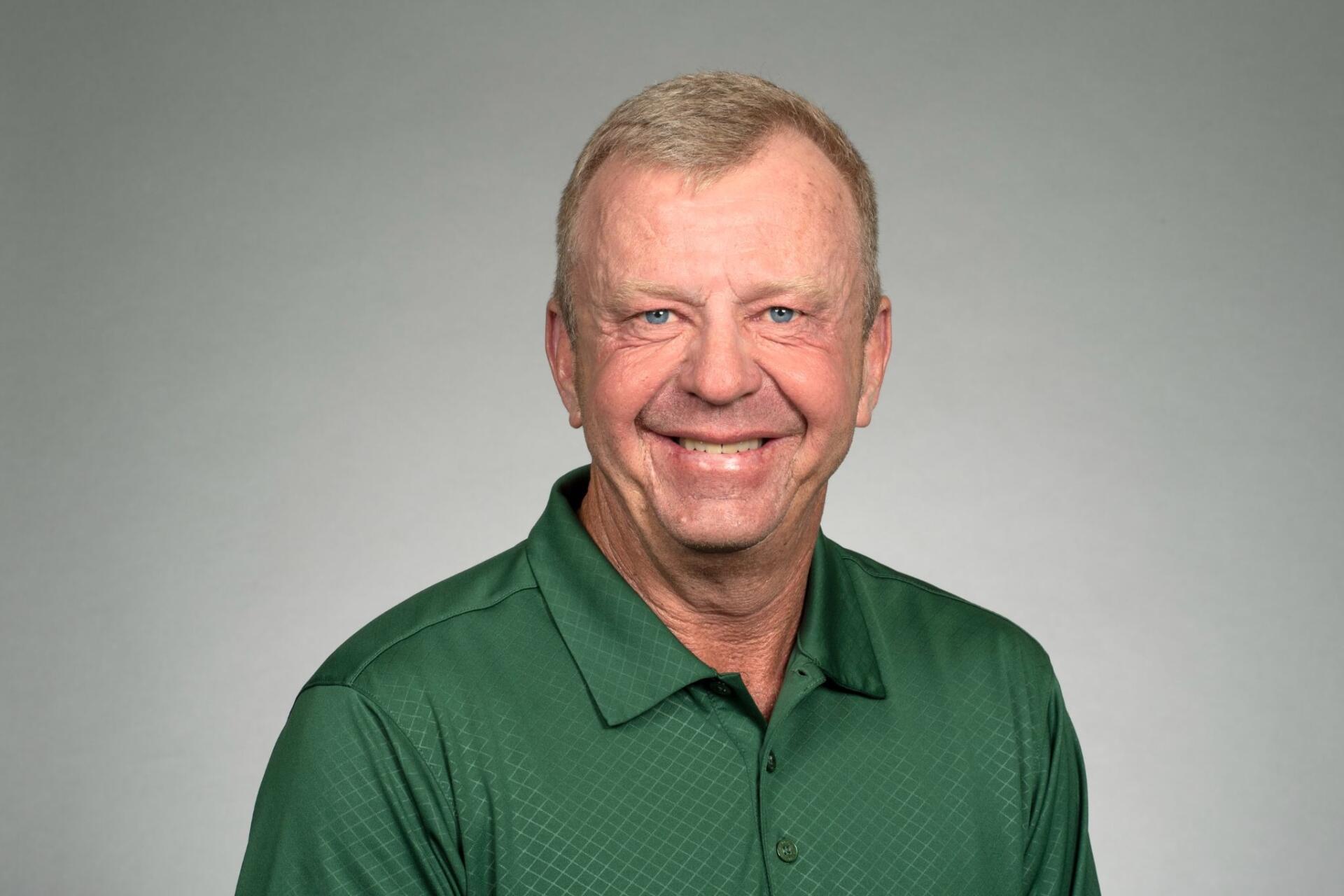
Billy Mayfair is one of America’s most accomplished professional golfers, boasting a distinguished career that spans nearly four decades. After rising to prominence at age 15 on the cover of Boys’ Life as “Golf’s Junior Hotshot,” he captured both the U.S. Amateur Championship and U.S. Public Links Championship, earned medalist honors at the PGA Tour Qualifying School, and became Arizona State University’s first four-time All-American golfer. Since joining the PGA Tour in 1989, Mayfair has secured five PGA Tour victories, including wins at the Nissan Open, Buick Open, Motorola Western Open, and Greater Milwaukee Open, reached a career-high world ranking of No. 26, earned more than $22 million in career prize money, and famously remains the only golfer to ever defeat Tiger Woods in a PGA Tour playoff.
In 2019, after experiencing Asperger-related symptoms for much of his life, Mayfair was diagnosed with autism spectrum disorder. Today, while competing on the PGA Tour Champions, the Arizona Sports Hall of Fame inductee has embraced a vital new role as a passionate advocate for neurodiversity, using his platform to share his journey, break down barriers, and prove that individuals on the spectrum can excel at the highest levels.
Below, Mayfair discusses his journey, his historic moments on the course, and his mission to empower the neurodivergent community.
Q: After competing successfully at the elite level of professional golf, what prompted you in 2019 to seek an evaluation, and what clarity did the diagnosis provide?
Billy Mayfair: My wife, Tami, was really the person who pushed me to get evaluated. There had been things throughout my life that I never completely understood, but after I was disqualified from a tournament in 2019 because of a rules situation, she felt there might be something more going on. At first, I didn’t want to hear it because I had spent my whole life thinking this was simply who I was. Once I finally went through the testing and read the results, so many things suddenly made sense. I understood why I sometimes struggled in school, why I didn’t always pick up on social cues and why I could spend hours by myself on a golf course and be perfectly happy. The diagnosis didn’t change who I was, but it gave me an explanation for things I had wondered about for most of my life. In many ways, it opened my eyes and allowed me to understand myself for the first time.
Q: Golf is an intensely mental sport that demands rapid calculations, crowd management and absolute emotional control. How did living with undiagnosed autism shape your daily preparation and performance on the PGA Tour?
Billy Mayfair: Looking back, I think autism probably helped me in certain aspects of golf and made other parts much more difficult. I have always been able to focus very intensely on something when I am interested in it, and golf was something I could practice for hours without getting bored. I also liked the individual nature of the game because I could go to the golf course by myself and work at my own pace without having to depend on a team. At the same time, there were situations where I needed more time to process information or didn’t understand something the way another person expected me to. Before my diagnosis, I didn’t understand why that was happening, so I just found ways to work through it. I developed routines and relied heavily on preparation because knowing what I was going to do helped me stay comfortable and focused. In some ways, the golf course became my sanctuary because it was a place where I understood the environment and knew exactly what was expected of me.
Q: You remain the only player to ever beat Tiger Woods in a PGA Tour playoff. Looking back at that historic victory, what role did your unique focus and resilience play in handling that level of high-stakes pressure?
Billy Mayfair: At the time, I really wasn’t thinking about making history or about what beating Tiger might eventually mean. I had been playing well that week, birdied the last hole to get into the playoff and then went out there focused on what I needed to do on the next hole. One thing I have always been able to do is get very locked in on the golf course and block out a lot of what is happening around me. Looking back after my diagnosis, I think that ability to narrow my focus probably helped me in situations like that. Tiger wasn’t yet the Tiger Woods the world would eventually come to know, so there wasn’t quite the same aura surrounding him that developed later. Obviously, what he accomplished afterward made that victory much more significant, and I am very proud to be the only player who has beaten him in a PGA Tour playoff. People still bring it up to me all the time, and I consider that a tremendous compliment.
Q: A major focus of your work is demonstrating that neurodivergent individuals can thrive at the highest levels of athletics and business. What are the biggest misconceptions about autism you actively work to dispel?
Billy Mayfair: One of the biggest misconceptions is that people have a single picture in their minds of what someone with autism looks or acts like. Autism is a spectrum, and people on that spectrum have very different abilities, personalities and challenges. Someone may need a little more time to process a question or may communicate differently, but that doesn’t mean that person isn’t capable of accomplishing great things. I played professional golf at the highest level, won five times on the PGA Tour and didn’t even know I had autism. There are probably many other people who have spent their lives wondering why they process things differently without ever having an explanation. I want young athletes and adults on the spectrum to understand that autism doesn’t have to define what they can accomplish. Sometimes a little understanding, patience or additional information is all someone needs to succeed.
Q: Transitioning to the PGA Tour Champions while establishing yourself as a leading advocate requires tremendous discipline. What coping mechanisms, daily routines or self-awareness strategies do you rely on today to manage day-to-day challenges?
Billy Mayfair: Routine has always been important to me, although I understand much better today why that’s the case. I also understand much more about how I process information, so if I need additional time or need someone to explain something differently, I am much more comfortable saying so. Tami has been a huge part of helping me recognize those things and develop ways of dealing with them. I also make family time a priority because there has to be a balance between golf, advocacy and having a life away from both. The biggest difference today is that I understand myself better, so instead of fighting certain tendencies, I can work with them.
Q: For adults and young athletes who suspect they may be on the spectrum but hesitate to seek an evaluation, what advice would you share about the value of getting answers?
Billy Mayfair: I would tell them not to be afraid of getting answers because knowing doesn’t change who you are. I was in my 50s when I was diagnosed, and I had already been a professional golfer for a while, won tournaments, raised a family and lived a pretty successful life. The diagnosis didn’t take any of those things away from me. What it did was help me understand why certain things had been difficult and why I reacted to situations differently than other people sometimes did. I wish I had known much earlier because I think that knowledge could have helped me avoid some difficult situations and understand myself better. Getting evaluated isn’t about putting a label on yourself, it is about getting information that may help you navigate your life more effectively. If sharing my experience helps a young athlete or a 50-year-old adult realize they aren’t alone and encourages them to seek answers, that is more important to me now than almost anything I have accomplished on a golf course.
Today, Mayfair continues to compete as an enduring force on the PGA Tour Champions while actively traveling to speak on the importance of perseverance, self-awareness, and navigating the day-to-day challenges of autism. A native of Phoenix, Arizona, and an inductee of both the Arizona Sports Hall of Fame and the Arizona State University Sports Hall of Fame, he resides in Scottsdale, Arizona, with his wife, Tami, and their son, Max.