Modern business culture often demands relentless speed, constant self-promotion, and burnout in pursuit of scale. Many entrepreneurs find themselves disconnected from their original mission, trapped in reactive decision-making, and overwhelmed by industry noise. Without an intentional framework, founders risk sacrificing personal clarity, discipline, and purpose while chasing conventional metrics of success.
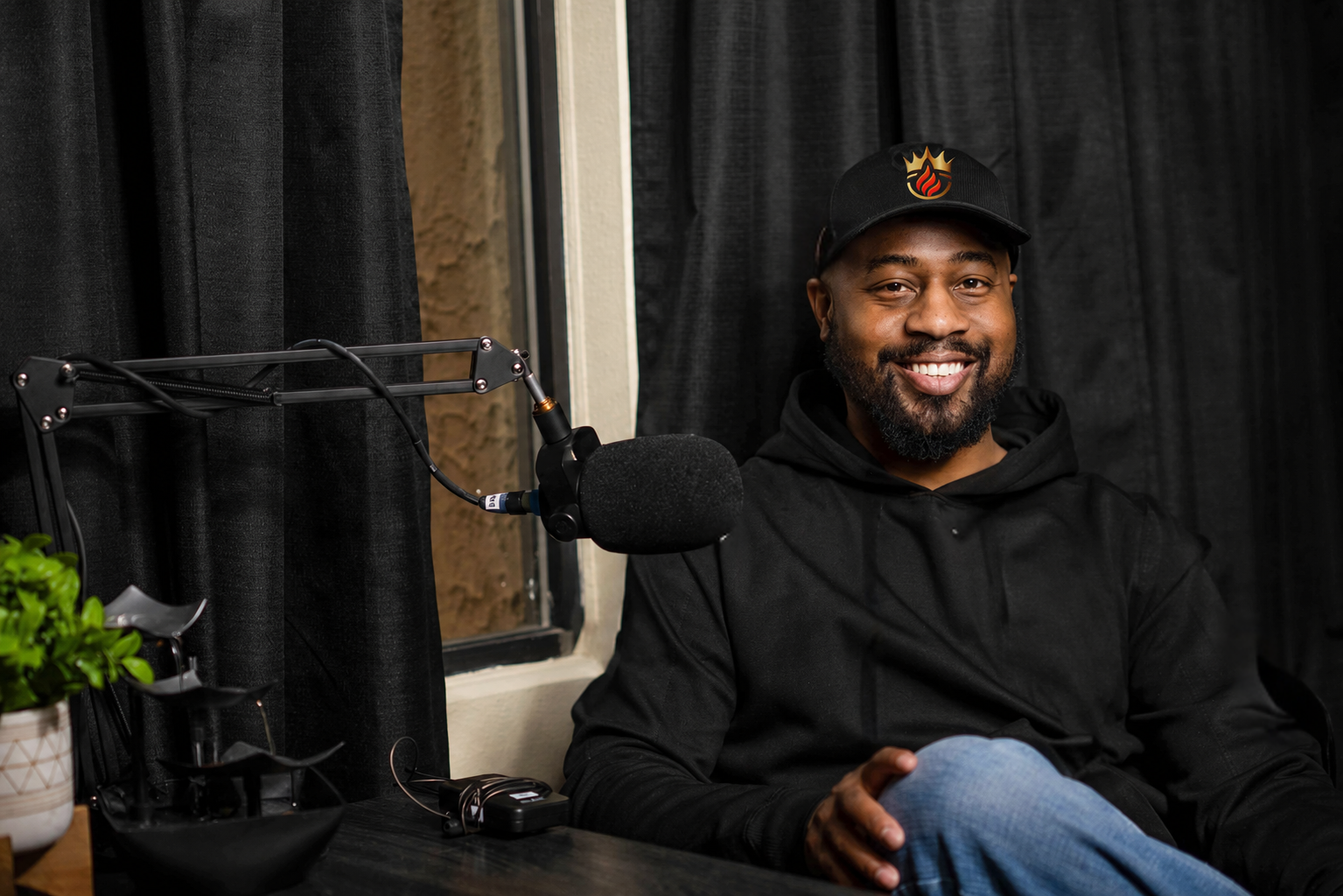
The Daily Crown offers an alternative path forward. Founded by Elzie Flenard III, the platform and its companion podcast deliver structured daily guidance, resources, and community to help purpose-driven leaders build sustainable enterprises rooted in stewardship and focused execution. In this executive interview, Flenard discusses the operating philosophy behind The Daily Crown, the balance between conviction and commercial growth, and how modern executives can lead with enduring clarity.
Q: Many entrepreneurs struggle to maintain alignment between their core values and commercial ambitions as their organizations scale. What foundational practices help founders keep purpose at the center of operational growth?
Elzie Flenard III: The interesting thing about drift is that you usually don't notice it while it's happening.
You start a business with a clear sense of why you're doing it. You know who you want to serve. You know what matters to you. Then the business starts growing. Customers have demands. Payroll becomes real. Opportunities appear. Somebody tells you what you should be doing next. Before long, you're making dozens of decisions every week, and very few of them are connected back to the reason you started.
That's why I believe founders need a regular practice of returning to center.
For me, that means asking some very simple questions: What am I actually called to build? Who am I supposed to serve? Is the way I'm pursuing growth consistent with what I say I believe?
That's where our Business IS Ministry™ philosophy comes from. I don't believe ministry begins when you leave the office. The business itself is part of the stewardship. The way you lead people matters. The way you make money matters. The way you treat customers matters. The opportunities you accept—and the ones you turn down—matter.
I'm very pro-growth. I want entrepreneurs to build healthy, profitable businesses. But I don't think success should require you to become someone you were never called to be.
The challenge is learning how to grow without losing yourself in the growth.
Q: You often emphasize that true leadership is grounded in stewardship rather than ego. How does that mindset shift change the way an executive approaches daily decision-making and team accountability?
Elzie Flenard III: I spent years building businesses where, if I'm being truthful, too much depended on me.
A lot of entrepreneurs wear that as a badge of honor. Nobody can do it like I can. Nobody knows the customer like I do. Nobody understands the vision like I do.
It sounds like commitment, but eventually it becomes a ceiling.
Stewardship caused me to think differently about that.
If I've been entrusted with a business, then my responsibility isn't simply to prove how valuable I am to it. My responsibility is to make what I've been given stronger. That includes the people around me.
So leadership starts to look less like control and more like development. You teach people what you know. You give them room to make decisions. You set a standard and hold them accountable to it. You try to make yourself replaceable in the work so that the organization isn't limited by your personal capacity.
That principle has followed me for years: the more willing you are to pour into people and equip them to succeed without you, the more valuable you ultimately become as a leader.
And it changes difficult decisions, too.
When your identity isn't tied to always being right or always being needed, you can ask a better question: What does responsible stewardship require here?
Sometimes that's encouragement. Sometimes it's patience. Sometimes it's a hard conversation.
The crown, to me, has never been about status. It's about accepting responsibility for what has been placed in your hands.
Q: The marketplace frequently pushes founders toward hustle culture and constant reactivity. How does The Daily Crown framework help leaders slow down, sharpen their focus, and execute with disciplined conviction?
Elzie Flenard III: This is really the heart of why The Daily Crown exists.
I meet a lot of entrepreneurs who are doing well on paper. They're talented. They're working hard. Revenue may even be growing. But when you really talk to them, something is off.
They're tired. They're carrying too much. They're responding to everything. And somewhere in all that motion, they've started drifting.
That's what makes drift dangerous. It rarely announces itself.
You don't wake up and say, Today I'm going to move away from my calling. You just keep adding things. One more commitment. One more opportunity. One more strategy. One more thing somebody told you a successful entrepreneur should be doing.
Eventually, you can be moving incredibly fast without being certain you're still moving in the right direction.
The Daily Crown is built around helping entrepreneurs interrupt that cycle through faith, focus, and fellowship.
Faith gives you somewhere deeper to anchor than the marketplace. Focus helps you separate what matters from what is merely demanding your attention. Fellowship gives you people with whom you can be honest about the realities of carrying a business.
Then you move.
I'm not anti-execution at all. Quite the opposite. But I've learned that execution without alignment can simply help you get to the wrong destination faster.
Sometimes the most productive thing a founder can do is stop long enough to ask, Is this still mine to carry?
And once you know the answer, move with conviction.
Q: Podcasting has become a primary medium for executive communication and thought leadership. How does the Daily Crown Podcast translate complex leadership principles into practical, daily action steps for busy operators?
Elzie Flenard III: I think people connect with stories before they connect with frameworks.
That's probably why podcasting has stayed such an important medium for me. You can take something that sounds abstract like calling, stewardship, fear, alignment, leadership and put it inside a story somebody recognizes from their own life.
Maybe I'm talking about a decision I made in business that didn't work. Maybe it's a conversation I had with another entrepreneur. Maybe it's something I noticed in Scripture. Maybe it's an ordinary moment that exposed something bigger.
Then we pull on that thread.
What happened? Why did it happen? What can we learn from it? And what do we do with that lesson now?
That's really the rhythm.
I've never wanted The Daily Crown Podcast to become another place where entrepreneurs collect information. They already have more information than they can use.
I want the show to create moments of recognition.
Sometimes an episode helps you realize you've been operating out of fear. Sometimes you recognize that you've allowed urgency to determine your priorities. Sometimes it reminds you that you already know what the next move is—you've just been avoiding it.
If you listen for ten or fifteen minutes and leave with one thought that changes the way you lead that afternoon, that's valuable to me.
The goal isn't content consumption.
It's to help you hear clearly enough to act differently.
Q: Looking at the community you have built around The Daily Crown Fellowship, what is the biggest blind spot you see capable leaders encounter when trying to scale independently?
Elzie Flenard III: One of the strangest things about entrepreneurship is that you can become more surrounded by people and more isolated at the same time.
As the business grows, everybody starts coming to you for something.
Employees need decisions. Customers need answers. Vendors need responses. People online may see you as the expert. Your family knows you as the person who usually figures things out.
But where do you go?
That's the blind spot I see.
Capable people can get very good at carrying things quietly. And because they're capable, everybody assumes they're fine—including them.
The problem is that isolation makes drift harder to detect.
You need people who aren't impressed by the title, aren't dependent on you for a paycheck, and aren't simply waiting for their turn to speak. You need people who can listen, challenge you, pray with you, share their own experiences, and occasionally help you see something you're too close to see yourself.
That's why we use the word fellowship intentionally.
I'm not interested in building a room where everybody is handing out business cards and calculating what they can get from one another.
I want entrepreneurs to have a place where they can show up as the person carrying the business, not just the person leading it.
Because sometimes you don't need another consultant.
Sometimes you need another founder to look at you and say, I've been there too.
And that can be enough to help you see the next step differently.
Q: For founders who feel overwhelmed by uncertainty and shifting market demands, what is the single most critical mindset adjustment they must make today?
Elzie Flenard III: I would stop trying to see the whole road.
Entrepreneurs love certainty because certainty feels like control. We want the five-year plan. We want to know which strategy is going to work. We want to know what the market is going to do next.
But that's not how the journey usually unfolds.
I've had businesses change. I've had ideas evolve. I've had seasons end that I thought would last much longer. I've had to change direction more times than I could probably count.
The mistake would have been assuming every zig or zag meant I had failed.
Sometimes the road changes because you've learned something. Sometimes you've grown. Sometimes the market is telling you something. Sometimes what made sense in one season simply isn't the assignment anymore.
The important thing is knowing what remains true while everything around you is changing.
That's where faith and focus become incredibly practical.
Instead of asking, How do I figure out the next five years? I think a founder can ask, What is the next faithful thing for me to do?
Maybe it's making the call.
Maybe it's ending something.
Maybe it's finally launching.
Maybe it's saying no.
Maybe it's getting still long enough to admit that you've been moving in a direction you no longer believe you're supposed to go.
You don't need the entire map to move forward.
You need enough clarity to take the next step without abandoning who you are along the way.
Building an enduring business requires more than tactical agility. It demands an intentional operating system rooted in discipline, sound stewardship, and consistent execution. As Flenard outlines, founders who lead from conviction rather than ego are far better equipped to navigate market turbulence and foster meaningful organizational growth.
As the entrepreneurial landscape becomes increasingly complex, leaders who anchor their work in clear principles will continue to stand out. Platforms like The Daily Crown prove that sustained impact and commercial excellence are not mutually exclusive, but rather complementary outcomes of focused, value-driven leadership.
To learn more visit https://dailycrown.co/