Insurance agencies face a complex challenge today: scaling operations while managing massive amounts of sensitive client data. Balancing rapid growth with strict data protection and regulatory compliance often creates friction, slowing down innovation and adding administrative overhead.
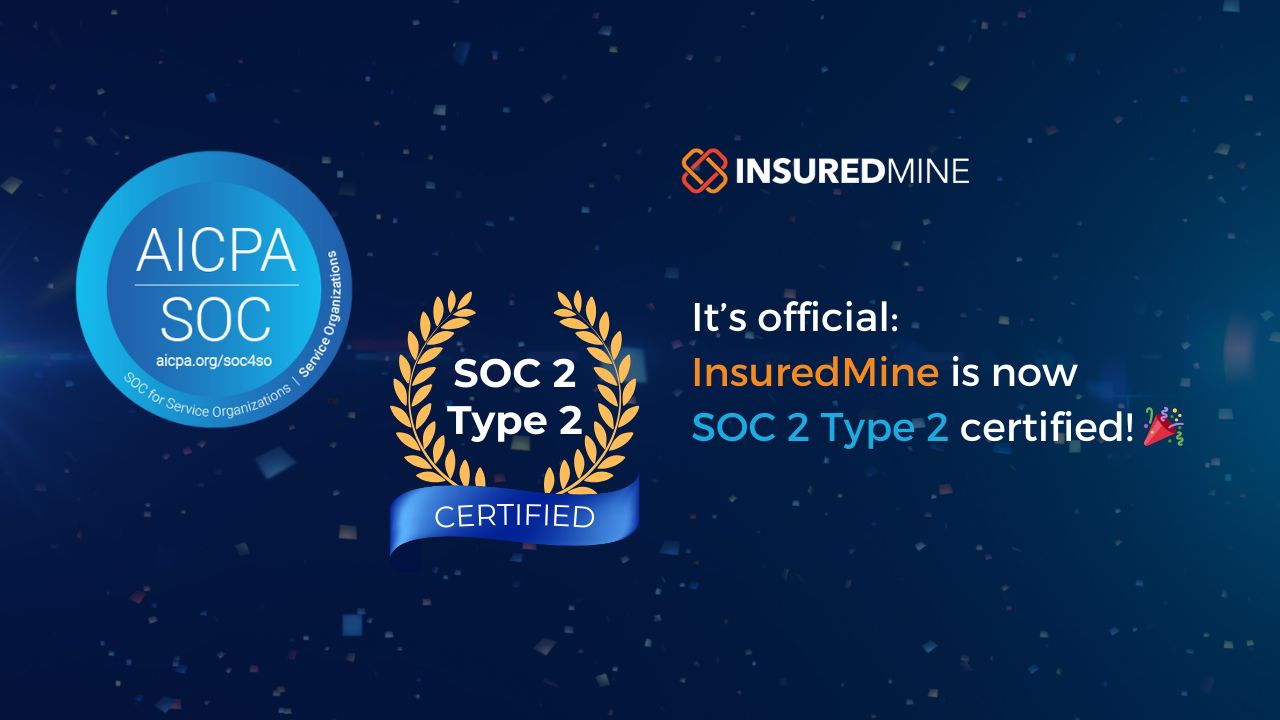
InsuredMine solves this dilemma by offering an all-in-one, AI-powered CRM designed specifically for insurance agencies. By achieving SOC 2 Type II compliance, the company has reinforced its commitment to rigorous security standards while continuing to streamline sales, engagement, and analytics for agencies worldwide.
Q: How does achieving SOC 2 Type II compliance impact trust and operational standards for modern insurance platforms?
Raution Jaiswal: The distinction people often miss is between Type I and Type II. Type I says your controls exist on a given day. Type II says an independent auditor watched those controls operate consistently over an extended period. One is a photograph; the other is a film. For a company entrusted with an agency's client data, only the film matters.
That shift changes security from a promise into an operating discipline. InsuredMine today works with 17 of the top 50 independent agencies in the country, and the relationships managed on our platform are tied to more than $8 billion in premium. At that scale, security cannot depend on individual judgment or good intentions. Access control, change management, monitoring, and incident response have to be embedded into how the company runs — enforced by process, verified by audit, and repeatable regardless of who is in the room.
Trust is built exactly there: not in what a vendor says about security, but in what a third party can verify about how the vendor actually operates, month after month.
Q: What unique data security challenges do insurance agencies face when managing client policies and communications?
Raution Jaiswal: The unique challenge of independent agencies is this: they are small businesses holding enterprise-grade sensitive data, usually without enterprise-grade IT.
A single client relationship carries policy details, financial information, driver's license numbers, claims conversations, years of emails, texts, call recordings, and documents. And that data does not sit still. It moves constantly — between producers and account managers, between the AMS, the CRM, carrier portals, comparative raters, e-signature tools, and personal spreadsheets. Every export, every extra login, every manual transfer is another point of exposure.
Meanwhile, the regulatory floor keeps rising. New York's DFS cybersecurity regulation and the NAIC Insurance Data Security Model Law — now adopted in a majority of states — put obligations directly on agencies, not just carriers. Add E&O exposure and communication-compliance requirements around texting, and a data incident is no longer an IT inconvenience. It is a licensing, liability, and reputation event.
So security in this industry is not an IT line item. It is an operational question: who can see what, who did what, and where does client information actually live? Most agencies cannot answer all three today. That is the real vulnerability.
Q: How does integrating core functions like sales pipelines, client engagement, and analytics into a single platform reduce security risks?
Raution Jaiswal: Fragmentation creates risk. Every disconnected tool is another attack surface, another permission model, another place where client data quietly accumulates outside anyone's oversight.
Here is what that looks like in practice: a producer exports prospects to a spreadsheet, texts clients from a personal phone, tracks renewals in a separate tool, and emails documents from an unmanaged inbox. None of it is malicious. All of it is invisible. When that producer leaves — and producer turnover is a fact of life in this industry — the agency has no idea what client data walked out the door.
A unified platform collapses that sprawl. Pipeline, communication, workflows, and analytics operate inside one controlled environment with one permission model and one audit trail. Instead of asking five vendors five different questions about who accessed a client record, the agency asks one system and gets one answer.
The goal was never fewer tools for its own sake. The goal is a governed operating environment around the client relationship — because the client relationship is the asset, and you cannot protect an asset you cannot see.
Q: In what ways do automated workflows and AI-driven insights maintain compliance without sacrificing speed or efficiency?
Raution Jaiswal: The best compliance system makes the right behavior the easiest behavior. If compliance slows people down, they route around it — and that is when risk actually enters the building.
Automation improves compliance precisely because it removes dependence on memory. A renewal workflow that fires automatically, documents every touchpoint, and escalates on schedule is not just faster than a producer's to-do list — it is inherently more auditable. The record creates itself.
AI raises the stakes, and the standard. Agencies sit on enormous intelligence trapped inside conversations, policies, and years of activity history. AI can surface it in seconds — but only if it operates inside the same security perimeter as everything else. In our architecture, AI respects user permissions: when a team member asks a question, the answer is drawn only from data that person is already entitled to see. Insight inherits access control; it does not bypass it. And where judgment matters, a human stays in the loop.
We hold a simple standard: AI should make an agency more intelligent without making its data less secure. Speed and governance are not trade-offs. Designed correctly, they reinforce each other.
Q: What long-term benefits do compliance certifications bring to growing agencies and networks managing multi-million-dollar books of business?
Raution Jaiswal: As an agency grows, the consequences of weak controls grow faster than the agency does.
At a certain scale, the technology stack stops being a productivity tool and becomes part of the infrastructure supporting the value of the agency itself. Anyone who has been through a perpetuation event, a network affiliation, or an acquisition knows that due diligence now includes hard questions about data practices. An agency running on a compliance-certified platform answers those questions in an afternoon. An agency running on spreadsheets and disconnected tools answers them in months — often with a valuation haircut attached.
There are immediate benefits too: faster vendor due diligence, stronger footing with carriers and partners, and credible assurance for clients who increasingly ask how their information is handled.
But the deepest benefit is institutional discipline. Growth creates complexity — more people, more integrations, more data, more risk. A compliance-first operating model forces a technology provider to build processes that withstand that complexity rather than buckle under it.
This matters more every year, because the CRM is evolving from a system of record into a system of intelligence. Platforms like ours will understand more about an agency's clients — their behavior, their risk, their next best action — than any system before. That knowledge is only valuable if it is trustworthy. Intelligence without trust is worthless. The companies that earn the right to manage an agency's data will be the ones that treat protecting it as seriously as they treat growing the business.
Regulatory standards and data security will only continue to increase in importance as the insurance sector embraces digital transformation. Platforms that bridge the gap between advanced automation and uncompromising security provide the essential foundation agencies need to scale safely.
As the industry moves toward deeper intelligence-driven operations, compliance-first technology ensures that growth never compromises client trust. InsuredMine sets a benchmark for how modern platforms can deliver powerful CRM capabilities while protecting sensitive information at every level.
To learn more visit https://www.insuredmine.com/