Generational history fades rapidly when families rely on memory alone. Personal letters, handwritten diaries, and vintage photographs often scatter or end up lost to time. When descendants fail to document their lineage, they lose their connection to ancestral roots and the broader social history that shaped their communities. Reconstructing centuries of ancestral records requires patience, rigorous archival research, and a clear vision to turn dusty documents into an engaging chronicle.
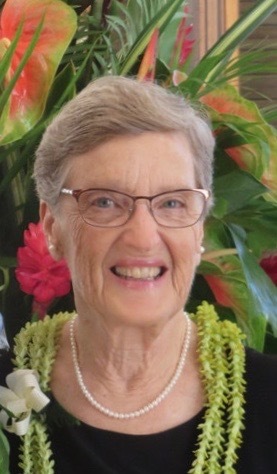
Beverly Schultz Csordas bridges this divide in her book, The Olden Days: My Mother’s Family History 1594–1997. Chronicling her mother Margaret Concklin Schultz’s ancestry, Csordas traces her lineage from early colonial days, to the founding of a historic fruit orchard in Pomona, New York, in 1711. In this interview, Csordas discusses her investigative journey, how family archives mirror early American history, and why documenting our personal origins matters today.
Q: Tracing family lineage across four centuries is an ambitious endeavor. What original questions or discoveries first inspired you to begin researching your mother’s ancestral roots?
Beverly Csordas: The inspiration began with the simple fact that I had boxes of family diaries, letters, photos and other documents that I had inherited from my mother. I was motivated by the sense that I felt that these things should be preserved. I also realized that if I did not take on this task, they would likely never be revealed for future generations. I was determined to share with my grandchildren my family history and, along with that, a hope that they would come to appreciate the family and place that is my ancestral home. It is, after all, part of their personal history.
Q: The Olden Days brings history to life by incorporating vintage photographs, letters, and personal diaries. What was your method for authenticating these records and organizing centuries of disparate documents into a cohesive narrative?
Beverly Csordas: Let me just say, it was a daunting task. I thought about it for years, before summoning the energy to tackle the project. My entry into this world was simply taking inventory of what I had. It took a while to log everything and then to number the entries into some meaningful order. I began the narrative with a photo portrait of a young female ancestor I had on my living room wall, and that had also hung on the wall in my mother’s home. I then looked back two generations to this woman’s father and grandfather. Along with family papers about these men, reading books about the history in the county and an online search, I was able to tell their story and include photos of them. That was essentially the method I used as I proceeded–to weave together family archives, books about the history of the region and online searches. I tried to note where I found the information through lists of references and resources as well as footnotes. The process took about 20 years of gradual work.
Q: While researching, genealogists often uncover unexpected surprises, trials, or overlooked figures. Did you uncover any stories in your lineage that changed how you view your family heritage?
Beverly Csordas: Let me be clear, I do not consider myself a genealogist (or an historian or writer for that matter). What I have seems to be a determination to preserve my family history, and I do that as best I can. Yes, there were many unexpected challenges along the way. One of the most demanding was transcribing the diaries. Most of them were written from 1882 to 1904 by women who wrote in very small notebooks, in tiny handwriting in pencil. It was a time consuming process that frequently required a magnifying glass to decipher words. Another challenge was taking pictures of old photographs, so the would be preserved digitally. That was very time consuming as well. And then there was the task of deciding which pictures to include.
The surprises were endless and enlightening. Such as the name of a toddler who died in 1874, who was my grandfather’s sister. I had never heard her name mentioned, but later discovered her tombstone in the family cemetery. Another example of a surprise was to come across a letter written by my grandmother in January 1919. In it she describes in detail how each of her five children became very ill but somehow managed to survive. And that many people did not survive leaving children who were, “left without a mother’s care”. Although she did not give the illness a name, it most certainly was the Spanish flu pandemic of 1918. I was reading this about 100 years later during the COVID pandemic!
I might add that discoveries continued after I first shared this book with family. The most amazing one was seeing for the first time the grave marker of my ancestor, Nicholas Concklin. It is a simple stone carved with his initials and the years of his birth and death–1661 to 1751. It is located in the woods about two miles from my family home. In a larger context, I have been surprised by how enriching this experience has been to me personally. Getting to know and understand my mother as a child and as a young adult is a priceless glimpse into the past.
Q: Many families own heirloom documents and oral stories but struggle to assemble them into a lasting book. What practical advice do you give to aspiring family historians who want to preserve their ancestral records?
Beverly Csordas: I suppose the first bit of advice is to not doubt that this work, the preservation of family history, is important. For all the years I was transcribing diaries, for example, I constantly questioned myself. Wondering, why was I doing this? Who is ever going to care or be interested? It was a constant thought, but for some reason I seemed compelled to keep on.
Second, is the simple notion that it is important to begin. As mentioned earlier, making a log of all that you have is a good place to start, to get an overview of what you want to accomplish. One could then continue with a particular person or time period that peaks their curiosity. I essentially started with what I was curious about. Then I went back in time to write about the early days of Rockland County, then went forward again to more immediate relatives including my grandparents and their children. I must say I enjoyed the “research” aspect, going through books and online discoveries.
Nonetheless, I never, ever intended this to be a book. It was simply to be a collection of items I would print out, put in some sort of folder and share with family. But it grew to so many pages, I turned to a publisher who specializes in the this type of book. The limited number of copies I had made, I gave to family and close friends. Some of those who saw it encouraged a publication to reach a wider audience. And so it evolved far, far beyond my original intention.
A family history does not necessarily need to be long or involved. One of the most precious items included in this book is a single handwritten page by my Aunt Isabelle Roeandt who entitled it, “My Life Story”. In it she gives a glimpse of her life, her family and her personal tragedy.
Q: Looking ahead, how do you hope The Olden Days shapes the way future generations connect with regional history, farming heritage, and personal genealogy?
Beverly Csordas: Many of those in the ‘future generation’ have little notion of my family history or the historical significance of the area. With this book they will always have information and documents available to them. My grandchildren have now traveled to this county, have gone to the family farm that has been operating for over 300 years, and have visited the cemeteries where their ancestors are buried. One visitor to the county even used the book as a guide to visit numerous historical locations in the county. Although originally intended for family only, making this history more widely available has helped to share this history with a broader range of readers. It is available to shoppers at the farm stand in Pomona, New York, where this history is centered.
I could never have imagined these positive consequences as I sat for years transcribing old diaries and wondering if it was worth it. Others taking on such a task should not doubt the value of their efforts, whether it be an in depth study or a simple one page story.
Family history provides the foundation for our shared cultural heritage. By recovering centuries of diary entries, deeds, and personal anecdotes, Beverly Schultz Csordas highlights how individual lives form the fabric of early American history. Her work demonstrates that preserving an ancestral legacy requires active inquiry, careful archival stewardship, and deep dedication to truth.
As digital tools change how we record our lives, preserving personal archives remains essential for future generations. Authors like Csordas prove that family histories are not merely private keepsakes, but vital records of resilience, community building, and regional heritage. The Olden Days offers an enduring blueprint for anyone seeking to uncover and honor their ancestral past.
To learn more visit The Olden Days on Amazon.