Young artists and students often face pressure to conform to traditional expectations, which can stifle individuality and creative growth. When aspiring musicians play instruments outside conventional genres, they frequently struggle to find their voice, build confidence, and gain recognition within rigid artistic frameworks. Fostering true creative potential requires guidance, self-belief, and an appreciation for diverse, non-traditional talents.
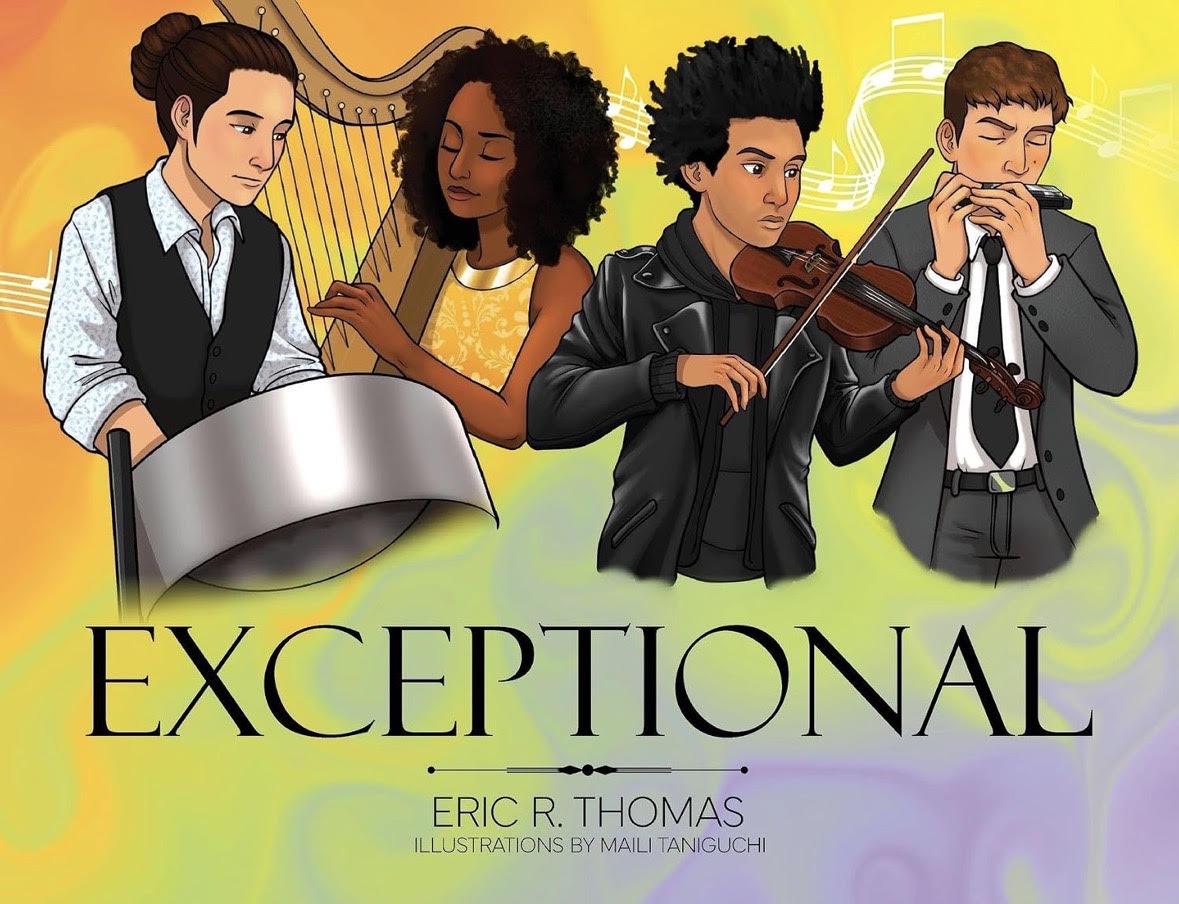
In his book Exceptional, educator and author Eric Robert Thomas tackles this challenge through the inspiring journey of four high school seniors preparing for their final spring jazz concert. With more than twenty-five years of teaching experience and a deep connection to the jazz arts community, Thomas demonstrates how dedication and mentorship turn non-traditional instruments into unforgettable artistic expressions. We sat down with Eric Robert Thomas to discuss the inspiration behind Exceptional, the influence of real-world jazz innovators, and the vital role of creative mentorship in empowering young voices.
Q: As an educator with more than twenty-five years of experience, what specific need or moment inspired you to write Exceptional for young musicians and dreamers?
Eric Robert Thomas: During my 25+ years as an educator, I learned that children don’t discover their gifts in the same way or at the same time. One of a teacher’s responsibilities is to recognize potential a young person may not see in themselves. That belief has carried over into my writing. In my first children’s book, Standing Tall, I explored the idea that our individual gifts can be used to meet others’ needs. With Exceptional, I wanted to explore another side of that idea: what happens when a person’s gift doesn’t fit neatly into others’ expectations?
Exceptional grew out of that belief, combined with my lifelong love of jazz and my relationships with extraordinary musicians who chose instruments we don’t traditionally think of as lead instruments in jazz. I wanted young people to understand that being different doesn’t mean being less capable. Sometimes the very thing that makes you different is what makes you exceptional.
Q: The four main characters play instruments rarely associated with traditional jazz leads—the violin, harp, harmonica, and steel pan. Why was it important for you to center the story around these non-traditional choices?
Eric Robert Thomas: Jazz has always been a music of possibility. Yet when many people picture a jazz ensemble, certain instruments immediately come to mind — saxophone, trumpet, piano, guitar, bass, and drums. I wanted young readers to meet four musicians who expanded that picture. Scott Tixier on violin, Brandee Younger on harp, Yvonnick Prene on harmonica, and Victor Provost on steel pan demonstrate that an instrument doesn’t have to be traditionally associated with a genre for an artist to find an authentic voice within it. That’s also a lesson for children: you don’t have to follow someone else’s path simply because it is the familiar one.
Q: The characters in the book are based on real-world jazz trailblazers like Scott Tixier, Brandee Younger, Yvonnick Prené, and Victor Provost. How did their artistic journeys shape the narrative and themes of the book?
Eric Robert Thomas: These artists would not necessarily call themselves “trailblazers” because, despite their enormous talent, they are humble, modest, and respectful of those who dared to implement these instruments into jazz before them. I had the privilege of getting to know Scott, Brandee, Victor, and Yvonnick over the years I promoted jazz events in New Jersey with my partners. What impressed me wasn’t simply their virtuosity. Each of them had the courage and discipline to develop an individual musical identity. They didn’t ask whether their instruments belonged in jazz; through excellence, they demonstrated that they did. Their journeys gave me the foundation for Exceptional. I wanted young readers to see that originality isn’t the absence of discipline. In many ways, it requires even more discipline because you are sometimes creating a path where one wasn’t obvious before.
Q: Mentorship plays a central role in the students’ preparation for their final spring concert. How does the teacher in the book reflect your own philosophy on guiding and encouraging student potential?
Eric Robert Thomas: Dr. Aliyy, their instrumental teacher, isn’t simply there to tell the students what to do. He sees them. My philosophy as a teacher was never to create the best versions of myself. It was to help students discover the strongest versions of themselves. Dr. Aliyy reflects that philosophy. A good mentor provides knowledge, structure, challenges, limitless encouragement, and high expectations, but also knows when to step aside and allow a young person to take ownership of their gifts. During my teaching career, I tried to create a classroom where students knew I believed in them while also understanding that belief came with expectations. I have many examples of my students over the years who met my expectations and then raised the bar even higher based on what they discovered they could do. Encouragement and accountability belong together.
Q: Your work aims to teach students respect and admiration for the distinct abilities and backgrounds of others. How does Exceptional communicate these values to young readers beyond the world of music?
Eric Robert Thomas: The instruments are really a metaphor. Every classroom contains children with different backgrounds, personalities, interests, abilities, and ways of seeing the world. Too often, young people compare themselves to whatever society has decided is “normal.” Exceptional asks them to look at differences another way. We can respect what others bring while recognizing the value of what we bring ourselves. A violin doesn’t have to become a saxophone to belong in jazz. And a child doesn’t have to become someone else to have value.
Q: What core message do you hope aspiring artists, musicians, and students take away from Exceptional as they carve their own creative paths?
Eric Robert Thomas: I hope young people finish Exceptional, asking themselves, “What is exceptional about me?” I want them to understand that talent matters, but talent must be joined by discipline, perseverance, curiosity, and the courage to be yourself. Scott, Brandee, Victor, and Yvonnick didn’t become exceptional because they chose uncommon instruments. They became exceptional because of how they used their gifts. I hope that every young reader comes away believing that their own gifts deserve to be discovered, developed, and shared, or as I say in my book, “Dare to be that person who does not accept mediocrity but embraces the challenges of fulfilling your dreams and potential with a plan that surpasses those who have low expectations of what you can offer the world.”
Exceptional illustrates that artistic excellence comes from embracing unique perspectives rather than conforming to rigid molds. By highlighting nontraditional instruments in jazz, the story provides young creatives with a meaningful roadmap for turning perseverance and originality into personal triumph. It reinforces the lasting impact of dedicated mentorship in helping students discover their authentic strengths.
As creative education continues to evolve, inspiring the next generation to value diverse talents and pursue their passions with discipline remains essential. Stories like Exceptional offer young readers the validation and confidence needed to forge their own paths and share their voices with the world.
Exceptional is available for purchase online at Amazon.com and Barnes & Noble.com.