The January 2025 mid-air collision between a commercial jet and a U.S. Army Black Hawk helicopter over the Potomac River remains a devastating aviation disaster. The National Transportation Safety Board (NTSB) investigation exposed severe flaws in airspace design, communication protocols, and air traffic control capacity near Ronald Reagan Washington National Airport (DCA). These overlapping failures highlight the deadly consequences of unmanaged systemic risk in highly congested airspace.
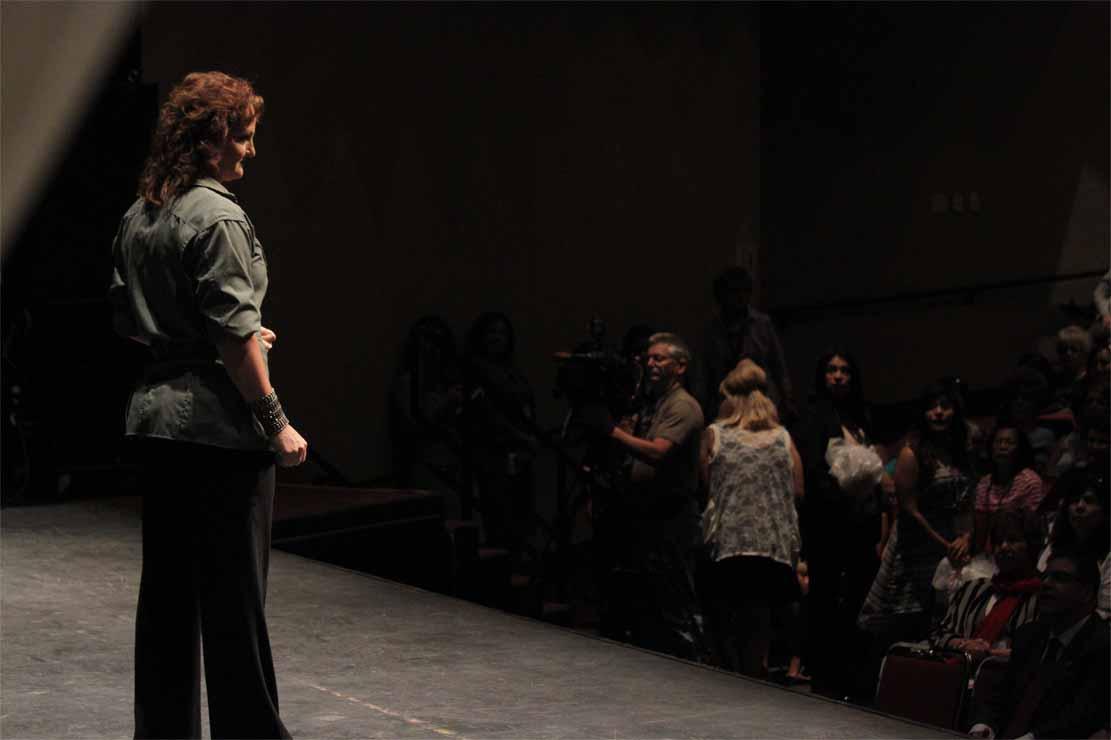
Elizabeth McCormick is a former U.S. Army Black Hawk helicopter pilot and a professional motivational speaker. She draws on her extensive military aviation experience to analyze the complex factors that caused this tragedy. In this interview, she breaks down the technical and operational breakdowns of the DCA crash and explains how organizations can apply these lessons to prevent future disasters.
Q: The National Transportation Safety Board identified airspace design as a major factor in the crash. How did the specific placement of Helicopter Route 4 create such a dangerous environment for both aircraft?
Elizabeth McCormick: What the NTSB final report confirms is that this tragedy was not the result of one isolated mistake. There were systemic risks built into that airspace long before January 29.
Helicopter Route 4 placed helicopters directly underneath the approach corridor for aircraft landing on Runway 33 at Reagan National. The published maximum altitude for the helicopter was 200 feet. Yet the NTSB determined that even if a helicopter was flying Route 4 at exactly 200 feet along the eastern shoreline of the Potomac, there could be only about 75 feet of vertical separation between that helicopter and an aircraft on the Runway 33 approach.
Seventy-five feet is an extraordinarily small margin when you consider aircraft movement, pilot workload, nighttime visual conditions, lateral positioning and normal instrument tolerances. The NTSB found that the separation became even smaller if the helicopter moved farther west from the shoreline or if the arriving aircraft was below the three-degree visual glidepath.
That is especially significant to me as a former Black Hawk pilot because immediately following the accident, one of the concerns I raised was the helicopter's altitude. We knew Route 4 had a 200-foot maximum in that area. The final investigation determined that the collision occurred at approximately 278 feet MSL. The NTSB also uncovered another critical factor: the Black Hawk's barometric altimeter may have been indicating approximately 100 feet lower than the helicopter's actual altitude. That means the crew could have believed they were complying with the route altitude while actually flying higher.
The larger problem is that the system provided virtually no margin for that kind of error. In fact, the NTSB found that 49 percent of the 523 helicopter flights it analyzed on the northern portion of Route 4 exceeded the route altitude at some point. This was not simply an anomaly involving one helicopter crew.
There was also a dangerous assumption built into the system. Army pilots interviewed by investigators believed that staying at or below the published helicopter route altitude provided separation from fixed-wing traffic. The NTSB found that wasn't actually the case. The FAA had not designed Route 4 to provide procedural separation from airplanes approaching DCA.
So you had helicopters flying a published route, airline crews flying a legitimate approach to Runway 33, and an airspace design that allowed those two flight paths to come dangerously close together. The system then depended heavily on pilots visually seeing and avoiding one another to provide the final layer of protection.
That is why I think one of the most important lessons from this tragedy is that you cannot design a safety-critical system where everything has to go perfectly for it to remain safe. Good aviation safety builds in margins, redundancy and multiple layers of protection so that one human error, one instrument discrepancy or one missed radio transmission does not result in the loss of 67 lives.
Q: The air traffic controllers were reportedly overwhelmed by the volume of traffic that night. How does controller workload impact the situational awareness needed to manage low-altitude military and civilian flights?
Elizabeth McCormick: The NTSB's final findings make it clear that controller workload was not just background noise in this accident. It was identified as an additional causal factor. The local controller was simultaneously working both the local control position, responsible for arriving and departing airplanes, and the helicopter control position, responsible for helicopters transiting some of the most complex airspace in the country. The NTSB concluded that combining those positions increased workload and negatively affected the controller's performance and situational awareness.
Think about what situational awareness requires from an air traffic controller. They have to know where each aircraft is now, its altitude and speed, what instructions have been issued, and where that aircraft will be seconds or minutes from now. As workload increases, the controller's attention has to be divided among more aircraft, more radio calls and more rapidly changing variables. That reduces the cognitive capacity available to recognize a developing conflict.
The numbers from that night illustrate the problem. In the 20 minutes before the collision, the controller was responsible for between 7 and 12 aircraft. He later told investigators that he had felt 'a little overwhelmed' about 10 to 15 minutes before the accident. Then, in just the final two minutes, there were 29 radio transmissions, and approximately 90 seconds before impact the number of aircraft under his responsibility increased to 12, including five helicopters and seven airplanes.
There is another critical factor that deserves much more attention: the airplanes and helicopters were operating on separate radio frequencies.
The DCA tower used a discrete helicopter frequency while the airplanes used the local frequency. When the helicopter and local controller positions were combined, one controller was responsible for monitoring and transmitting on both. The controller's transmissions could be heard by pilots on both frequencies, yet the pilots could not hear aircraft transmitting on the other frequency. The NTSB specifically concluded that this procedure decreased overall pilot situational awareness.
From a Black Hawk pilot's perspective, that is significant. PAT25 could not hear the CRJ crew accept the Runway 33 circling approach or read back its landing clearance. At the same time, the CRJ crew could not hear PAT25 reporting its position as it traveled down the helicopter route. Had those crews been able to hear one another's transmissions, each crew would have received additional information about the other aircraft's location and intentions. That doesn't guarantee the collision would have been prevented, but it would have provided another layer of situational awareness. That is exactly why the NTSB recommended that the FAA evaluate the safety benefits and risks of putting aircraft on the same frequency when the helicopter and local positions are combined.
And there was yet another communications vulnerability. Just 17 seconds before impact, ATC transmitted, 'PAT two five pass behind that C-R-J.' According to the NTSB, a simultaneous microphone transmission from the helicopter interfered with that message, and the Black Hawk crew did not receive the critical 'pass behind' instruction.
This brings us back to a fundamental principle of aviation safety: redundancy matters. We should never design a system where one controller, divided between two types of traffic on separate frequencies, becomes the primary link connecting aircraft that cannot hear one another, especially when those aircraft are operating in close proximity at night.
The lesson for aviation and for organizations outside aviation is the same. When you overload one person with multiple mission-critical responsibilities, you don't simply increase their workload. You can degrade the entire team's situational awareness. Safety systems should be designed so that when one layer fails, another layer catches the error before it becomes catastrophic.
In this case, the NTSB concluded that if the helicopter and local control positions had been staffed separately, the Black Hawk might have received a more timely and effective traffic advisory. The Board went further and concluded that, given the traffic volume and complexity that night, those positions should have been separated.
Q: The Black Hawk crew and the commercial jet communicated on different radio frequencies. How did this lack of shared communication limit the pilots' ability to avoid the collision?
Elizabeth McCormick: This is one of the most important findings in the NTSB report because it illustrates how communication itself is a critical layer of collision avoidance.
First, I want to clarify something from some of the early reporting. This was not a UHF-versus-VHF issue. Both aircraft were communicating on VHF frequencies. Flight 5342 was on DCA's tower frequency of 119.1 MHz, while the Black Hawk, PAT25, was on the dedicated helicopter frequency of 134.35 MHz. The tower controller was monitoring both frequencies.
That distinction matters because although both flight crews could hear the controller's transmissions, they could not hear each other's transmissions to the controller. The NTSB concluded that this procedure decreased the pilots' overall situational awareness.
Think about what the Black Hawk crew would have heard if everyone had been communicating on a common frequency. They could have heard Flight 5342 accept the change from Runway 1 to the circling approach to Runway 33. They also could have heard the CRJ crew read back its landing clearance. Those radio calls would have provided valuable information about where that airplane was going and, critically, that its flight path was going to cross the helicopter's route.
That becomes even more significant because the Black Hawk crew did not receive the word 'circling' in ATC's initial traffic advisory because of degraded radio reception. What the crew heard was essentially that there was a CRJ at 1,200 feet 'for Runway 33.' They missed the very word that could have alerted them that the CRJ was changing direction and crossing toward Runway 33.
Now look at it from the CRJ crew's perspective. Had they been able to hear the helicopter frequency, they could have heard PAT25's position report as the Black Hawk proceeded along the helicopter route. That would have given the airline pilots another cue that a helicopter was operating nearby and potentially converging with their approach path. The NTSB specifically identified these missed opportunities for both crews.
Instead, ATC effectively became the communication bridge between two aircraft that could not hear one another.
That created another vulnerability. When the controller told PAT25 to 'pass behind' the CRJ just 17 seconds before the collision, a simultaneous 0.8-second microphone transmission from the helicopter interfered with the controller's transmission. The Black Hawk crew did not receive the critical instruction to pass behind the CRJ.
So now we have multiple communication barriers stacking on top of each other. The Black Hawk crew could not hear the CRJ accept the Runway 33 approach. They missed the word 'circling' in the controller's traffic advisory. The CRJ crew could not hear the Black Hawk's position reports. And then, seconds before impact, the Black Hawk crew did not receive the instruction to pass behind the CRJ.
Each one of those pieces of information could have contributed to a more complete traffic picture.
There is another factor that concerns me as a former Black Hawk pilot. When ATC asked PAT25 whether they had the CRJ in sight, the controller did not provide a relative position such as 'traffic at your 10 o'clock.' The NTSB specifically found that providing that type of directional information could have told the instructor pilot where to look. Instead, the instructor pilot may have believed the CRJ being referenced was one of the aircraft approaching Runway 1 rather than Flight 5342 crossing toward Runway 33.
This is where the concept of shared situational awareness becomes so important. Situational awareness isn't simply seeing another aircraft. It is understanding which aircraft is the conflict, where it is, where it's going and what it's going to do next.
And this is why I don't view the accident as one missed radio call or one pilot failing to see another aircraft. The NTSB findings show multiple layers of information that either weren't shared, weren't received or weren't sufficiently specific. At the same time, the system was relying heavily on visual separation to keep these aircraft apart. The NTSB ultimately concluded that relying on pilot-applied visual separation as a primary means of separating this mixed traffic created an unacceptable risk.
There were legitimate reasons for using separate frequencies. It reduced radio congestion and prevented pilots from having to listen to communications that might not apply to them. Yet when airplanes and helicopters are operating in the same physical airspace with intersecting flight paths, there is a tradeoff. Reducing radio congestion can also remove information that pilots need to build the larger traffic picture.
That's why the NTSB recommended that the FAA conduct a comprehensive evaluation of whether aircraft should be required to use the same frequency when the helicopter and local control positions at DCA are combined. The Board also recommended anti-blocking technology that could alert controllers or flight crews when simultaneous transmissions prevent a message from getting through.
For me, the broader safety lesson is this: communication is not just about transmitting instructions. It's about creating shared situational awareness. When you isolate information, you can isolate people from the very warning signs they need to recognize a developing threat.
In aviation, especially in congested airspace, the goal should be to make sure that no single missed transmission, misunderstood traffic call or visual identification becomes the last line of defense.
Q: The Black Hawk crew was conducting a night vision goggle check ride. From your experience, how do night vision goggles affect a pilot's depth perception when spotting other aircraft?
Elizabeth McCormick: Elizabeth McCormick: Night vision goggles are an incredible tool, and as a Black Hawk pilot I've flown many hours using them. They dramatically improve what we can see at night. Yet they do not give you the same visual picture you have during daylight, and that distinction is extremely important in understanding this accident.
When you're wearing NVGs, you're essentially looking through two tubes. Your normal field of view is approximately 180 to 200 degrees, while night vision goggles reduce that to roughly 40 degrees. That means pilots have to continuously move their heads and deliberately scan the environment to maintain situational awareness. The Army's submission to the NTSB specifically identified that limited field of view as an NVG limitation.
NVGs can also affect your perception of depth, distance, closure rate and relative movement. When you're looking at another aircraft at night, particularly head-on or nearly head-on, there may be very little apparent movement across your field of view. It can look like a relatively stationary point of light even though that aircraft is closing on you rapidly.
That is one of the things I think the general public needs to understand. Seeing a light is not the same as correctly identifying the aircraft represented by that light.
The NTSB found that when the Black Hawk received its initial traffic advisory, there were multiple airplanes approaching DCA. From PAT25's perspective, those airplanes would have appeared as a tight cluster of lights near the horizon. Investigators determined that the instructor pilot likely could see at least four, and possibly five, airborne targets in that direction. An Army standardization instructor pilot also testified that the brightest aircraft light does not necessarily belong to the closest aircraft, making it difficult to determine an airplane's sequence within a group.
Now add the Washington, D.C. environment. You have city lights, airport lighting, aircraft lights and reflections around the Potomac. The NTSB specifically identified the complex array of adjacent city lights, limited NVG field of view, workload, divided attention and lack of apparent motion as perceptual limitations affecting the helicopter crew.
That creates a very challenging visual problem. A pilot may genuinely believe they have the correct aircraft in sight, while actually tracking another aircraft.
And that appears to be extremely relevant here. The Black Hawk crew reported that they had the traffic in sight and requested visual separation. Yet the NTSB found that there was no discussion between the helicopter pilots confirming that they were actually looking at the same aircraft. Investigators concluded that the instructor pilot may have misidentified the CRJ that represented the collision threat.
There is another important characteristic of nighttime collision geometry. When two aircraft are on converging paths, an aircraft that remains in approximately the same place on your windscreen can actually represent the greatest collision threat. Pilots often refer to this concept as constant bearing, decreasing range. If there is little relative movement, your eyes may not receive the visual cue that immediately tells your brain, 'That aircraft is getting dangerously close.'
That is why I would be careful about saying the goggles themselves 'caused' the crew not to see the CRJ. The NTSB did not conclude that NVGs caused this accident. In fact, NVGs substantially improve nighttime visual acuity compared with unaided night vision. The issue is that they come with known perceptual limitations that must be considered when a safety system depends heavily on pilots visually identifying and maintaining separation from another aircraft.
And that connects directly to one of the NTSB's central conclusions. The Board found that the air traffic system had become overly reliant on the see-and-avoid concept and pilot-applied visual separation without adequately accounting for its limitations.
As a former Black Hawk pilot, my concern isn't that the crew was using night vision goggles. Using NVGs was appropriate for the mission. My concern is how much the overall system depended on the crew making a perfect visual identification in an extremely complex environment.
They were at low altitude, operating at night, wearing goggles with a restricted field of view, surrounded by city and airport lighting, looking toward multiple aircraft that could appear as clustered points of light, while simultaneously flying the helicopter, communicating with ATC and conducting an annual evaluation.
That is a lot of variables converging at once.
The safety lesson is that technology can improve human performance without eliminating human limitations. When we know those limitations exist, we have to design procedures, airspace and layers of redundancy around them rather than expecting the human being to overcome every limitation perfectly, every time.
Q: The NTSB noted that the helicopter did not transmit ADS-B Out data, forcing the commercial jet to rely entirely on visual separation. What steps must the aviation industry take to ensure all aircraft share real-time location data?
Elizabeth McCormick: There is an important clarification from the NTSB's final report. The Black Hawk was not transmitting ADS-B Out, but the NTSB determined that the lack of ADS-B Out did not itself contribute to this collision. The helicopter was still visible to air traffic control through its Mode S transponder, and Flight 5342 was not equipped with ADS-B In, so even if the Black Hawk had been broadcasting ADS-B Out, the CRJ's crew would not have received that information directly in the cockpit.
That distinction is important because the larger safety issue isn't simply whether an aircraft is transmitting its position. We need aircraft transmitting the information, aircraft capable of receiving it, and technology in the cockpit that turns that data into an actionable warning for the pilots.
Think of ADS-B as having two sides. ADS-B Out says, 'Here I am.' ADS-B In says, 'Here is the traffic around me.' For this technology to provide its greatest collision-avoidance benefit, we need both.
The NTSB discovered that the accident Black Hawk was actually equipped with a transponder capable of broadcasting ADS-B Out. However, investigators found that the ADS-B squitter was turned off and the time source was incorrectly configured. More concerning to me is that there was apparently no historical ADS-B data from this helicopter after that transponder was installed in April 2023. The required post-installation functional check should have detected that problem, and the NTSB concluded that the Army's inspection was insufficient. Investigators subsequently found incorrect settings on several other helicopters in the same battalion.
That tells us this wasn't simply a technology problem. It was also an inspection, verification and maintenance problem.
The NTSB has now recommended that military aircraft with ADS-B-capable transponders operating in the National Airspace System have those systems verified at least annually and whenever the aircraft enters service in the NAS. That verification needs to confirm three things: that the ADS-B settings are correct, that the aircraft is actually transmitting, and that it is transmitting the correct aircraft address.
There is also the issue of military exemptions. Military aircraft can have legitimate national-security reasons for not broadcasting their location during sensitive missions. I understand that from the military side. We cannot simply say that every military aircraft must broadcast its position everywhere, all the time, regardless of the mission.
However, when military aircraft are operating alongside civilian aircraft in some of the most congested controlled airspace in the country, safety and security requirements have to be reconciled rather than treated as mutually exclusive. If a mission is not sensitive and there is no operational reason to suppress ADS-B, then the technology should be available and operating. The NTSB specifically recommended changing military procedures so crews can enable ADS-B Out in flight when appropriate.
The other half of this equation is ADS-B In.
The NTSB has recommended that military aircraft operating where ADS-B Out is required also carry ADS-B In with an integrated cockpit traffic display and an alert that pilots can actually hear. That's particularly important in a Black Hawk because putting traffic information on a tablet strapped to a pilot's leg is not equivalent to integrating collision information into the aircraft.
The Black Hawk pilots actually had tablets capable of displaying ADS-B traffic. NTSB simulations indicated that the system could have generated an alert concerning Flight 5342 approximately 48 seconds before the collision. The problem was that during low-level nighttime flight under night vision goggles, looking down at a tablet takes a pilot's eyes away from the external scan. And the tablet's audible warning was not integrated into the pilots' helmets, so investigators concluded they likely would not have heard it over the noise inside the helicopter.
That is why integration matters. A safety system is only valuable if the crew can receive, recognize and act on the warning when they need it.
The same principle applies to commercial aircraft. Flight 5342 had TCAS II, which generated a traffic advisory concerning the Black Hawk about 20 seconds before impact. However, the system did not generate a resolution advisory telling the pilots to climb or descend because TCAS II suppresses those resolution advisories below certain altitudes during approach. The NTSB concluded that TCAS operated as designed, yet its existing design limitations made it ineffective in preventing this collision.
What is particularly compelling is what investigators found when they simulated more advanced ADS-B-based collision technology. The NTSB determined that Flight 5342 could have received its first visual and audible traffic warning approximately 59 seconds before impact, identifying traffic at 12 o'clock, low and three miles away. A second warning could have occurred approximately 35 seconds before impact. Compare that with the TCAS traffic advisory the crew actually received approximately 20 seconds before the collision.
In aviation, 39 additional seconds can be enormous.
So I believe the lesson is bigger than simply saying, 'Require ADS-B.' We need an integrated collision-avoidance ecosystem. Aircraft need to transmit accurate position information. Other aircraft need the ability to receive it. Pilots need intuitive cockpit displays and audible alerts that work in their actual operating environment. Those systems need recurrent inspection and verification. And we need to modernize collision-avoidance technology so pilots receive useful warnings early enough to do something about them.
Most importantly, technology should provide another layer of protection rather than leaving pilots dependent on seeing another aircraft with their own eyes at night in congested airspace.
This accident demonstrated what happens when multiple safety layers have gaps. The goal should be that if visual identification fails, technology catches the conflict. If communications fail, technology catches it. If a pilot identifies the wrong aircraft, technology identifies the actual threat.
That is what redundancy means in aviation: no single point of failure should be allowed to become a single point of catastrophe.
Q: You analyze aviation disasters to teach broader lessons on safety and leadership. What are the most critical takeaway organizations can learn from the systemic failures that caused this tragedy? Elizabeth McCormick: The most critical takeaway is that disasters like this are almost never caused by one single mistake. They happen when multiple layers of protection fail at the same time.
In aviation safety, we often explain this through the Swiss Cheese Model of accident causation. Imagine every safety procedure, technology, person and policy as a slice of Swiss cheese. Each layer provides protection, yet every layer has holes. Those holes represent vulnerabilities, human limitations, equipment limitations or procedural weaknesses.
Normally, another layer catches the error. A pilot makes a mistake, ATC catches it. A radio call is missed, another crew member sees the traffic. Visual identification fails, collision-avoidance technology provides an alert.
The catastrophe occurs when the holes in multiple layers line up.
That is what makes the DCA collision such an important case study.
Look at the layers that came together: the helicopter route and Runway 33 approach were designed with inadequate separation. The Black Hawk was above the Route 4 altitude limit while its altimeter may have been indicating approximately 100 feet lower than its actual altitude. The helicopter and airplane crews were communicating on separate frequencies and could not hear each other's transmissions. The controller was managing both airplane and helicopter traffic. Critical radio information was missed or blocked. The Black Hawk crew may have visually identified the wrong aircraft. Nighttime conditions and NVG limitations complicated that visual identification. And the available collision-avoidance technologies did not provide both crews with sufficient actionable warning to prevent the impact.
Any one of those factors by itself might not have caused an accident.
It was the cascading effect that became catastrophic.
And that is the leadership lesson organizations need to understand. When something goes wrong, our instinct is often to ask, 'Who made the mistake?' A stronger leader asks, 'Why did our system allow one mistake to become a catastrophe?'
If your entire operation depends on every person making the right decision, every piece of equipment working perfectly and every communication being received correctly, you don't have a resilient safety system. You have a system with no margin for error.
High-reliability organizations build redundancy intentionally. They assume human beings will occasionally misunderstand something. Communications will sometimes fail. Equipment will malfunction. People will become overloaded. Leaders therefore create multiple independent safeguards so that when one layer fails, another layer catches it.
And there is another lesson from the Swiss Cheese Model that leaders cannot ignore: some of the most dangerous holes exist long before the accident happens.
They can be embedded in policies, staffing decisions, procedures, training, technology or organizational norms. Because nothing catastrophic has happened yet, people can begin accepting those vulnerabilities as normal.
That is where complacency becomes dangerous.
The absence of an accident does not necessarily mean the system is safe. Sometimes it simply means the holes haven't lined up yet.
For every organization, whether you're operating helicopters, running a hospital, manufacturing products or leading a corporate team, the question should not simply be, 'Are we following the process?'
Leaders should continually ask: Where are the holes in our Swiss cheese? Which safeguards are weakening? Where are we relying on one person or one system as our final line of defense? And what happens when two or three of those safeguards fail simultaneously?
Because the lesson from DCA is not that one person needs to be perfect.
The lesson is that the system needed to be strong enough that no single person had to be.
The tragic crash at DCA resulted from a chain of structural and operational failures. Flawed route designs, separated communication frequencies, and heavy reliance on visual separation in complex airspace all caused the disaster. Understanding these breakdowns is essential for preventing similar tragedies and fixing the national airspace system.
Aviation safety requires continuous improvement and strong leadership at every level. By studying these systemic failures, leaders across all industries can spot hidden risks and build stronger safety cultures. Elizabeth McCormick uses these hard lessons to help teams communicate effectively, manage high-pressure situations, and put safety first.
To learn more about Elizabeth and her safety keynote presentations visit https://yourinspirationalspeaker.com/