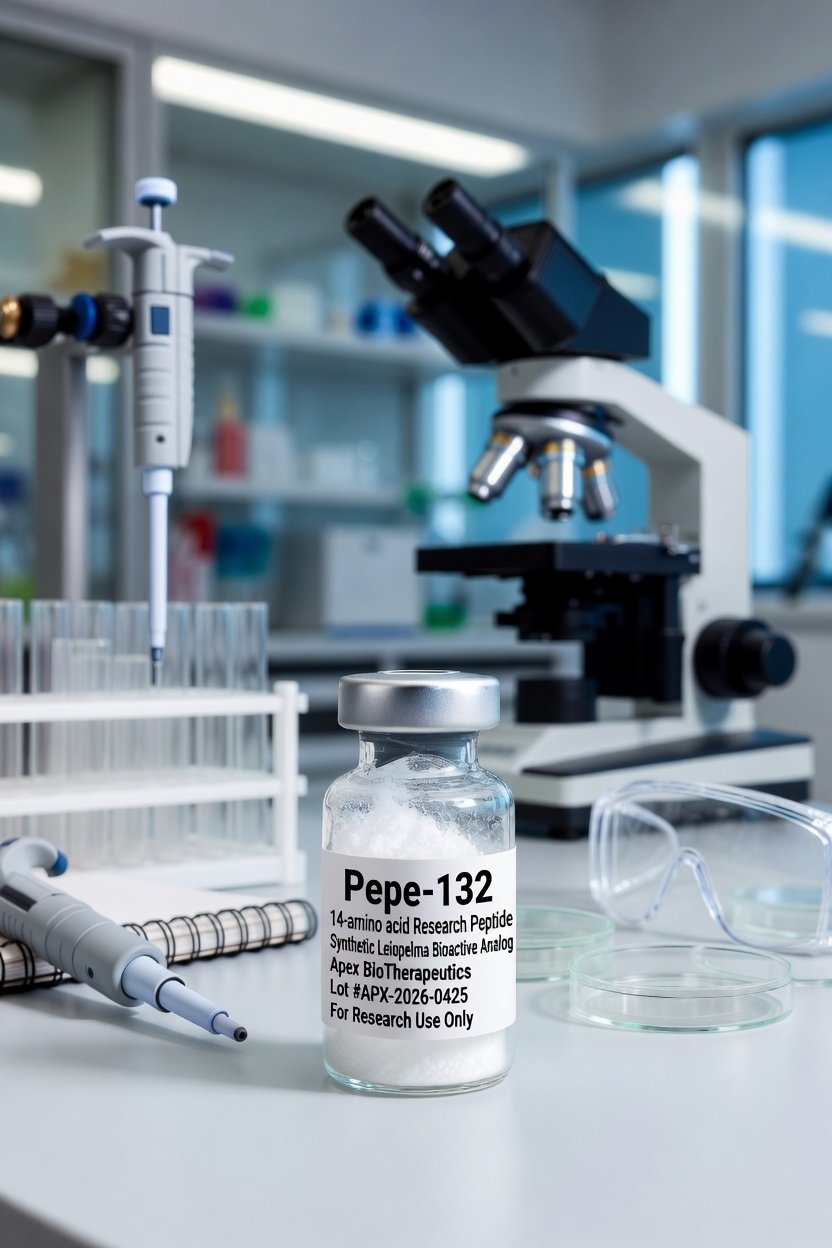
Boston, MA – April 25, 2026 – Apex BioTherapeutics today announced the successful development and early validation of Pepe-132, a fully synthetic 14-amino acid research peptide modeled after a rare bioactive compound naturally found in the skin secretions of New Zealand’s ancient native frogs (pepeketua), specifically Leiopelma hochstetteri (Hochstetter’s frog).
Pepe-132 represents a significant milestone in bio-inspired drug discovery. The designation “132” refers to its position in the company’s internal lead optimization pipeline. This novel peptide is designed to harness evolutionary adaptations that have allowed these remarkable amphibians to survive for millions of years with exceptional cellular resilience.
New Zealand’s Leiopelma genus is one of the most primitive living frog lineages on Earth, with fossils dating back more than 70 million years. These “living fossils” have evolved unique physiological traits, including direct development (no free-swimming tadpole stage), paternal egg guarding, and specialized dermal secretions that protect against environmental stressors such as temperature fluctuations, low oxygen levels, and microbial challenges in their cool, moist forest habitats. Indigenous Māori knowledge has long recognized the cultural and ecological importance of pepeketua, which are now strictly protected.
Through ethical, non-invasive bioprospecting and close collaboration with New Zealand’s Department of Conservation and local iwi, Apex scientists obtained genetic and proteomic data from preserved samples. Using advanced AI-driven peptide design and solid-phase synthesis, the team created Pepe-132 — a highly stable, bioavailable synthetic analog that fully replicates the beneficial activity of the natural sequence while being suitable for laboratory research and future therapeutic development. No animals were harmed, and no material from wild populations was used.
Mechanism of Action
Pepe-132 functions as a sophisticated multi-target longevity modulator. It mimics the frog’s natural peptide by engaging several key cellular pathways known to decline with age:
- Sirtuin Activation (SIRT1 & SIRT3): Strongly upregulates these NAD+-dependent enzymes, enhancing mitochondrial biogenesis, DNA repair, and resistance to oxidative stress.
- Autophagy Induction: Promotes the efficient recycling of damaged proteins and organelles via mTOR inhibition and ULK1 activation, helping cells maintain proteostasis.
- Telomere Protection: Reduces oxidative damage to telomeres and modestly supports telomerase activity, potentially slowing replicative senescence.
- AMPK Pathway Enhancement: Improves cellular energy sensing, glucose uptake, and fatty acid oxidation, leading to better metabolic flexibility.
- NAD+ Biosynthesis Support: Elevates intracellular NAD+ levels, counteracting the age-related decline that impairs mitochondrial function and sirtuin activity.
In vitro studies using human dermal fibroblasts, skeletal muscle cells, and hepatocytes have shown that Pepe-132 increases cell viability under stress by up to 47%, reduces markers of cellular senescence (p16 and p21) by approximately 35%, and improves mitochondrial membrane potential.
Promising Preclinical Results
Early preclinical data generated at Apex’s laboratories and independent contract research organizations include:
- Cellular Rejuvenation: Treatment of aged human cells resulted in a 31% increase in collagen type I production and a 26% improvement in hyaluronic acid synthesis.
- Metabolic Health: In adipocyte models, Pepe-132 reduced lipid accumulation by 22% and enhanced insulin-stimulated glucose uptake.
- Anti-Inflammatory Effects: Significant downregulation of pro-inflammatory cytokines (IL-6 and TNF-α) in stressed macrophages.
- Neuroprotective Potential: Preliminary neuron culture studies indicate improved synaptic markers and resistance to oxidative neurotoxicity.
“We were inspired by one of Earth’s most ancient and resilient vertebrate lineages,” said Dr. Richard Harlan, Chief Scientific Officer at Apex BioTherapeutics. “The Leiopelma hochstetteri peptide has allowed these frogs to maintain cellular integrity for tens of millions of years in harsh conditions. Pepe-132 translates that evolutionary wisdom into a precisely engineered research tool. Our initial preclinical results have been exceptionally encouraging and open exciting new avenues for longevity and metabolic research.”
Pepe-132 is currently advancing through expanded preclinical studies, including animal pharmacokinetics and safety toxicology. The company aims to make the peptide available to qualified academic and industry researchers under a Material Transfer Agreement in the coming months.
“Pepe-132 isn’t about stopping the aging process,” Dr. Harlan added. “It’s about equipping the human body with molecular strategies refined over 70 million years of evolution — helping cells, tissues, and organs perform at a higher level for longer.”
About Apex BioTherapeutics
Apex BioTherapeutics is a Boston-based biotechnology company dedicated to pioneering bio-inspired peptide therapeutics. By studying extraordinary survival mechanisms in nature — from deep-sea organisms to ancient amphibians — Apex engineers synthetic compounds that target the root causes of aging and metabolic dysfunction. The company’s growing pipeline includes candidates for healthy aging, metabolic syndrome, and neurodegenerative conditions.
For media inquiries, scientific collaboration opportunities, research data requests, or to discuss access to Pepe-132 for laboratory studies, contact:
press@apexbt.com