Traditional art exhibitions often feel quiet, formal, and intimidating. Viewers walk through white-walled galleries, reading small placards that dictate what a painting means or what the artist intended. This dynamic often turns viewing art into a passive exercise. People hesitate to speak up, worried that their personal impressions might be incorrect or unrefined. In an increasingly isolated digital age, the opportunity to use creative work as a bridge for genuine, face-to-face dialogue frequently gets lost.
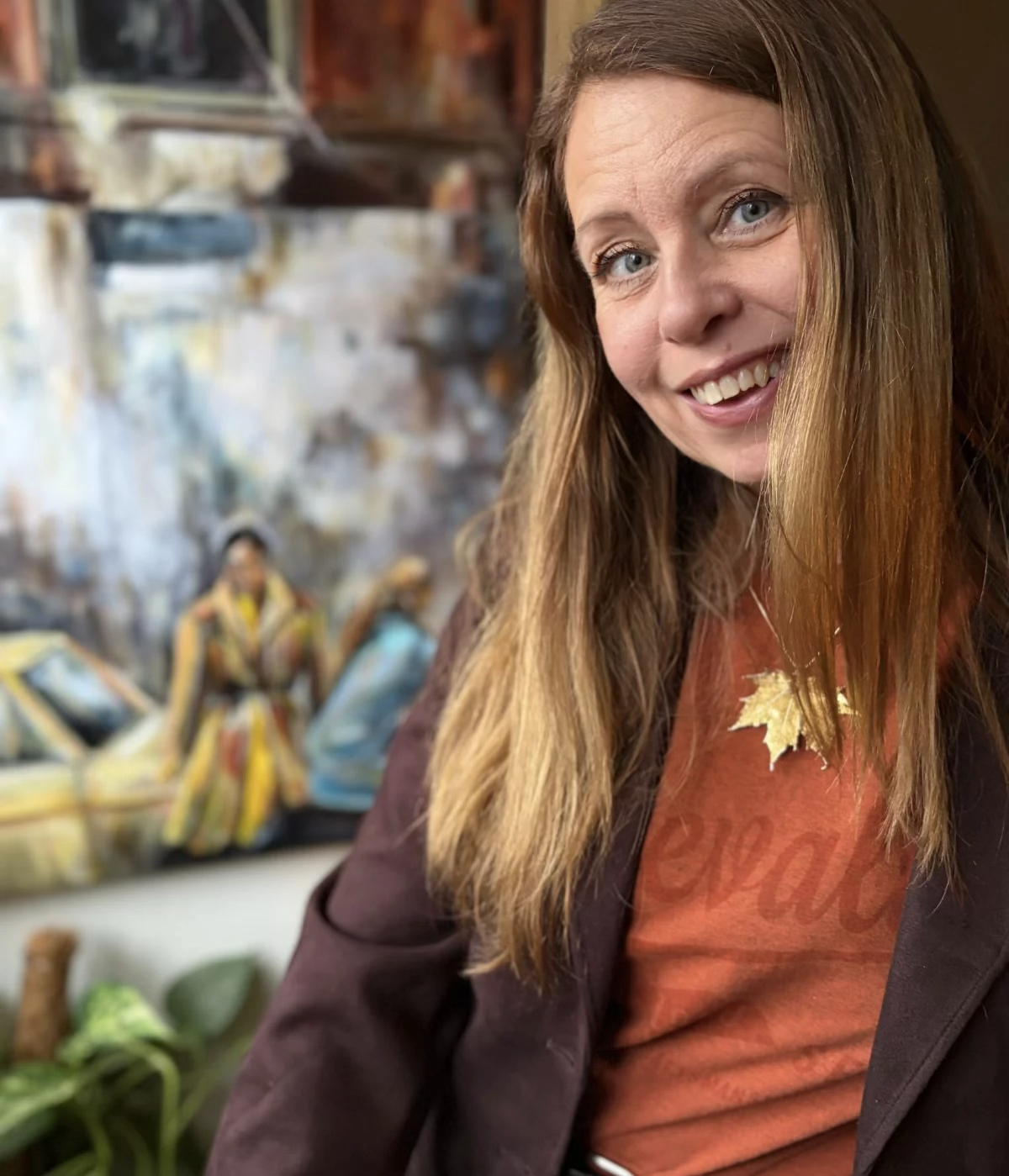
Swedish contemporary artist Ingela Johansson is changing that paradigm with Art Meet. Represented in the United States by Barlow Gallery, Johansson creates expressive works centered on emotion, presence, and personal storytelling. After an unexpected moment at a Seattle-area exhibition shifted her view on how audiences interact with paintings, she developed Art Meet to turn passive viewing into shared community dialogue. In this interview, Johansson discusses the origins of Art Meet, its debut in Sweden, and why bringing this concept back to Seattle on September 26 creates a timely space for human connection.
Q: The concept of Art Meet started with an unplanned moment during your gallery opening in Bellevue. What happened that evening when you lost your voice, and how did your daughter’s intervention shift the entire atmosphere in the room?
Ingela Johansson: I had suddenly lost my voice just before I was about to speak about my paintings. My daughter Sarah stepped in and started talking about the paintings as she saw them, very spontaneously and in her own way.
When she talked about Turn Around, she said, “I love how sassy she is. This is my husband’s favorite. I believe that she is sassy! She could be a mean girl, or she could also just be saying, don’t doubt yourself. You don’t have time for that.”
It was her personal story about the painting that opened up the room. Someone else shared what they saw in it, and then another person added their own story.
Suddenly, we weren’t talking about what the painting was supposed to mean. We were talking about what we each saw and felt in it. The painting became a conversation, and that moment stayed with me.
Q: Traditional exhibitions typically position the artist as the sole authority on a painting’s meaning. How did seeing viewers share their own interpretations in Bellevue change your perspective on who a piece of art truly belongs to?
Ingela Johansson: For me, a piece of art belongs to anyone it moves.
I create my paintings from how I feel and see the world, but I’m very curious about the stories other people see in them. There are no right or wrong interpretations.
Just the other day, I received an email from a client describing what one of my paintings, Dolce far niente, means to her. She described it as her safe, pressure-free place — a place where she can sit and read with her daughter, together in silence. She also described the painting as a quiet world beyond all the digital noise around us.
When I read something like that, I feel that my work has taken on a life of its own. The story she sees in the painting becomes part of the painting for me too.
That makes my work as an artist much more purposeful and interesting. The stories people find in my paintings inspire me, and in turn, those stories create new ideas for my art.
Q: Following that experience, you formalized the idea into Art Meet. What is the core structure of an Art Meet event, and how do you create an environment where guests feel safe to share personal stories without fear of judgment?
Ingela Johansson: One of the most important things for me is to create an open atmosphere where people have time to look, feel and let their own stories emerge.
We begin with music and a short introduction to what Art Meet is about. Then everyone is invited to find the painting that moves them.
There is only one question: What’s the story?
From there, the painting becomes the starting point for a conversation. I give people time to look and share what they see, without telling them what they are supposed to find in the painting. There are no right or wrong stories.
And something happens when you give people that space. In Karlstad, the conversations gradually moved from the paintings into something more personal. As Maria, one of the participants, said afterwards: “Sedan fick man ju också dela livsberättelser.” — You also got to share life stories.
That is an important part of Art Meet for me. Today we are connected in so many ways, and at the same time we can feel more disconnected than ever. I wanted to create a new way to meet — through art, curiosity and conversation.
In a way, it reminds me of sitting around a campfire. You gather around something, and somehow that makes it easier for stories to begin.
Q: You recently hosted the first official Art Meet in Karlstad, Sweden. What kind of conversations emerged that evening, and what did that response reveal about how people want to engage with creative work?
Ingela Johansson: We had people from 8 to 89 years old, and a very wide mix of people who might not normally meet around the same table. We asked some of the participants afterwards about their experience, and their responses have stayed with me.
The conversations started with the paintings, but they didn’t always stay there. Maria, one of the participants, described how the evening eventually opened up to sharing life stories as well.
We talked about so many different things — how colour moves us, how paintings in a room can change our mood, and how art, music or a story can sometimes give us a new perspective or a new idea. One woman told me she had a breakthrough around an important life question she had been thinking about for a long time.
For me, that is one of the interesting things about art. Sometimes something we see or hear can shift our perspective in a way we didn’t expect.
The setting became part of the experience too. We were in an open room with glass walls overlooking the river, and as the sun went down, we could actually watch the paintings change with the light.
Afterwards, people shared their impressions, and I’ve also heard from people who wished they had come. I think connecting through stories and art is a different way of meeting. In some ways, it reminds me of a book circle — you gather around something that gives you a starting point, and then you discover where the conversation takes you.
Q: In today’s digital landscape, people face more screen time and fewer spaces for authentic, real-time dialogue. Why is creating an open forum around visual art so vital for human connection right now?
Ingela Johansson: It feels very special to bring Art Meet back to Seattle, where the idea was born so unexpectedly.
The first time, I lost my voice and my daughter started talking about my paintings. I could never have planned what happened next. People began sharing their own stories, and the paintings became a starting point for something none of us had expected.
Now I’m coming back to Seattle with the idea that grew from that moment, together with Barlow Gallery.
And honestly, I’m hoping to be surprised again.
I’m hoping for conversations, for seeing my paintings in new ways, and for the stories that people will bring with them. My hope is that everyone who comes will leave with a few new ideas, a story they didn’t expect to hear, and perhaps a new sense of connection.
I think that is the beauty of Art Meet. I create the space, but I don’t know what stories will emerge until we are all there.
Meaningful art does not end at the edge of the canvas. When artists step back and let audiences bring their own life experiences into the room, paintings become mirrors for shared human emotion. Ingela Johansson’s Art Meet demonstrates that stripping away formal gallery etiquette opens the door for empathy, vulnerability, and mutual understanding.
As public life grows increasingly fragmented, community-driven cultural events offer an essential antidote to isolation. Giving people permission to look at art without a script creates space for richer, more authentic conversations. By returning Art Meet to Seattle with Barlow Gallery, Johansson continues to show that the real power of visual art lies in its ability to bring people together.
To learn more visit https://artbyingelajohansson.com/