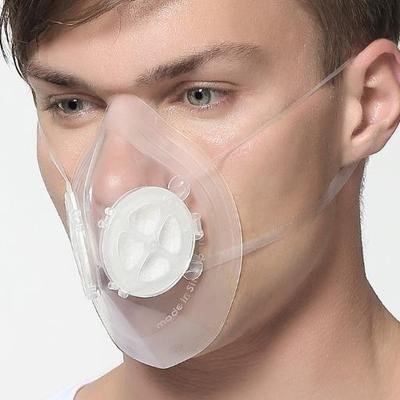
Queen Mary University research demonstrates ultrafine particles bypass respiratory system, raising concerns for Asian megacity populations
SINGAPORE – Groundbreaking research from Queen Mary University of London has confirmed that ultrafine air pollution particles from traffic can penetrate the human bloodstream within 60 minutes of exposure, potentially reaching vital organs including the brain and heart.
The October 2025 study, published in ERJ Open Research, provides the first direct visual evidence of pollution particles attaching to red blood cells and circulating systemically—a finding with significant implications for the millions of commuters navigating congested urban centers across Asia.
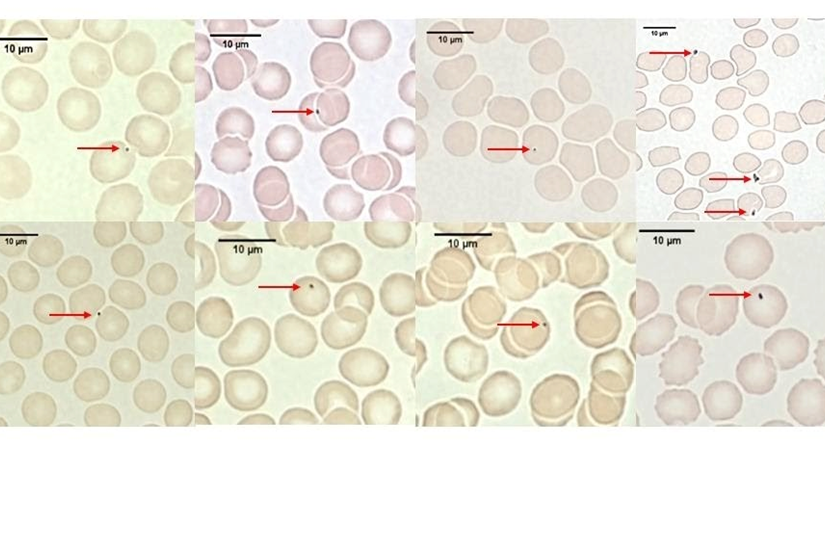
Representative light microscopy images of carbonaceous (black) particles adherent to red blood cells (red arrows) from healthy volunteers. Each image is from a different adult volunteer.
Credit: Grigg J, Wertheim D, Crust S, et al. Adherence of traffic-related particles to human red blood cells in vivo. ERJ Open Res 2025
The One-Hour Window
Researchers led by Professor Jonathan Grigg exposed 12 healthy volunteers to typical London roadside traffic conditions. Analysis of blood samples revealed a two- to three-fold increase in red blood cells carrying particulate matter, with millions of cells showing attached ultrafine particles containing metals associated with vehicle exhaust and brake wear.
“These observations show that ultrafine air pollution particles can attach to red blood cells, which means they have the potential to travel throughout the body,” Professor Grigg stated.
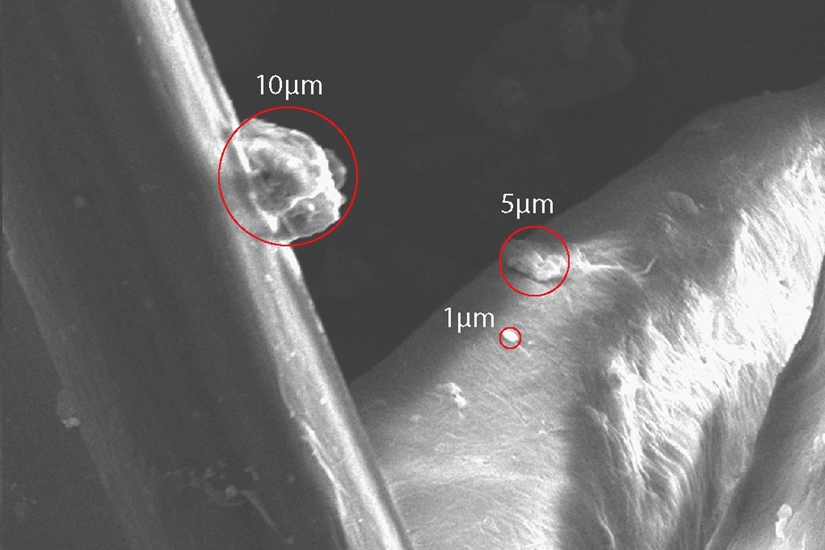
Ultrafine particles captured on Totobobo filter view under 2000X microscope
Credit: totobobo.com
Protection Works—But Fit Matters
In a follow-up phase involving eight participants wearing FFP2-grade respirators, researchers found zero increase in blood-borne particulate matter—confirming that proper respiratory protection effectively blocks systemic pollution entry.
However, a companion study in Thorax (BMJ) examining five commonly used masks under real traffic conditions revealed substantial performance variation. The research identified facial seal and individual fit as critical factors, noting that filtration ratings alone don’t guarantee real-world protection when air leaks around the face.
Asian Urban Centers in Focus
The findings carry particular weight for populations in high-density Asian cities where traffic congestion and pollution levels significantly exceed those in London. Daily commuters, delivery riders, outdoor workers, and vulnerable groups including children and pregnant women face extended exposure periods.
“This study sheds light on how ultrafine particles may reach organs throughout the body via the bloodstream—and suggests that appropriate respiratory protection could reduce this risk,” commented Professor Ane Johannessen of the European Respiratory Society.
What This Means
The research challenges the assumption that air pollution primarily affects respiratory health, demonstrating that the cardiovascular and potentially neurological systems face direct exposure through rapid bloodstream penetration.
For urban populations, the findings underscore the importance of evidence-based protective measures, particularly for those with unavoidable traffic exposure. The research also highlights a critical gap between certification standards and real-world performance, suggesting consumers need better guidance on mask selection and proper fitting.
Research Collaboration Invited
Universities and research institutes interested in collaborative studies on real-world exposure to traffic-related ultrafine particles may contact francis@totobobo.com.