Baum Calls Current Drug Strategy “Outdated for the Synthetic Era”
WASHINGTON, D.C. — National overdose deaths have declined for the first time in years. But that progress is fragile — and could reverse without structural reform and sustained federal investment, according to Richard J. Baum, former Acting Director of the White House Office of National Drug Control Policy.
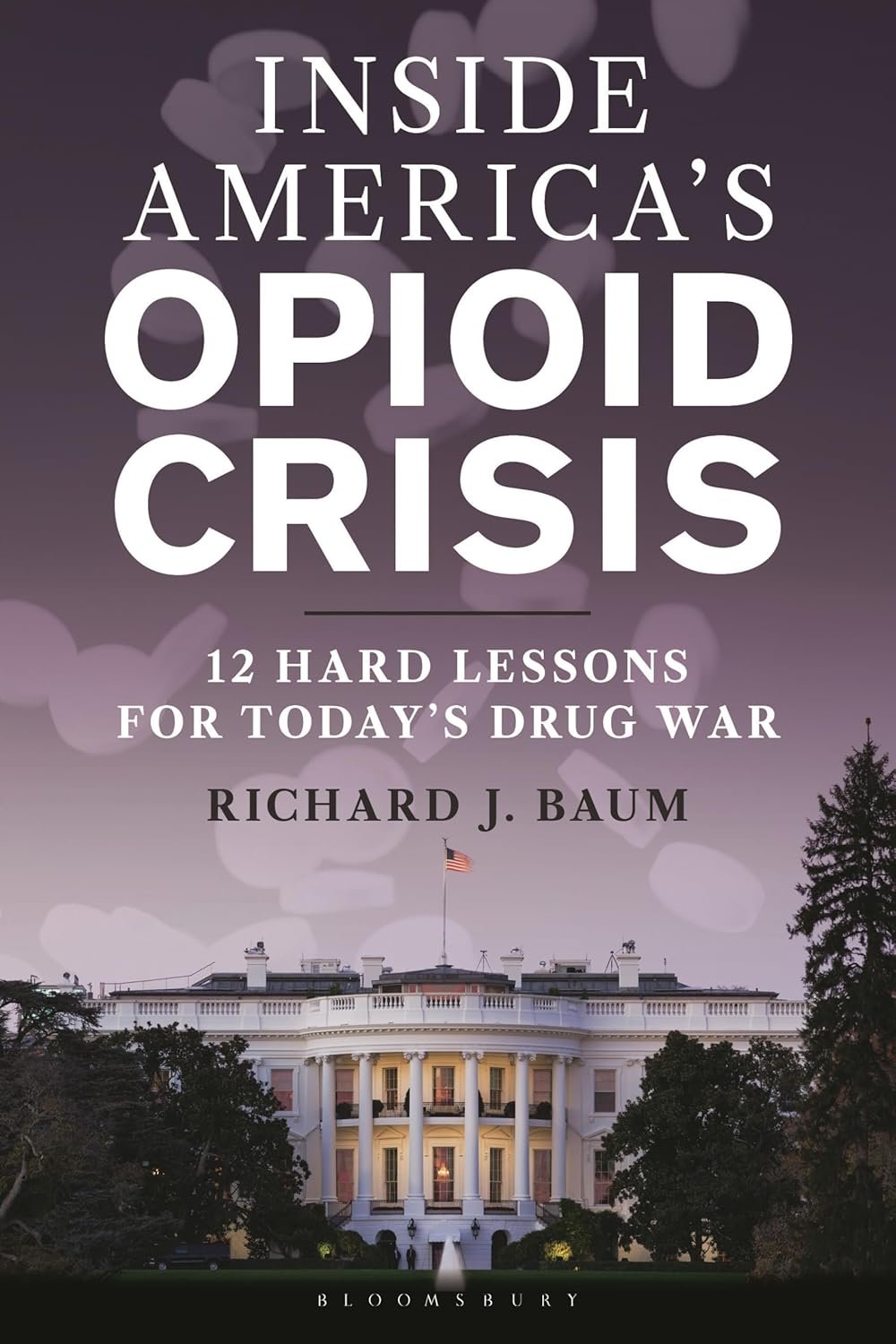
In his new book, Inside America’s Opioid Crisis: 12 Hard Lessons for Today’s Drug War (Bloomsbury Academic, Feb. 19), Baum argues that the United States is confronting a synthetic drug epidemic with systems designed for an earlier era of heroin and prescription opioids.
“The threat modernized,” Baum said. “But we did not modernize the response. If Congress treats recent overdose declines as a victory moment, we risk repeating the mistakes of the past decade.”
More than one million Americans have died from drug overdoses since the late 1990s. While recent federal data shows stabilization and modest declines, Baum warns that tens of millions of Americans continue to struggle with substance use disorders — many involving complex polysubstance addiction combining fentanyl, methamphetamine, and cocaine.
“These are not short-term treatment challenges,” Baum said. “Many individuals require sustained engagement — often a year or more — along with extended recovery support. Our systems were not built for this reality.”
Baum is urging Congress to enact a sustained $10 billion annual modernization initiative — approximately a 20 percent increase over the nearly $50 billion already spent each year on national drug control efforts — to align federal strategy with the scale and complexity of today’s synthetic drug market.
“This is not a spending revolution,” Baum said. “It is a structural course correction. We are already spending billions downstream — on emergency care, incarceration, foster care, Medicaid, lost productivity, and community disorder. A modest increase upstream would stabilize treatment access, strengthen recovery systems, and modernize enforcement.”
Drawing on 28 years at the White House Office of National Drug Control Policy across six presidential administrations — including service as Acting Director (2017–2018) and Executive Director of the President’s Opioid Commission — Baum outlines twelve “hard lessons” and 32 structural reforms focused on:
- Expanding voluntary pathways into sustained treatment
- Building nationwide recovery-support infrastructure
- Strengthening collaboration between courts, jails, law enforcement, and treatment providers
- Modernizing retail drug enforcement without returning to mass incarceration
- Updating border and precursor control strategies for synthetic supply chains
“Congress faces a choice,” Baum said. “Apply the lessons of the past fifteen years — or leave the nation unprepared for the next phase of this crisis.”
Inside America’s Opioid Crisis: 12 Hard Lessons for Today’s Drug War will be released February 19, 2026. A companion 17-part public education video series is available at RichardJBaum.com.
Media Contact:
Richard J. Baum
media@richardjbaum.com
(202) 743-2746
Baum is available for interviews.
About Richard J. Baum
Richard J. Baum served for 28 years at the White House Office of National Drug Control Policy across six presidential administrations, including as Acting Director (2017–2018) and Executive Director of the President’s Opioid Commission. He is currently an adjunct professor at Georgetown University and focuses on drug policy reform and public education.