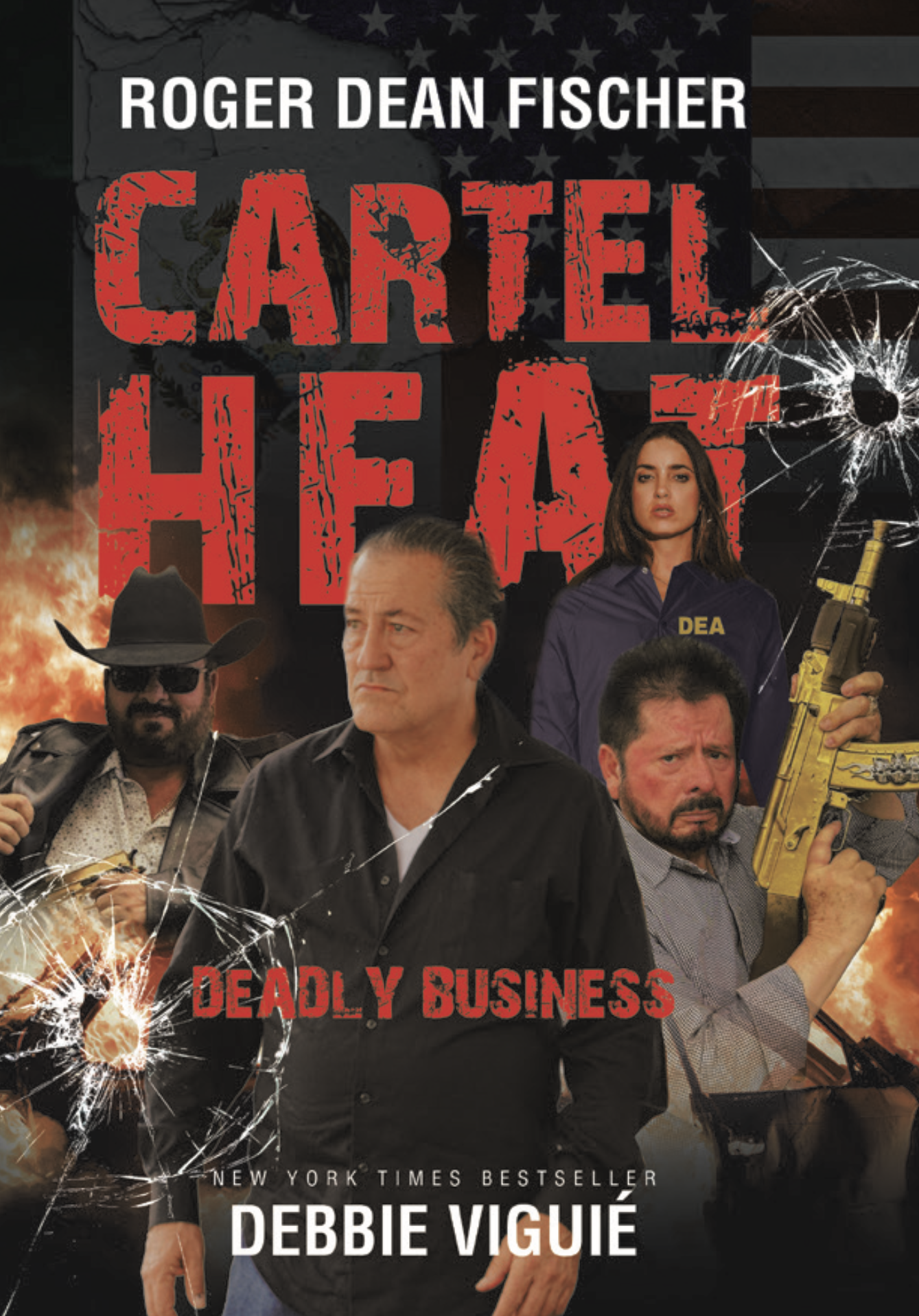
Independent publishing is transforming the literary landscape. Traditional publishing houses often rely on rigid timelines, generic marketing templates, and formulaic editorial constraints that leave promising stories overlooked. Writers face uphill battles securing authentic distribution, creative control, and multi-format adaptations like audiobooks or film transitions. Without dedicated partners who champion original concepts across both literary and cinematic mediums, powerful narratives struggle to reach their full commercial potential.
Capon Knight Publishing solves this challenge by blending storytelling craft with modern, multi-platform execution. Co-founded by film director and producer Roger Dean Fischer, the independent publishing house delivers a full suite of services, including high-caliber editing, ghostwriting, print distribution, and audiobook production. In this Executive Q&A, Roger Dean Fischer discusses the creative process behind Cartel Heat: Deadly Business co-authored with New York Times bestselling author Debbie Viguié, the intersection of film and fiction, and how independent publishing empowers authors to bring gripping stories to life.
Q: Independent authors face immense competition in crime fiction and suspense. What core elements set Cartel Heat: Deadly Business apart in today's crowded market?
Also worth a look: Intelligent Compatibility: How Heart Rocket Integrates Predictive AI into International Matchmaking and Mapping Global Journeys: How Visited App Transforms Travel Tracking and Planning.
Roger Dean Fischer: Cartel Heat: Deadly Business cuts through the crowded crime fiction market by anchoring its high-stakes premise in intense realism, distinct character-driven friction, and strategic collaborative star power.
Here are the core elements that set the novel apart in today's competitive literary landscape:
- High-Profile Bestselling Collaboration: Co-authored with Debbie Viguié, a New York Times bestselling author, the book immediately establishes baseline prestige and a built-in cross-genre readership. This partnership combines seasoned, top-tier plotting mechanics with raw, gripping crime elements.
- The "Two Worlds Colliding" Dynamic: Unlike standard lone-wolf crime thrillers, the narrative draws deep narrative tension from the colliding operations of a Mexican cartel boss, Eddie, and a brutal Mafia leader, John "The Butcher" Branson. The claustrophobic friction of their alliance—epitomized by high-stakes meetings in dim Miami private clubs—provides a unique look into an unstable, multi-layered criminal underworld.
- Cross-Media Potential: The project stands out because its cinematic pacing is intentionally built for screen adaptation, with an ongoing TV pilot adaptation already elevating its profile beyond a traditional book release.
- Dual-Market Appeal: By seamlessly blending localized turf wars with sprawling international drug trade mechanics, the book appeals equally to readers who crave intimate, street-level suspense and those who love massive, continent-spanning thrillers.
Q: You collaborated with New York Times bestselling author Debbie Viguié on Cartel Heat: Deadly Business. How did combining your background in film production with her literary experience shape the pacing and cinematic tone of the book?
Roger Dean Fischer: I originally wrote Cartel Heat as a screenplay back in 2016. Fast forward to 2022, my publicist Lyla Foggia—who previously worked with Steven Spielberg before retiring—suggested adapting the script into a novel to help raise production funds for the film. While I am an avid reader with over 800 books under my belt, writing film scripts is a completely different beast than crafting a novel.
My initial plan was to hire a ghostwriter to help format the screenplay into prose. That is when I found Debbie Viguié, a New York Times bestselling author with over 10 million books sold. When I approached her, I didn't want a ghostwriter; I wanted a true creative partner. She read the script, saw the vision, and immediately jumped on board.
The magic of our collaboration lies in that exact intersection of film and literature. My film production background ensured the story maintained a structural, scene-based architecture—we cut tightly between multiple perspectives, lean heavily into fast-paced, dialogue-driven momentum, and keep the descriptions incredibly visceral. Debbie then took that cinematic skeleton and infused it with deep character psychology, rich world-building, and the literary pacing required to make a thriller unputdownable. The result is a book that reads like a blockbuster movie playing directly in your mind.
Q: Traditional publishers frequently dictate rigid editorial standards and long release delays. How does Capon Knight Publishing give writers a more agile and supportive path to publication?
Roger Dean Fischer: The traditional publishing industry is notoriously slow, often taking 12 to 18 months just to bring a finished manuscript to shelves while forcing authors into rigid editorial boxes. But even worse is how the corporate landscape, including the Big Five, actively exploits aspiring writers today. Many of these massive conglomerates use deceptive subsidiary models—co-branded "imprints" or partnerships—to strip writers of their money. They upsell authors on expensive packages, dangling false promises of making them a New York Times Bestseller. When a writer sees a predatory vanity press boasting that they are "An Imprint of Simon & Schuster," it is often a trap designed to deceive them into paying thousands of dollars upfront. In traditional publishing, money is supposed to flow to the author, not from them. At Capon Knight Publishing, we threw out that predatory, outdated playbook. We operate with the speed and agility of an independent studio, streamlining the production timeline so compelling stories can hit the market while they are still fresh and relevant—without ever charging the author to publish. We build true creative partnerships. We don't strip away an author's unique voice to fit a corporate mold; instead, we provide collaborative editorial support that sharpens the narrative while preserving the creator's original vision. By combining fast-tracked schedules, honest business practices, and a deeply supportive environment, we give writers the professional infrastructure of a major house with the integrity and velocity they need to succeed.
Q: Translating books into trailers, screenplays, and audiobooks is becoming vital for author visibility. How does your production background help authors visualize and adapt their stories across formats?
Roger Dean Fischer: When I look at a book, I don't just see words on a page—I see it through the lens of a camera. Having written Cartel Heat originally as a screenplay back in 2016 before partnering with Debbie Viguié to turn it into a novel, I know exactly what it takes to translate a story back and forth between these mediums. They are completely different skill sets. Most writers are trained to think purely in prose, but my background in film production forces me to think in terms of structural, scene-based architecture.
Because I understand budgeting, casting, pacing, and visual storytelling, I can help authors strip away the filler and look at their books as highly cinematic properties. When we produce a 60-second book trailer, we approach it like a real Hollywood teaser—building immense tension, cutting tightly between character perspectives, and making it visually visceral to grab a viewer's attention instantly on Amazon or social media. We apply that same sharp, fast-paced momentum to audiobooks and screenplay adaptations. Authors today can't just rely on text anymore; they need to create a cross-media experience, and my production experience gives them the exact blueprint to turn their books into blockbusters across every format.
Q: Book release events and direct community engagements are crucial for early momentum. What marketing strategies prove most effective for generating buzz around a new independent release?
Roger Dean Fischer: Independent releases don't have corporate millions to throw at traditional advertising, so you have to out-market the giants with creativity, speed, and cinematic flair. For us, generating buzz starts long before the release date by turning a book launch into a true media event. Instead of a standard book signing where an author sits quietly at a table, we treat a release like a Hollywood premiere. You can see the first book trailer we did for Cartel Heat-Deadly Business. We produced it in Houston Texas with the same film actors on the book cover. The script was written by me and directed.
The single most effective tool in our arsenal is high-end visual storytelling. We produce cinematic, fast-paced book trailers that look and feel like movie teasers, cutting them tightly to hook viewers immediately on Amazon and social media. We then pair that visual push with aggressive grassroots community engagement. This means building a dedicated "launch team" of early readers, leveraging multi-perspective content across platforms, and cross-promoting heavily through independent online booksellers. By building an immersive, cross-media experience around the book—giving the audience a taste of the story through audio teasers, striking visuals, and direct interaction—we create an organic, viral momentum that forces people to take notice. Independent publishing thrives on connection, and when you make a release feel like an unmissable event, the community carries it across the finish line.
Q: Looking at the future of independent storytelling, what major opportunities should aspiring authors focus on over the coming years?
Roger Dean Fischer: The future of independent storytelling belongs to authors who stop thinking like traditional writers and start thinking like content creators and producers. The biggest mistake aspiring authors make is locking themselves into a single format. Today, the most massive opportunity lies in multi-platform, cross-media storytelling. When you write a story, you should be developing it simultaneously for a readers' market, an audio market, and a visual market.
Aspiring authors need to focus on building a cohesive multimedia package right out of the gate. That means learning how to pitch a book alongside a cinematic book trailer, a ready-to-adapt screenplay, and a dynamic audiobook strategy. Because the traditional corporate publishers are slow, risk-averse, and wrapped up in predatory imprint models, independent authors have a massive advantage in speed and agility. You can adapt to new digital trends instantly, leverage social media platforms to build a direct global fan base, and get your work listed across thousands of independent online booksellers overnight. The industry has flattened. If you can deliver a high-octane, visually visceral story and present it as a multi-format brand, you don't need a corporate gatekeeper—you hold all the power. And remember that AI is now a powerful tool to promote everything, especially books. My last piece of advice is do not use AI to write your novel. AI can not write a New York Times story. Stop falling for the “write a book with AI”. It’s not possible.
Q: With the success of Cartel Heat: Deadly Business, readers are eager to know what is next on your horizon. What can you tell us about your upcoming project?
Roger Dean Fischer: I am diving straight into the psychological deep end with my next book, a gripping horror fiction novel titled Martha: The Basement of Lost Souls. It is set in an old, abandoned farmhouse nestled deep within the eerie, fog-covered West Virginia hills. The story follows a family that purchases this isolated property, completely unaware of the dark, supernatural history trapped inside its walls.
As a filmmaker and scriptwriter, I approach horror the same way I approach a high-octane thriller—it is all about structural, scene-based pacing, visceral imagery, and building a relentless sense of dread. With Martha, the terror isn't just lurking in the shadows; it is centered around the soulless ghost of a little girl with solid black eyes peeking through a cracked basement door. It is designed from the ground up to be a highly cinematic, fast-paced nightmare that plays like a blockbuster movie right in the reader's mind. We are already building a massive, immersive cross-media experience around it, complete with striking black-and-white stenciled artwork and an intense, atmospheric book trailer to drop readers right into the woods of West Virginia before they even open the first page.
Independent publishing thrives when artistic vision pairs with proactive, multimedia promotion. As highlighted by Capon Knight Publishing, turning an idea into a bestseller requires tight pacing, authentic character development, and a comprehensive distribution roadmap that spans print, digital, audio, and visual media. Authors who retain creative ownership and embrace cinematic storytelling methods stand out in an increasingly competitive marketplace.
The future of storytelling belongs to agile creators and independent houses that break traditional boundaries between books and screen entertainment. By combining experienced literary guidance with film-grade production tools, independent authors can cultivate dedicated audiences and expand their work into multi-format franchises. Through personalized support and innovative production services, Capon Knight Publishing continues to empower visionary storytellers to make their mark.
To learn more visit https://caponknightpublishing.com/