Despite decades of corporate diversity initiatives, women still encounter systemic barriers in the modern workplace. Hidden biases, pay disparities, and unsupportive corporate environments continue to hinder professional advancement and personal well-being. Many organizations claim to prioritize diversity, yet they struggle to implement measurable, accountable frameworks that foster genuine equity and psychological safety. This persistent gap leaves talented female leaders undervalued and drives costly turnover across major industries.
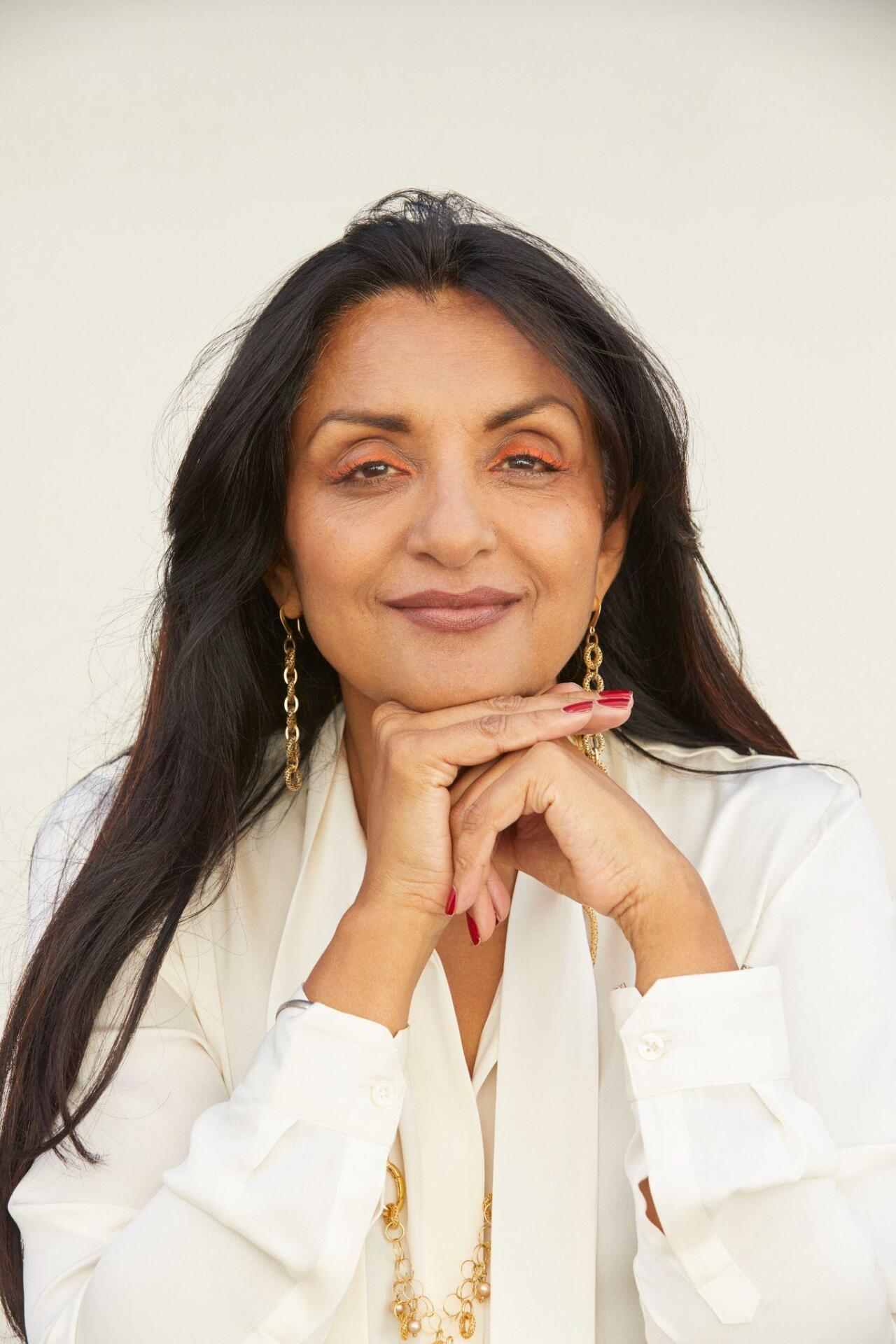
WCorp provides a concrete solution to this corporate challenge. Founded by award-winning entrepreneur, success coach, and activist Geeta Sidhu-Robb, WCorp certifies and consults businesses committed to creating secure, equitable, and supportive environments where women can thrive. Recognized as a finalist and honoree at the Women Changing the World Awards, Geeta combines decades of business leadership, advocacy, and executive coaching to reshape organizational culture. We sat down with Geeta to discuss her mission with WCorp, the necessity of workplace equity standards, and how businesses can build sustainable paths for female leadership.
Q: You have led major campaigns and built multiple successful ventures throughout your career. What specific systemic problems in corporate culture led you to establish WCorp?
Geeta Sidhu-Robb: Twenty-five years in business — founding Nosh Detox, then advising thousands of senior women through IPOs, exits and promotions — and I kept walking into the ‘same’ company. Different logo, same architecture. Everybody talks about equality. Nobody has changed the plumbing.
Start with the working day itself. The 9-to-5 was designed for a person who had somebody else at home doing everything else. I do not know a single woman who "works" from 9 to 5 and then "homes" from 5 to 9. And yet that is still the model every one of us is measured against.
What crystallised it for me was a report I read about women working at a London investment firm who were so frightened of their male boss (he’d been reported 15 times for sexual assault already with no successful convictions) that they had built their own early-warning system — colleagues on one floor ringing down to the next to say "hide behind a locked door, he's coming." Read that sentence again. Professional women, in a regulated firm, in the City of London, operating a phone tree for a man. That was not a group of women having a bad week. That was a functioning system of fear, and it had been allowed to keep functioning.
After that I could not look away. It confirmed what a career in boardrooms had already taught me: the barrier for women is not ambition and it is not talent. It is structural. Pay inequity. Cultures that are not safe. No accountability whatsoever for how women are actually treated day to day. And a total failure to design work around periods, menopause, childcare and caregiving — the things that happen to most of the workforce and are planned for by almost none of it.
Women literally cannot bring their biology to work. Ever.
WCorp exists to hold companies to account for those failures. The specific, measurable ones.
Q: You were recognized at the Women Changing the World Awards for your advocacy. How does that global platform amplify WCorp’s mission to transform corporate standards?
Geeta Sidhu-Robb: Let me be honest about what recognition is actually for. Winning that award at Women Changing the World Awards mattered to me enormously, but not for the trophy. WCorp's mission only works if it becomes a global conversation rather than a niche one, and a platform like that puts us in front of exactly the people who can move it — leaders, investors and change-makers who can either adopt the standard themselves or press others to do so.
It sits inside a wider pattern. We first unveiled WCorp in 2024 at the UN Commission on the Status of Women. I have since spoken at the UN again when we were awarded in 2025 the Women’s Brand Impact Award by UN WWO. We’ve also won Disruptor of the Year at the Best Business Awards, and Most Inspiring Women's Workplace Equity Advocate at the UK Enterprise Awards. Each of those moments extends our reach into rooms and networks we could not book on our own.
The genuinely useful part, though, is commercial. Awards lend our certification credibility with a sceptical board. There is a conversation I have constantly, and it opens with "we already have a diversity policy." When a chair can see that this is not one founder's opinion — that it has been recognised by international bodies and industry judges — that conversation moves much faster from policy to accountability. Credibility is what gets you past the first objection.
Q: Many companies adopt surface-level diversity policies without seeing real change. How does the WCorp certification process hold organizations accountable for actual workplace equity?
Geeta Sidhu-Robb: This is the precise problem WCorp was built to solve. A diversity statement on a website has quietly become a substitute for doing anything at all. We do not score policy documents and we do not reward PR language. We ask one question: is this actually a good place for a woman to work?
Our framework assesses organisations on leadership diversity, pay equity, career progression, inclusive culture and employee support systems — and critically, it is evidence-based rather than self-reported. Self-reporting is how you end up certifying a company's marketing department. We measure the things that shape a woman's real, daily experience: safety from harassment, psychological security, flexibility for caregivers, fair access to leadership, and proper support through menstrual health, menopause and the other health realities that are rarely discussed at work, let alone planned for.
The framework was built on around 96,000 data points, developed with global experts like Celeste Mergens the founder of Days For Girls International, and piloted with five companies before we scaled it anywhere. And certification is not a one-off audit. It is ongoing, with practical roadmaps for improvement, so accountability continues after the badge is issued — which is exactly where most schemes quietly stop.
We also put a number on it. Our AI-powered ROI calculator shows a leadership team the financial cost of losing women set against the financial benefit of keeping and promoting them. That is what moves a business from good intentions to sustained action. Values are debatable. The maths is not.
Q: From your experience coaching executives and business leaders, what are the primary cultural changes a company must make to retain top female talent?
Geeta Sidhu-Robb: I have advised everyone from FTSE executives to founders through multimillion-pound exits, and the pattern barely varies. Women do not leave because they have run out of ambition.
They leave because staying has become too expensive.
Four things change that.
The first is designing a workplace around the actual shape of women's lives rather than a 1950s idea of a working day. That means taking into account women's cultural, familial and societal obligations like real flexibility for childcare and eldercare, and acknowledging menopause and menstrual health openly instead of treating them as something to be managed privately and silently. This leads ultimately to a performance and results based workplace which enables businesses to grow faster and thrive within.
The second is psychological safety that means something in practice. A woman needs to know that raising a concern about how she is treated will not cost her her career, and that leadership will act on it rather than note it and penalise them for it.
The third is leadership pipeline accountability. Track who gets sponsored, who gets promoted, who is handed the stretch opportunity. Without measurement, bias fills the gap by default. It always does.
The fourth is the simplest and by far the rarest: ask. One WCorp-certified CEO told me he had been "living in a bubble" until he sat down and asked the women on his team what their working week was actually like. That kind of honest audit, done consistently, is what retains people. Not another wellness webinar.
Q: You recently presented on women's advocacy and equity at major international forums, including the United Nations. How are global discussions translating into tangible action within everyday workplaces?
Geeta Sidhu-Robb: Closing that gap is the whole job. I spoke at the UN Commission on the Status of Women in 2024 and again in 2025, and the risk at that altitude is always the same: gender equity stays magnificent and abstract and never reaches a line manager or an HR policy. My focus has always been translation — turning the global conversation into something a company can implement on a Monday morning.
That is what WCorp is. The practical companion to the advocacy: audits, workshops and advisory support, now delivered to more than 50 companies across six continents, spanning consulting, media, agriculture and education. We work with C-suite executives and HR teams directly through strategy sessions, and we built our global Ambassador network and WMasterminds so that leaders can carry the work forward themselves rather than depending on a single certification event.
The outputs are measurable: staff retention, engagement, and the number of women moving into leadership roles. That is the only real test of whether a UN stage translates into change. Not applause in the room. Whether a woman in a mid-career role somewhere feels the difference a year later.
Q: For business leaders who want to move beyond rhetoric and build an equitable workplace today, what is the most critical first step they should take?
Geeta Sidhu-Robb: Stop assuming your policies describe reality, and go and find out what is actually true. A recent study by Bank of America found seventy-six managers in a hundred say they discuss menopause with their staff. When the women themselves were asked only three women in a hundred say that conversation ever happened.
Almost every leader I speak to believes their company treats women fairly. Very few have ever asked. So the single most useful thing you can do this week is take an honest, evidence-based look at how the women in your organisation actually experience work. Are they safe? Are they progressing at the same rate as their male peers? Are they staying? And if they are not, why not?
That is uncomfortable, which is precisely why most companies reach for a statement or a training session instead. But you cannot fix what you have never measured.
Once you have the honest picture, the financial case makes itself. Our ROI calculator consistently shows leaders that supporting women is not a cost line, it is a return — through retention, productivity and innovation.
So the first step is not a new policy. It is accountability. Get real data on your culture, be willing to hear what it tells you, and commit to acting on it rather than filing it. Everything else — mentorship, flexibility, leadership pipelines — follows from knowing where you actually stand.
Achieving true gender equity requires transparent standards, structural accountability, and genuine leadership commitment. Geeta Sidhu-Robb demonstrates that creating supportive workplace environments is not merely a social obligation, but a strategic business advantage that unlocks untapped potential and drives sustainable performance. Through robust certification and practical consulting, WCorp provides companies with the necessary roadmap to close the gap between diversity goals and everyday practice.
As modern workforce dynamics evolve, organizations that fail to create inclusive, equitable cultures will struggle to attract and retain top talent. Establishing measurable standards for equity ensures that women across all levels have the support and recognition they need to lead effectively. Leaders like Geeta Sidhu-Robb and organizations like WCorp are setting a new standard for corporate integrity, building a future where equitable workplaces become the baseline for global business.
To learn more visit https://www.wcorporation.org/