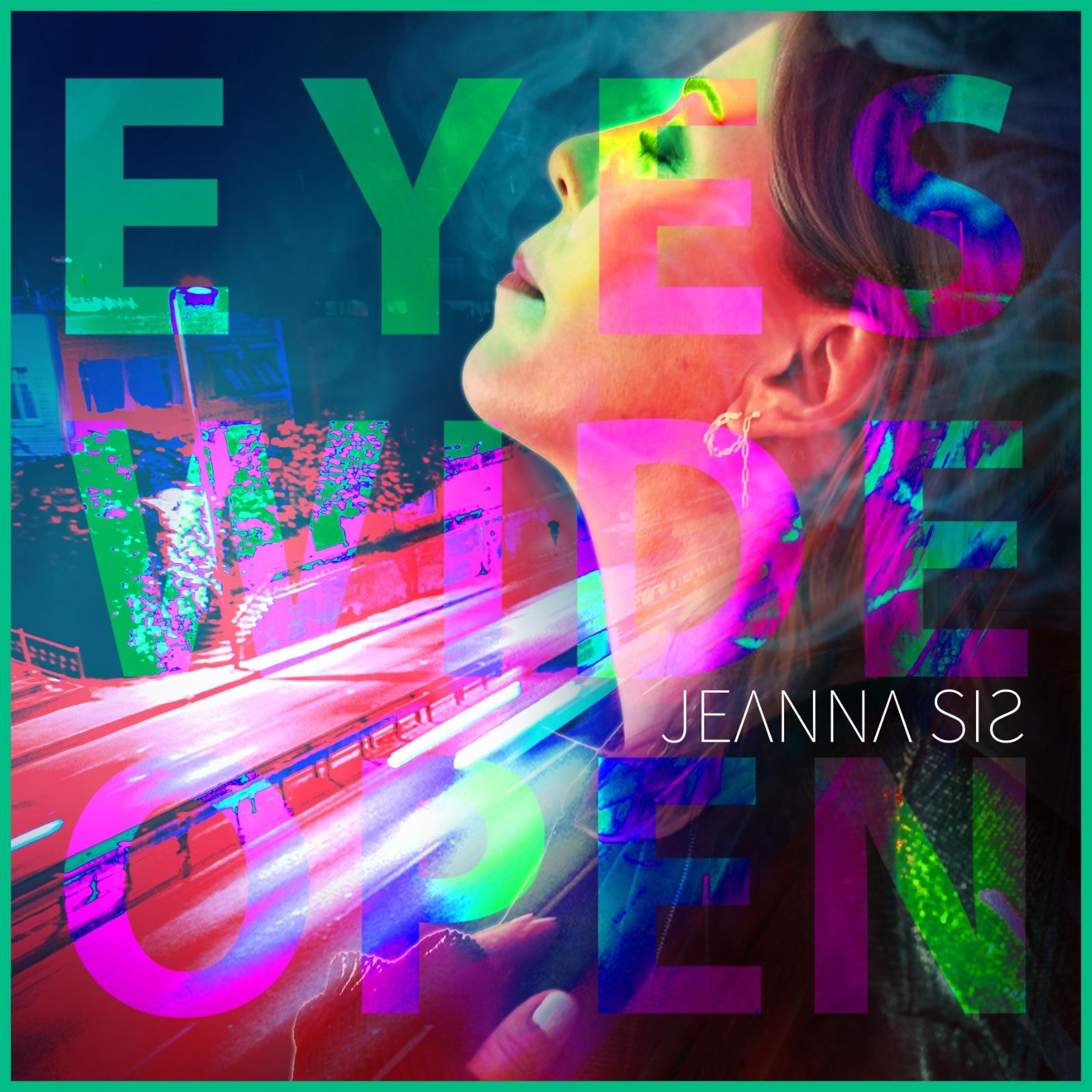
Mainstream music often favors catchy hooks over real substance. This leaves fans searching for artists who write about actual life struggles. Listeners want honest takes on toxic relationships, personal loss, and mental health. The major label industry often avoids these difficult subjects. This creates a massive opportunity for independent artists willing to share unfiltered stories.
German-based rapper and producer Jeanna-Sis steps directly into this space with her debut album, "Eyes Wide Open." She uses music to confront difficult realities. She pulls from personal experiences to connect with fans on a direct level. In this executive Q&A, Jeanna-Sis discusses her creative process, the stories behind her latest singles, and how she navigates the music industry on her own terms.
Q: Your debut album, "Eyes Wide Open," features tracks like "FRENEMY" and "True Colors" that deal heavily with betrayal. What made you want to address these themes so directly?
Jeanna-Sis: Both songs are autobiographical, although I deliberately keep the other person’s identity private. “FRENEMY” has a double meaning. On the surface, it describes loving someone who could feel like my closest friend at one moment and almost like an enemy at another. But it is equally about what that relationship did to my relationship with myself.
I used to be a good friend to myself. I trusted my instincts and believed I could rely on myself to make healthy decisions. Within this increasingly toxic dynamic, I began doubting my own perception, overriding my boundaries and rationalizing situations that were hurting me. I was not only involved with someone who had become my frenemy—I was gradually becoming my own frenemy too.
“True Colors” explores the other side of that same internal conflict. The title does not simply mean that somebody finally revealed a hidden or darker side. It raises two equally important questions: Did he show me his true colors, and did he ever truly see mine?
Did he see me for the person I really was—my love, loyalty, vulnerability and the depth of what I felt? Or did he only see the role I played in his life? At the same time, I had to question whether I had genuinely seen him, or whether I was seeing him through my romantic hope for who he might eventually become.
That hope is the emotional core of the song: the almost unshakeable belief that one day he would recognize the connection, feel what I felt and finally be able to show it. Even when his behavior gave me reasons to doubt everything, part of me continued believing that the love underneath it was real and that hope would never die.
At its heart, “True Colors” asks the question I could never completely answer: Was what we shared genuinely real for both of us, or was it only real for me? Were the moments of closeness authentic, or was I being played? Had he shown me his true colors, or had my own love and hope painted over them?
I wanted to address these themes directly because betrayal is not limited to what another person does to you. It can also be the way you begin betraying your own instincts and abandoning yourself to preserve a connection. Writing these songs was my way of confronting that uncertainty, recovering my own perception and slowly becoming an ally to myself again.
Q: You recently released the lyric video for "Still Searching for STAN." How do you manage the emotional weight of writing about a profound personal loss?
Jeanna-Sis: I wrote “Still Searching for STAN” many years—actually decades—after losing him. Closer to the time of his death, I might have been able to put some of those feelings into words, but I would not have been able to perform the song. I would have become too emotional and probably broken down in tears. For that reason, I could not have placed it on an album that I also wanted to be able to perform live.
By the time I created “Eyes Wide Open,” I had spent decades processing the grief. That does not mean the loss had stopped affecting me. It meant that I had finally reached a point where I could speak and sing about him without being completely overwhelmed. I trusted myself to carry the emotion onstage while still being able to finish the song.
The song is my tribute to Steffen, who was an exceptionally important person in my life. Although our lives physically overlapped for only a few years, the depth of a connection is not determined by its duration. He was somebody with whom I felt deeply connected, and I still think about him very often. In my own way, I have continued to feel that connection even after his death.
Writing the song was not only about expressing the loss from my perspective. I also tried to imagine what the experience might have been like for him: what kind of pain he may have been carrying, what could have brought him to that moment and what, if anything, may come after death. I would never claim to know exactly what he thought or felt. The song is my attempt to approach the questions that remained unanswered and to understand him with compassion rather than reduce his life to the way it ended.
So the writing process became a form of grief work, but also an act of remembrance and respect. Including the song on my debut album was especially important to me because it gave him a permanent place within the story of my life and my music. “Still Searching for STAN” means that although I have learned to live with the loss, part of me is still searching—for answers, for understanding and for the person I continue to carry in my heart.
Q: The track "JEANNA on EMMA" introduces your alter ego, CRAZY-MISS. What creative freedom does an alter ego give you when producing and writing?
Jeanna-Sis: JEANNA-SIS is bold and outspoken, but she is still closely connected to who I actually am and how I would behave in real life. There are certain completely outrageous things she would probably never say or do. That is why I created CRAZY-MISS.
CRAZY-MISS represents the unfiltered, impulsive and darker part of the imagination—the thoughts and urges that many people experience but would normally never say out loud or act upon. We filter ourselves because we consider the consequences, other people’s opinions, social expectations and our own moral boundaries. CRAZY-MISS temporarily removes all of those filters.
When I write from her perspective, I can follow a primal emotion to its most extreme conclusion. She is allowed to explode, lose control, act recklessly or express jealousy, anger and desire without stopping to ask whether it is sensible, socially acceptable or morally correct. It gives me the freedom to ask: What might I want to say or do in this moment if there were absolutely no consequences?
That does not mean her actions are literal accounts of how I would actually handle those situations. I can truthfully say, “That is not how I would behave—but perhaps, in that emotional moment, part of me might have wanted to.” The events can be exaggerated or fictionalized while the underlying emotion remains completely genuine.
For me, an alter ego is therefore a safe creative space where there are no limits to a lyric. CRAZY-MISS can act out the shadow side that I—and perhaps many listeners—normally keep under control. She turns forbidden thoughts and raw impulses into storytelling instead of real-world actions. That freedom makes the writing more unpredictable, theatrical and honest, because sometimes an outrageous fantasy reveals an emotional truth more effectively than a factual description ever could.
Q: The album includes interludes like "SKIT: Toxic Relationship" and "SKIT: MOM CALLS." How do these spoken moments help build the overall narrative of the record?
Jeanna-Sis: I have always loved the way Eminem used skits on his albums. They made the records feel like complete worlds, with characters, conversations and a narrative running between the songs. Instead of simply listening to a collection of tracks, you felt as though you were entering an entire experience. That was something I always wanted to create with my own debut album.
The opening “SKIT: MEET & GREET” functions almost like a prologue. It introduces the purpose behind the album, my determination to establish myself as a hip-hop artist and my desire to create something meaningful that could outlive me. It introduces the idea of leaving a musical legacy and prepares the listener for the world they are about to enter.
“SKIT: Toxic Relationship” then gives the listener a glimpse into the relationship that inspired several of the album’s most personal songs. The person portrayed in that toxic relationship was also the person who deleted the recordings I had previously made for the album in his studio. The dialogue is dramatized rather than being a word-for-word transcript, but the confrontation itself and the emotions behind it are based on something that genuinely happened.
That connection is essential to understanding the skit. In response to having my music deleted, I announce that I am going to become a famous rapper, make an album about that person and even write a hate track. At the time, it came out as an angry and defiant reaction, but it also became a promise to myself that I ultimately fulfilled.
Within the album’s narrative, the skit therefore functions as both an origin scene and an announcement of what is to come. It reveals the moment in which the album was emotionally born. The listener is hearing the very album I said I would create during that confrontation. An attempt to erase my artistic expression had the opposite effect: it gave me the determination to create something much bigger.
That experience also motivated me to invest in my own professional recording equipment and develop a studio setup that allowed me to record and produce my music independently and at the level of quality I wanted. I never again wanted somebody else to have the power to erase, withhold or control my work. In that sense, “Eyes Wide Open” itself became my answer: the music that was deleted became the motivation for an entire body of work that could no longer be taken away from me.
“SKIT: MOM CALLS,” which closes the album, is based on a real and very funny exchange with my former host mother. She had listened to the record, complimented my singing voice and sincerely tried to persuade me to consider making Christian music. That suggestion becomes especially ironic after an album in which I am swearing in almost every song and only one track is not marked explicit. It is a loving and humorous contrast to all the anger, pain and emotional intensity that came before it.
Together, the skits give the album a beginning, an origin story and an ending. They introduce my ambition, reveal the conflict that motivated much of the project and finally provide a moment of warmth and humor. They allow listeners not only to hear songs about a toxic relationship but to step briefly into my world and experience some of the conversations, emotions and relationships surrounding the music. That is why I see “Eyes Wide Open” as a complete listening experience rather than simply a collection of individual tracks.
Q: You actively engage with fans through radio interviews, like your recent spot on BLAST FM, and your current Meet & Greet contest. Why is direct fan interaction so important for an independent artist today?
Jeanna-Sis: For me, direct interaction with listeners is not simply an additional part of promoting my music. It is one of the main reasons I make music in the first place. I write about personal emotions and experiences, but once a song is released, somebody in a completely different part of the world may recognize their own feelings within it.
One particular moment during a live YouTube interview meant a great deal to me. A viewer from Russia had joined the live interview and waited for the opportunity to compliment my song “Mr. Fake.” It is the only German-language song on “Eyes Wide Open,” but he knew it and simply told me, “Mr. Fake is a bomb.”
It may sound like one short comment, but it meant so much more to me. This person was listening from Russia, knew a German song from my album, knew that I was going to be interviewed and took the time to be there live so that he could tell me how much he liked it. That made the international reach of my music feel real in a way that streaming numbers alone never could.
That is what I love about music: it can create a connection between people who live in different countries, speak different languages and may never meet or know anything else about one another. Sometimes one sentence, one lyric, one melody or even one note can express an emotion that another person understands completely. A song that began with one of my private experiences can suddenly mean the world to somebody else.
When listeners tell me that they relate to my emotions or recognize parts of their own lives in my songs, it gives everything I went through and everything I put into the music a greater purpose. It turns an individual experience into a shared human one.
Radio interviews, live conversations and Meet & Greets make that exchange possible. Streaming figures can tell me how many people played a track, but they cannot show me who was moved by it or why it mattered to them. A direct comment from one listener can sometimes mean more than thousands of anonymous numbers on a screen.
That human connection is why fan interaction matters so much to me. I do not only want people to hear my music. I want them to feel seen by it, relate it to their own experiences and know that, through music, none of us is quite as alone as we might sometimes feel.
Q: Taking full control of the production process for tracks like "Not Enough" requires intense focus. What is the most challenging part of bringing your exact vision to life in the studio?
Jeanna-Sis: “Not Enough” was definitely the most difficult song on the album for me to record because it contains the fastest rap passages I have performed. At that speed, every syllable and consonant has to remain clear, the words have to fall precisely within the rhythm, and I still have to control my breathing throughout the verse.
The technical challenge was only one side of it, however. I did not want to concentrate so heavily on speed and precision that I began delivering the lyrics mechanically, almost like a robot. The song came from genuine pain, betrayal and disappointment. It would not have worked if the words were technically perfect but the listener could no longer feel the emotions behind them.
The real challenge was therefore finding a balance between speed, clarity and emotional expression. I needed every word not only to land correctly on the beat but also to carry its meaning. The anger, sadness, vulnerability and determination all had to remain present, even during the fastest sections. I never wanted the rapid delivery to sound like a technical exercise or something I included simply to demonstrate that I could rap quickly. The speed had to intensify the emotion rather than replace it.
That is also where being both the artist and the producer becomes complicated. While performing, I have to remain instinctive, vulnerable and connected to what I felt when I wrote the song. When listening back, I have to become analytical and evaluate the timing, pronunciation, breathing, arrangement and overall sound. If I enter that analytical mindset too early, I risk losing the emotional truth of the performance.
Recording in my own professional booth gives me the freedom to experiment and repeat a passage until I find the right combination of technical accuracy and genuine feeling. At the same time, having unlimited access to the studio creates the temptation to keep revising forever.
Ultimately, the most difficult part is recognizing the take in which both sides come together: the words are fast and precise, but they still sound human. My goal is not sterile perfection. It is to create a professional recording that preserves the raw emotion and the reason the song needed to exist in the first place.
These questions reveal an artist deeply committed to artistic independence and raw storytelling. Jeanna-Sis uses her tracks to process complex life events. She turns personal pain and frustration into music that resonates with everyday people. Her hands-on approach ensures that her exact vision reaches her audience without corporate interference.
The demand for genuine, self-produced music will continue to grow as listeners reject overly manufactured pop sounds. Artists like Jeanna-Sis prove that success comes from addressing real-life issues head-on and building a direct connection with fans. "Eyes Wide Open" sets a strong standard for the future of independent hip-hop.
To learn more visit https://jeanna-sis.com/