For decades, the field of paranormal exploration has struggled with a reputation built on folklore, sensationalism, and unverified personal anecdotes. Skeptics often dismiss unexplained phenomena due to a lack of empirical evidence, while passionate investigators frequently operate in isolation without standardized tools or frameworks. This divide leaves critical questions unanswered: How do we separate myth from reality, and what happens when we examine the unexplained through the lens of modern discovery?
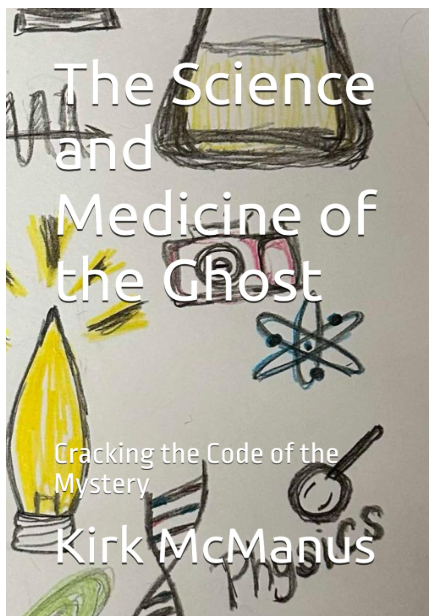
Kirk McManus, seasoned paranormal investigator who specializes in demonic possession assessments and evaluations addresses this challenge directly. In his books, Why Are Ghosts White: The Other Side of Here, and The Science and Medicine of the Ghost McManus presents an evidence-based approach that combines traditional field investigation with emerging tools such as artificial intelligence and advanced detection hardware. In this executive Q&A, McManus discusses how he is modernizing paranormal research, challenging long-standing assumptions, and building bridges between conventional science and unexplained phenomena.
Q: What inspired the provocative title of your book, Why Are Ghosts White: The Other Side of Here, and The Science and Medicine of the Ghost and what central misconception about the paranormal does it set out to correct?
Kirk McManus: Ghosts and paranormal entities exist in predictable environments and have specific behaviors. They are still subject to some laws of physics. As such, knowing their behaviors and the environments they exist in helps us reduce the chances of the paranormal entities harming the living, especially harmful demons.
Q: Paranormal investigation has historically relied on anecdotal reports. How does your methodology introduce rigorous, evidence-based practices into the field?
Kirk McManus: The research follows common 12th grade science.
Q: In the book, you advocate for integrating advanced technology, and cooperating with medical professionals and clergy to filter out what’s not working.
Kirk McManus: Rule out known medical conditions and naturally occurring phenomena that could be mistaken for a violent, harmful paranormal encounter or demonic possession.
Q: Paranormal research has often been fragmented, with various groups working in silos. Why is cross-disciplinary collaboration essential for the future of this work, and how can the community share data more effectively?
Kirk McManus: Modern electronic devices and social media platforms indicate that the existence of paranormal entities can no longer be declared as a “pseudo science”. There is too much global evidence of their existence. Once we declare it as a “science” then we can study it like we study the other sciences. Like human anatomy, biology, earth sciences etc. The profession can share data more effectively with centralized databases, and continue sharing information via the WWW. Just like every other profession. by putting egos aside.
Q: Bridging the gap between conventional science and the unexplained is notoriously difficult. What kind of reception have you encountered from the mainstream scientific community, and what standards must paranormal researchers meet to gain credibility?
Kirk McManus: In a court of law if two witnesses say they saw something, a judge considered it credible evidence. The same standard can apply to the paranormal. It’s usually simply a matter of the client exhibiting a medical condition or a paranormal encounter, but it can’t usually be both. The scientific community only responds if there is harm or injury or death of the living.
Q: For readers picking up Why Are Ghosts White: The Other Side of Here or The Science and Medicine of the Ghost newcomers entering the field, what is the single most important mindset shift required to investigate unexplained events responsibly?
Kirk McManus: It’s not paranormal anymore. Technology, social media, clergy and the medical community have already declared it. But businesses and governments aren’t going to investigate the dead, they only want to allocate resources to the living.
By emphasizing empirical evidence, data integrity, and technological integration, Kirk McManus demonstrates that the study of unexplained phenomena does not have to rely on folklore alone. His approach replaces sensationalism with structured observation, giving researchers a reliable framework to evaluate anomalies without bias or premature conclusions.
As detection equipment and data analysis tools continue to evolve, the boundary between mainstream science and paranormal research will depend on accountability and shared findings. McManus’s work highlights a practical path forward—one that respects both genuine human curiosity and the demands of scientific discipline.
Get a copy of “Why are Ghosts White?” at https://www.amazon.com/dp/B0HGRWMP92
Get a copy of “The Science and Medicine of the Ghost” at: https://a.co/d/0cMmKe8b